Engine Cranks But Will Not Start in Fort Worth: Is It the Immobilizer or Something Else?
Quick answer: If the engine cranks strongly but never fires, look at the security or anti-theft light. Flashing or staying on while cranking points at the immobilizer — a locksmith problem, typically $150–$400 to diagnose and program. Off or normal while cranking points at fuel, spark or a sensor — a mechanic's job, not ours. That one observation saves most people a wasted service call. Call (817) 674-3595 if the light says it is us.
As of September 2026, "it cranks but it will not start" is the single most misdiagnosed condition we get called about in Fort Worth, and the misdiagnosis runs in both directions.
People call a locksmith for a fuel pump. People call a mechanic for a key the car has stopped recognizing. Both end up paying for a visit that could not have fixed anything.
The frustrating part is that your car has almost certainly already told you which one it is. This guide shows you how to read it, in about five minutes, with no tools.
First, be precise about "cranks"
The word does a lot of work here, so let us be exact about what we are diagnosing.
Cranking is the engine physically turning over — the strong, rhythmic rur-rur-rur of the starter spinning the engine. If you hear that, this article applies to you.
Not cranking is different: a single click, rapid clicking, or complete silence with a dark dash. That is a battery, starter, or electrical fault, and none of what follows applies. If your dash does not even light up, the problem is upstream of everything discussed here.
Cranks then dies within seconds is also different. That pattern — fires, runs for one to three seconds, quits — is a classic immobilizer signature on some vehicles, where fuel is allowed briefly and then cut. If that is your car, skip ahead; you are almost certainly in the anti-theft column.
Assuming you have a strong, healthy, sustained crank that simply never becomes a running engine: continue.
The single test that sorts it
Sit in the driver's seat, turn the key or press the button to crank, and watch the instrument cluster while the engine is turning over.
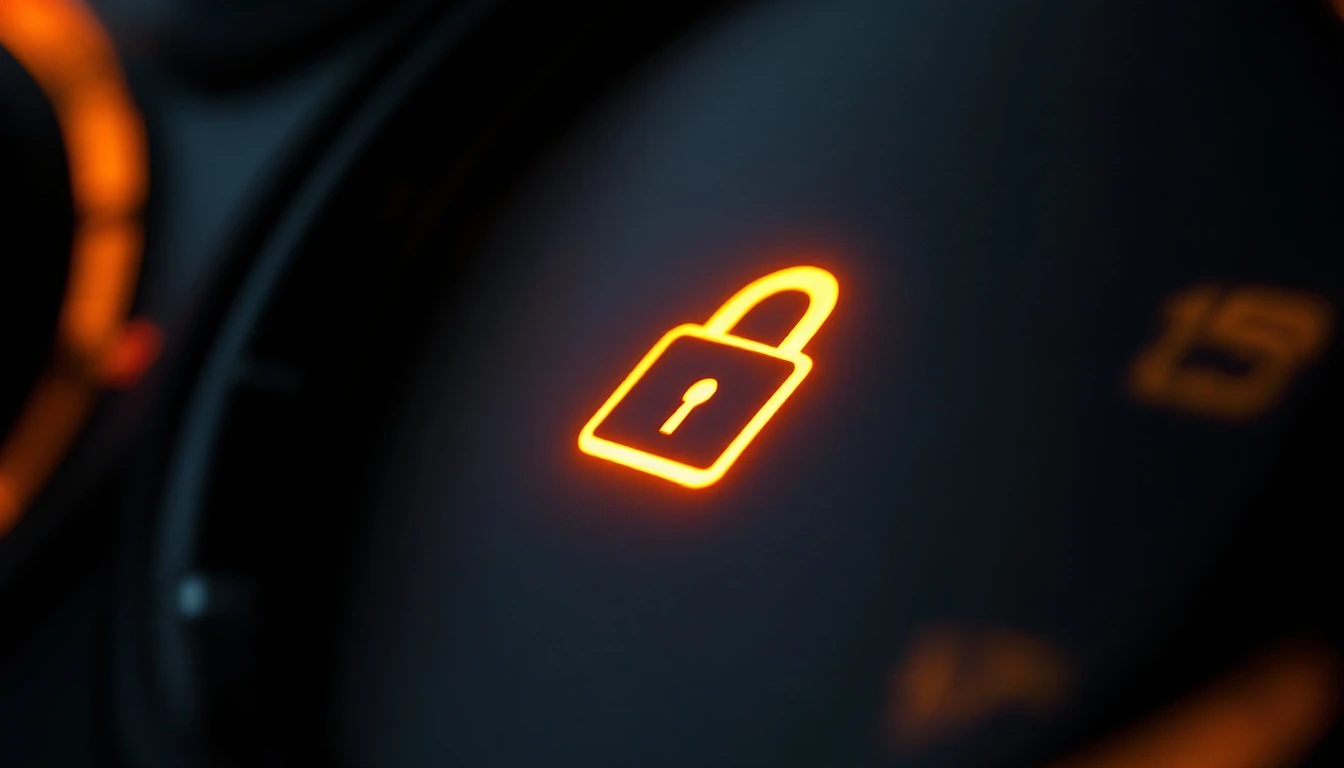
Specifically, find the security indicator. Depending on the vehicle it is a small car outline with a padlock or key through it, a padlock on its own, or the word SECURITY. Toyota and Nissan use a key silhouette, GM often spells out SECURITY, Ford uses a car with a padlock, Chrysler and Dodge use a car with a key.
If that light is flashing rapidly, staying solid, or comes on the moment you crank: the anti-theft system is refusing to authorize the start. That is our side of the house.
If that light behaves normally — briefly on at key-on, then off — and stays off while you crank: the anti-theft system has authorized the start. The car wants to run and something else is stopping it. That is a mechanic's job.
This is not a subtle read. An immobilizer refusing a start is designed to announce itself, because the whole point is to tell a thief the car is not going anywhere.
If the security light says immobilizer
You are in locksmith territory. There are four realistic causes, roughly in order of how often we find them.
The key has stopped being recognized. Chips fail, keys get physically damaged, and fob electronics degrade. This is the most common single cause. Test it in ten seconds: try your other key. If the spare starts the car, the first key failed and you need a replacement — which, because you still hold a working key, is a spare-key job in the $130–$450 range rather than the expensive column.
The antenna ring or receiver has failed. On key-turn cars a coil sits around the ignition cylinder and reads the chip. On push-button cars the equivalent antenna is elsewhere in the cabin. Either can fail or work loose, and the symptom is identical to a dead key — the car simply cannot read a chip it would otherwise accept. The tell here is that both keys fail.
The immobilizer or body module has lost its programming. This happens after a battery goes flat, after a jump start gone wrong, after a module is replaced, or occasionally on its own. The keys are fine, the antenna is fine, and the module has forgotten the relationship. This is programming work, typically $150–$400 — see our immobilizer programming cost guide for the detail.
A module genuinely failed. Least common and the most involved. When a body module, immobilizer module or engine controller fails outright, a replacement unit has to be programmed to the vehicle before anything works. Our guide on when a car needs module programming and not just a key covers where that line falls.
Make-specific reading, because these systems behave differently:
- GM and Chevrolet — Passlock and its successors have a well-known set of behaviors worth recognizing; see our Chevy security light and Passlock guide.
- Ford and Lincoln — PATS has a distinctive flash pattern that carries real diagnostic information; see our Ford PATS anti-theft light guide.
- Ram and Dodge — newer vehicles route security through a gateway module, covered in our Ram and Dodge security gateway guide.
- Mitsubishi — immobilizer programming on the Outlander and Eclipse Cross has its own process, covered in our Mitsubishi immobilizer programming guide.
- Chevrolet body modules — when the BCM is the culprit rather than the key, our Chevrolet BCM programming guide covers it.
- BMW — the steering lock and ignition interact with the start permission in a way that produces this exact symptom; see our BMW ELV steering lock and ignition guide.
If the security light is normal
Then we are not your answer, and we would rather say so now than after you have paid for a callout.
A car that cranks strongly, shows no security fault, and still will not start is missing one of three things: fuel, spark, or compression. The usual suspects are a fuel pump, a fuel filter, a crankshaft position sensor, ignition coils, a failed relay, or a blown fuse. None of that is locksmith work.
A useful confirmation before you call anyone: when you turn the key to ON without cranking, listen for a two-second hum from the rear of the car. That is the fuel pump priming. Silence where you normally hear a hum points hard at the fuel side.
If the check engine light is on, a mechanic can pull the stored codes and will usually be pointed straight at the fault. That is the right next call.
The cases that look like both
Three situations genuinely straddle the line, and they are where most wasted service calls come from.
The car battery recently died or was replaced. Low voltage causes bizarre, contradictory symptoms, and some vehicles want the key re-synchronized after a power interruption. Start by confirming the battery is actually good and the terminals are clean and tight, because chasing an immobilizer fault caused by a marginal battery wastes everyone's time. Our dead battery and key recognition guide covers this pattern.
An aftermarket alarm or remote starter is installed. These systems interrupt starter, ignition or fuel circuits by design. When they fail, the car cranks and will not start and the factory security light may look perfectly normal. If anything non-factory has been wired into the starting circuit, mention it on the phone — it changes the whole diagnosis.
The key turns but feels wrong. If the key is loose, sloppy, or has to be wiggled, you may have a worn ignition cylinder rather than a security fault. That is a separate job: our ignition cylinder versus immobilizer guide draws the distinction, and our ignition repair cost guide covers pricing at $150–$550 depending on whether the cylinder is rebuilt or replaced.
What it costs when it is us
| Situation | What is involved | Typical Fort Worth range (2026) |
|---|---|---|
| Diagnosis at the vehicle | Confirming which side the fault is on | $75–$150 |
| One key failed, spare still works | New key cut and programmed | $130–$450 |
| Both keys fail, antenna or receiver | Diagnosis, then repair or programming | $150–$400 |
| Immobilizer or module reprogramming | Restoring the key-to-vehicle relationship | $150–$400 |
| All keys lost alongside the fault | Key generated from vehicle data plus programming | $200–$500 |
Every number is confirmed against your specific vehicle before work starts. If we get to the car and the fault is on the mechanical side, we will tell you that rather than selling you a key you do not need.
Before you call anyone, five minutes
1. Watch the security light while cranking. The whole diagnosis usually lives here.
2. Try your other key. Free, and it resolves a large share of these calls.
3. Listen for the fuel pump prime at key-on. Silence points away from us.
4. Check the battery. Low voltage fakes almost every symptom in this article.
5. Note anything that changed recently. New battery, jump start, module replaced, alarm installed, car sat for months, body shop visit. Recent history is often the whole answer.
Then call whoever the evidence points at. Our ECU and module programming page covers what we handle, and our car key replacement page covers the key side.
Frequently Asked Questions
My engine cranks but will not start — is that the key?
Only if the security or anti-theft light is flashing or staying on while you crank. If that light behaves normally, the anti-theft system has authorized the start and the problem is fuel, spark or a sensor, which is a mechanic's job rather than a locksmith's.
What does a flashing security light mean?
It means the vehicle's anti-theft system is refusing to authorize the engine. Usually the key is no longer being recognized, the antenna that reads the key has failed, or the module has lost its programming. All three are locksmith work.
Can a bad key really stop the engine from starting?
Yes. On a vehicle with an immobilizer, the engine controller will not allow fuel or spark unless it receives valid authorization from the key. The starter will still turn the engine over — which is why it cranks — but it will never fire.
The car cranks, starts for two seconds, then dies. What is that?
On many vehicles that is the immobilizer signature. Fuel is permitted briefly and then cut when authorization fails. It is a strong indicator that this is a security-system problem rather than a mechanical one.
How much does immobilizer diagnosis cost in Fort Worth?
Diagnosis at the vehicle typically runs $75–$150. If the fix is programming, most immobilizer and module work runs $150–$400. If a key has to be replaced as well, add the key cost for your vehicle type.
What if it turns out to be mechanical?
Then we tell you and you call a mechanic. We would rather charge for a diagnosis and send you to the right place than replace a key that was never the problem.
References
- NHTSA — vehicle safety, recalls and anti-theft equipment standards
- NASTF — vehicle security information release for the independent trade
- FTC — auto repair consumer guidance
- ALOA Security Professionals Association
- Ready.gov — roadside and vehicle emergency preparedness
Car cranking and not starting in Fort Worth with a security light on? Call (817) 674-3595. We diagnose at the vehicle, and if it turns out to be mechanical we will say so.