Ignition Repair Cost in Fort Worth by Make (2026)
Quick answer: Ignition repair in Fort Worth runs $150–$550, and where you land depends on the make, whether the lock cylinder or the electrical switch behind it has failed, and how much of the steering column has to come apart. Before you spend anything, find out whether the ignition is even at fault — a worn cylinder and an anti-theft refusal produce completely different symptoms. A technician confirms the exact price for your vehicle. Call (817) 674-3595.
As of October 2026, ignition work is the service where Fort Worth drivers most often pay for the wrong repair. The reason is that three unrelated failures all get described the same way at the kerb: "my car won't start." One is mechanical, one is electronic, one is the battery. They cost different money, and only one of them is an ignition job.
So this guide does two things. First it gives you a way to sort your own symptom in about thirty seconds, standing at the car, before anybody quotes you. Then it lays out realistic cost by make, because a Chevrolet column and a BMW column are not the same amount of work and it is dishonest to pretend otherwise.
Sort the symptom before you spend
Two guides published this month narrow this faster than anything on this page: if your remote still unlocks the doors, start with a fob that unlocks but will not start the car, and if this began right after a jump start or a battery swap, start with what a dead battery does to the key system. A real example from early September: a customer booked an ignition repair after a no-start, and the actual fault was an immobilizer that had lost its key list when the battery was replaced the week before — a relearn, not a cylinder. The ignition was fine.
Three questions, in order.
Does the key turn? Put the key in and try. If it goes in and rotates smoothly through its positions, the mechanical side of the ignition is fine. That single observation eliminates the most expensive ignition repair from consideration.
Does the engine crank? If the key turns and the starter spins the engine over strongly but it never fires, the mechanical lock is doing its job and something is refusing to authorise the start. That is usually the immobilizer, and usually the key, and it is not an ignition repair. We break this line down in detail in our comparison of an ignition cylinder versus an immobilizer fault.
Does anything happen at all? No dash, no chime, no click — check the battery first. A flat battery imitates almost every other electrical fault on a car, and people replace ignition switches over it more often than you would think.
Here is the shorthand.
- Key turns hard, sticks, needs jiggling, or will not rotate → mechanical, ignition lock cylinder.
- Key turns fine, engine cranks, never fires, security light active → electronic, key or immobilizer.
- Key turns fine, no crank, dash lights work, just a click → electrical, starter or the switch behind the lock.
- Nothing at all, no lights → battery first.
On push-button-start cars the same logic holds with different presentation. There is no cylinder to wear, so a car that powers up but refuses to start is almost always a credential problem rather than a mechanical one — the pattern we describe for an F-150 smart key not detected generalises well across modern keyless vehicles.
What actually wears out inside an ignition
An ignition lock cylinder is a small precision device. Inside it sits a stack of spring-loaded wafers, and each wafer has to be pushed to exactly the right height by the corresponding cut on your key before the cylinder is free to rotate.
Every time you insert a key, brass slides against brass. Over tens of thousands of cycles the wafers wear, the springs weaken, and the tolerances that used to be tight become sloppy. Grit gets in. Heavy keychains hang off the key and load the cylinder sideways every time you drive, which accelerates everything.
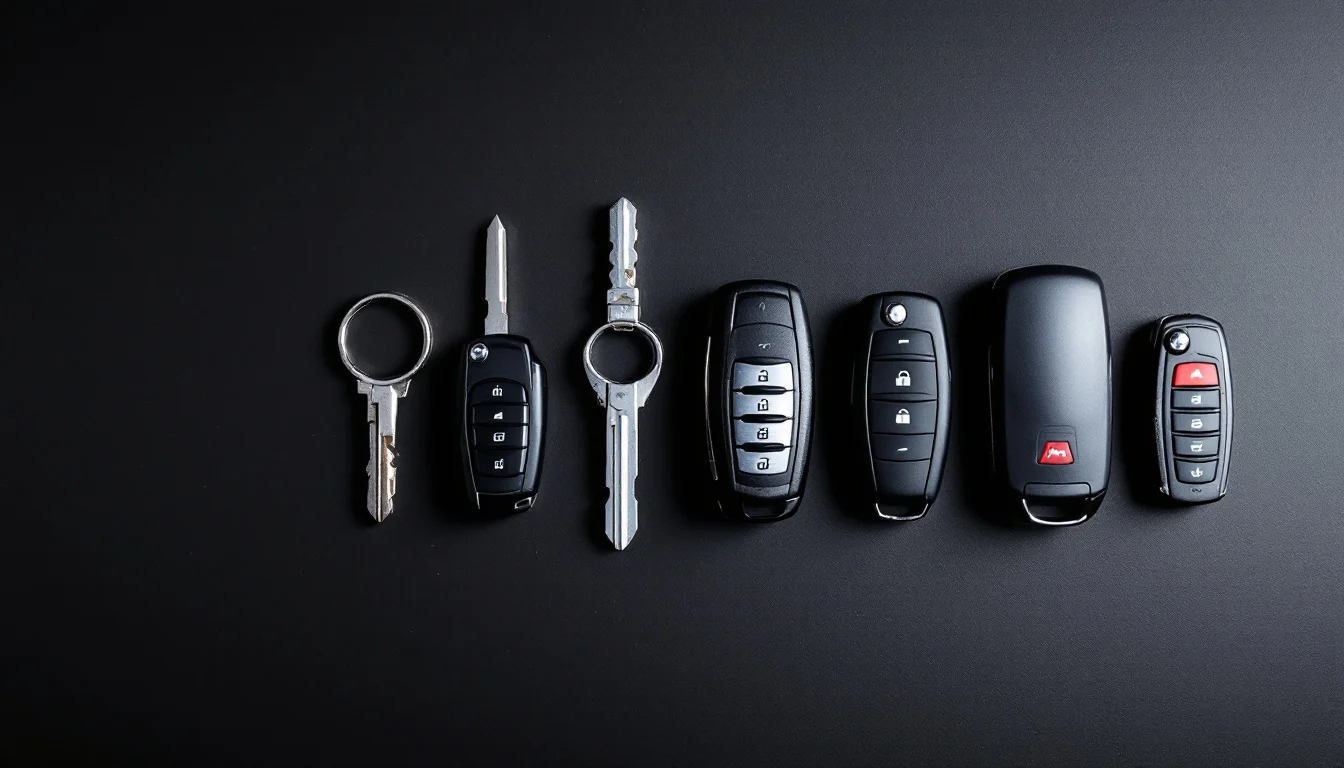
Then there is the other half of the pair: your key. Keys wear faster than locks because the key is softer and it also opens doors, trunks, and glove boxes. A key that has been in service for fifteen years has rounded cuts, and rounded cuts no longer lift the wafers to the correct heights. The result feels exactly like a failing ignition — hard turning, jiggling, a sweet spot you have to find — when the lock is actually fine and the key is the culprit.
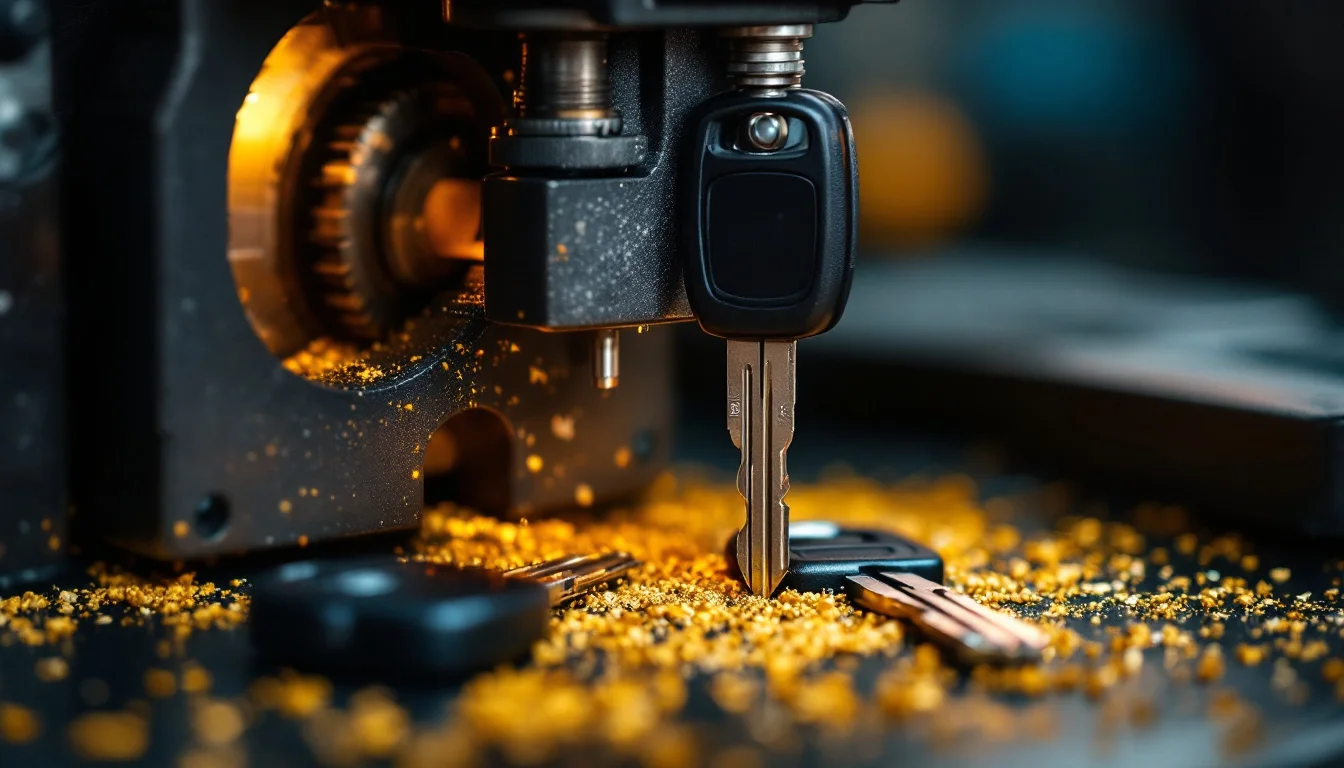
That is why we check the key before condemning the cylinder. Cutting a fresh key to the vehicle's own specification is a fraction of the cost of a column job, and on older cars it fixes the complaint outright a meaningful share of the time. The wear story is the same one we tell in our piece on Lincoln Town Car and LS ignition repair, where high-mileage sedans show it most clearly.
Repair, cylinder replacement, or switch replacement
Three different jobs get called "ignition repair", and knowing which one you are being sold is worth real money.
Repair or service. The cylinder is removed, cleaned, worn components addressed where the design allows, and a correctly cut key is fitted. Suitable when wear is moderate and the cylinder is a serviceable design. Cheapest option, and not available on every vehicle.
Lock cylinder replacement. The cylinder is replaced. The new cylinder is either keyed to match your existing key so you keep one key for everything, or supplied with its own key — the first option costs a little more and is usually worth it. This is the most common ignition job we perform.
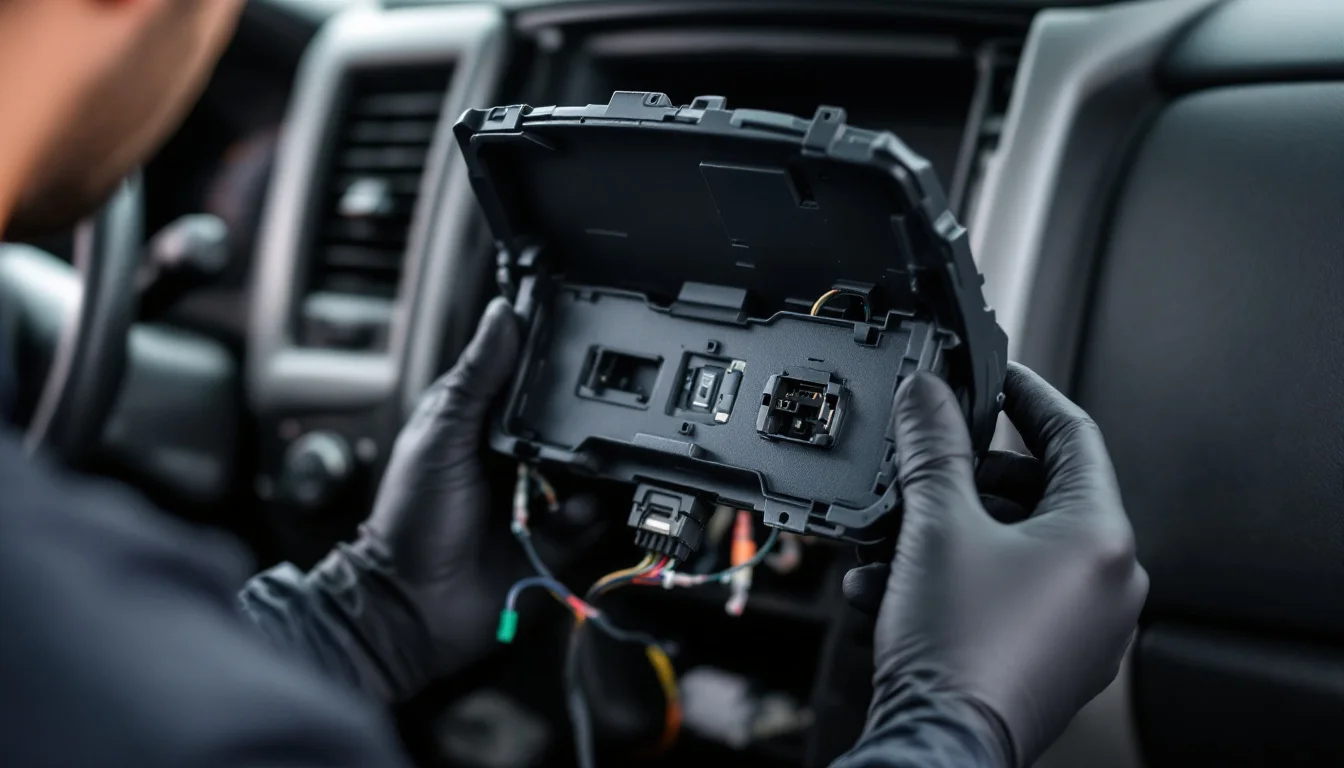
Ignition switch replacement. The switch is the electrical part behind the lock: the component that actually tells the car to power up, crank, and run. A failing switch produces intermittent electrical behaviour — accessories dropping out, no crank in one position but crank in another, a car that dies over bumps. Different part, different symptom, sometimes a different diagnosis than the customer expected.
On some vehicles the anti-theft antenna ring lives around the cylinder, which means that any cylinder work also touches the security side and the car may need a programming step afterwards to be happy. That is normal and it is included in the diagnosis.
Ignition repair cost by make
| Make | Typical cost range | What usually drives it |
|---|---|---|
| Ford | $150–$450 | Common designs, good parts availability, column access straightforward on most models |
| Chevrolet and GM | $150–$450 | Wafer wear is very common on high-mileage columns, anti-theft ring often involved |
| Chrysler, Dodge and Ram | $180–$480 | Cylinder and switch both frequent failure points, some columns need more disassembly |
| Toyota | $180–$500 | Durable columns, so failures tend to be genuine wear at high mileage |
| Honda | $180–$500 | Cylinder replacement is the usual outcome, key wear is a common contributing factor |
| Nissan | $180–$500 | Steering lock behaviour on some models complicates the diagnosis |
| Hyundai and Kia | $180–$500 | Anti-theft integration means a programming step often follows the mechanical work |
| BMW | $250–$550 | More column disassembly, security integration raises the labour content |
| Mercedes-Benz | $250–$550 | Steering-lock and ignition module designs are their own case, diagnosed first |
Every figure above is a working Fort Worth range, not a quote, and a technician confirms the exact price for your vehicle once the column and the key have been assessed. The Federal Trade Commission's consumer guidance on auto repair (consumer.ftc.gov) is worth reading before authorising work anywhere: get the number agreed in writing before the job starts, and treat a firm price given sight-unseen over the phone with suspicion.
The early-warning stage: when the key needs a jiggle
Most ignition jobs do not start with a key that will not turn. They start months earlier, with a key that turns only after a wiggle. That stage matters for cost, because it is when the cheaper repairs are still on the table.
If a second, less-used key turns smoothly, the daily key is worn and a new transponder key cut to factory code, $150–$250, may be the whole repair. If every key needs the same jiggle, the wafers are worn and a rebuild at $150–$280 keeps your existing keys. Left until the cylinder is damaged or a key snaps inside it, the job moves to a replacement at $280–$550, sometimes with an extraction at $75–$150 first.
Our guide to what it means when you have to jiggle the key to start the car walks through the parking-lot checks that separate a worn key from a worn ignition.
When it is the immobilizer rather than the ignition
Worth stating plainly because it is the most expensive mistake on this page. A worn cylinder and a refusing immobilizer both produce "it will not start," and they are not related repairs. The tell is the security light: an anti-theft indicator lit or blinking while the engine cranks points at the security system, not at the lock. Vehicles like the Mitsubishi Outlander and Eclipse Cross show up regularly in exactly this shape, and the fix there is module and key work — priced in our immobilizer programming cost guide — rather than anything mechanical.
European steering locks are their own category
Several European platforms do not use a conventional mechanical cylinder at all. Instead the steering lock is an electronic module that releases the column and participates in the start authorisation, and when it fails the car typically will not release the wheel or will not authorise a start even though every mechanical part is fine.
That is not an ignition repair in the sense the rest of this article uses the phrase. It is module work, it is diagnosed before anyone quotes it, and it is priced separately. If you drive a European car and your symptom is a locked steering wheel plus a refusal to start rather than a key that turns badly, say so when you call, because it routes the job differently from the first sentence.
Toyota and Honda: the high-mileage pattern
Two of the most common ignition calls we take in Fort Worth involve Japanese sedans with very high mileage, and the pattern is consistent enough to be worth naming.
These cars are reliable enough that people keep them for a very long time, which means the ignition accumulates far more cycles than the average vehicle ever sees. The failure is not a design flaw — it is arithmetic. Twenty years of twice-daily use is a lot of brass on brass.
The tell is gradual. The key starts needing a wiggle. Then a particular angle. Then you learn to lift the wheel slightly while turning. Owners adapt to it so slowly that they do not register how bad it has become until the day it stops entirely, usually in a parking lot. If you are at the wiggle stage, that is the cheap moment to deal with it. Our write-up on Toyota Camry and Corolla ignition repair covers that progression on the two models we see most.
How the visit runs
You call (817) 674-3595 and describe the symptom in the terms above: does the key turn, does the engine crank, do the lights come on. That alone usually tells us which lane the job is in.
A technician meets the vehicle where it sits. We start with the cheap checks — battery, key condition, whether a second key behaves differently — because eliminating those costs you almost nothing and occasionally ends the appointment happily. If the diagnosis is mechanical, we assess the cylinder and tell you whether service, cylinder replacement, or switch replacement is the right call, with a price agreed before anything comes apart. Our ignition repair service page describes the same process from the service side.
If the diagnosis lands somewhere else entirely — a key, an immobilizer, a starter — we say so. Selling somebody a column job for a problem a new key would have solved is the kind of thing that makes people distrust this trade, and the trade associations that publish standards for it, including ALOA (aloa.org), exist partly to push against that.
The honest boundary
We are a locksmith, not a general repair shop. If the diagnosis points at the starter motor, the wiring harness, or a charging fault, that is somebody else's work and we will tell you rather than guess at it.
Some columns are not field-serviceable. A few designs require enough disassembly, or enough manufacturer-specific tooling, that the job belongs in a shop. A technician confirms feasibility on the vehicle.
Security-relevant work needs proof of ownership. Photo identification plus registration, title, or an insurance card matching the vehicle. Anything touching the anti-theft system falls under that rule, and locksmiths in this state operate under the Texas DPS Private Security Program (dps.texas.gov). Immobilizer systems are effective at deterring theft — a point reflected in the vehicle theft prevention work published by NHTSA (nhtsa.gov) — and that effectiveness depends entirely on nobody bypassing the verification step.
Do not force it. A key that will not turn should not be attacked with pliers or a screwdriver. Snapping a blade inside the cylinder converts a moderate repair into a bigger one, and we would rather come out to a stuck ignition than to a stuck ignition with half a key inside it.
Frequently Asked Questions
How much does ignition repair cost in Fort Worth?
Between $150 and $550 depending on the make, whether the lock cylinder or the electrical switch has failed, and how much column disassembly the vehicle requires. Most domestic and Asian vehicles fall in the lower half of that range, with European platforms toward the top.
How do I know if it is the ignition or the key?
Try a second key if you have one. If the second key turns smoothly, the lock is fine and your original key is worn out. If both keys fight the cylinder in the same way, the wear is in the ignition itself and the cylinder needs service or replacement.
My key turns but the car will not start. Is that an ignition problem?
Usually not. If the key rotates normally and the engine cranks, the mechanical ignition is working and something is refusing to authorise the start, most often the immobilizer or the key transponder. That is a programming or key issue rather than a column repair.
Can you replace an ignition without towing the car?
In most cases yes. Ignition work is performed at the vehicle wherever it is parked, since the tools and replacement cylinders travel with the technician. A small number of designs need enough disassembly that a shop is the better setting, and we say so up front.
Will a new ignition cylinder mean carrying two keys?
Only if you choose that. A replacement cylinder can normally be keyed to match your existing key so one key still operates everything, which costs slightly more than fitting a cylinder with its own key but is far more convenient day to day.
Why did my ignition wear out in the first place?
Ordinary use plus two accelerants. Every insertion slides brass against brass and gradually wears the internal wafers, and a heavy keychain hanging off the key loads the cylinder sideways the entire time you drive. A worn key with rounded cuts then makes the problem noticeably worse.
References
- NHTSA — National Highway Traffic Safety Administration
- FTC Consumer Advice — auto repair and service
- ALOA — Associated Locksmiths of America
- NASTF — National Automotive Service Task Force
- Texas DPS — Private Security Program
- TxDMV — Texas Department of Motor Vehicles
Fighting a key that will not turn, or stuck in a lot with a car that cranks and will not catch? Call Locksmith Fort Worth at (817) 674-3595, describe the symptom, and we will tell you which of the three problems you actually have before anyone touches the column. Mobile-only, 24/7, throughout the Fort Worth area.
Written by the technicians at Locksmith Fort Worth, a mobile automotive locksmith service based in 76102 and serving the Fort Worth area 24/7.