The Security Gateway on 2018+ Ram, Dodge, Jeep & Chrysler: What It Means for Key and Module Work in Fort Worth (2026)
Quick answer: On 2018-and-newer Ram, Dodge, Jeep and Chrysler vehicles, a Security Gateway sits between the diagnostic port and the systems that hold your keys and module settings, and any legitimate shop has to pass through an authorized access step before it can write to them. That does not stop the work — it adds a step. Key jobs on these vehicles still land in the usual $150–$850 band; module-level work is always diagnosed first and quoted after, because the answer depends entirely on what the vehicle reports. Call (817) 674-3595 with your year, model and VIN.
As of July 2026, the single most common source of confusion on Chrysler-family vehicles in Fort Worth is not a broken part. It is a phone call that goes like this: "Another shop told me they can't program a key for my 2021 Ram, and the dealer quoted me a lot more than I expected. Is my truck special?" The truck is not special. It has a Security Gateway, and the shop that turned the job down almost certainly did not have authorized access to work behind it.
This article is the plain-English version of what that means. No procedures, no workarounds, no part numbers — just what actually changes for you as an owner: who can do the work, why it takes longer, why quoting it sight-unseen is dishonest, and how to tell a legitimate answer from a bad one.
What the Security Gateway is, in owner terms
Every modern vehicle is a network of computers that talk to each other. Historically, anything plugged into the diagnostic port under the dash could listen to that network and, with the right equipment, write to it. That openness is what made key programming, module configuration, and a lot of aftermarket service possible — and it is also what made certain kinds of vehicle theft possible.
Starting with the 2018 model year across most of the FCA lineup — now Stellantis — the manufacturer added a gateway module that sits between the diagnostic port and the rest of the vehicle network. Think of it as a receptionist. You can still walk into the lobby and read the directory. You cannot walk into the back offices and change anything until the receptionist confirms you are supposed to be there.
The practical consequence: reading data is largely unaffected, but writing — which is exactly what key programming and module configuration are — requires an authorized, credentialed session. It is a deliberate anti-theft measure, and on balance it works in owners' favor.
Which vehicles this affects
Broadly, 2018-and-newer Ram trucks and vans, Dodge cars and SUVs, Jeep models, and Chrysler models. Coverage varies by exact model and build date, and some vehicles adopted it earlier or later than the general pattern, so treat 2018 as a rule of thumb rather than a bright line. A technician confirms your exact setup from the VIN before committing to anything — that is not evasiveness, it is the only honest answer given how much variation exists across a lineup this large.
What it does not change
It does not make your vehicle unserviceable outside a dealership. It does not mean aftermarket keys will not work. It does not mean you have lost the ability to have a spare made locally. Properly credentialed independent locksmiths and shops work on these vehicles every day. What it does mean is that the pool of people who can legitimately do it is smaller than it was in 2015, and the ones who cannot will sometimes say the job is "impossible" rather than "outside what we're set up for."
Why a legitimate shop needs authorization — and why you want that
The credentialing side of this runs through the National Automotive Service Task Force (nastf.org), whose Vehicle Security Professional program exists precisely so that independent technicians can perform security-related work with a verified identity and an audit trail. That framework predates the Security Gateway, but the gateway made it far more consequential: now the vehicle itself enforces what used to be a professional norm.
It is worth pausing on why this is good for you. NHTSA's theft-prevention materials (nhtsa.gov) describe the basic economics of vehicle theft, and key-based theft — where a thief simply programs themselves a working key — has been a real and growing category. A gateway that refuses anonymous write access to the immobilizer is a direct answer to that. The inconvenience you experience when you need a spare key is the same mechanism that makes it hard for someone in a parking garage to make one for themselves.
Texas locksmiths are separately licensed under the DPS Private Security Program (dps.texas.gov), and you should feel free to ask about licensing before anyone connects to your vehicle. Any legitimate operator expects that question.
What this changes about cost and time
Here is the honest accounting. The Security Gateway does not usually change the hardware cost of your key. It changes the labor and access side: an authorized session takes setup, and the technician is carrying credentialed equipment and a subscription that a general mechanic does not have. Expect the job to take somewhat longer than the equivalent job on a 2015 vehicle, and expect quoting to be more conservative until the vehicle is in front of the technician.
| Job type on a 2018+ FCA vehicle | What the gateway adds | How it is priced in Fort Worth (2026) |
|---|---|---|
| Spare key or fob, one working key exists | Authorized session before enrollment | Standard key band, $150–$850 by key type |
| All keys lost | Authorized session plus VIN-derived cutting | Upper part of the key band, quoted on the VIN |
| Fob no longer recognized | Diagnosis first: fob, antenna, or module | Diagnose, then quote |
| Module configuration or replacement work | Authorized write access required throughout | Diagnose, then quote — no phone estimate |
| Diagnostic read only, no writes | Little to nothing | Quoted as a diagnostic visit |
Notice what is deliberately missing: a flat dollar figure for module work. We will not put one in print, and you should be wary of anyone who does over the phone for a vehicle they have not seen. Module-level jobs diverge enormously depending on what the vehicle reports — sometimes the fix is a configuration step, sometimes it is a communication fault somewhere else entirely, and sometimes what looked like a module problem turns out to be a key problem. A technician confirms your exact setup, tells you what the vehicle is actually reporting, and quotes the real work before touching it.
The three calls we get most on gateway-equipped vehicles
"Another shop said they can't do it." Usually accurate about that shop and inaccurate about the vehicle. Ask specifically whether they have authorized access for 2018-and-newer FCA vehicles. That is the real question, and it has a yes-or-no answer.
"The dealer quoted me a number that surprised me." Dealer pricing on these vehicles reflects both the access requirement and dealer labor rates. The comparison worth making is not dealer-versus-locksmith in the abstract, but dealer-versus-a-locksmith-who-actually-has-authorized-access. A shop without that access is not a cheaper option; it is not an option at all.
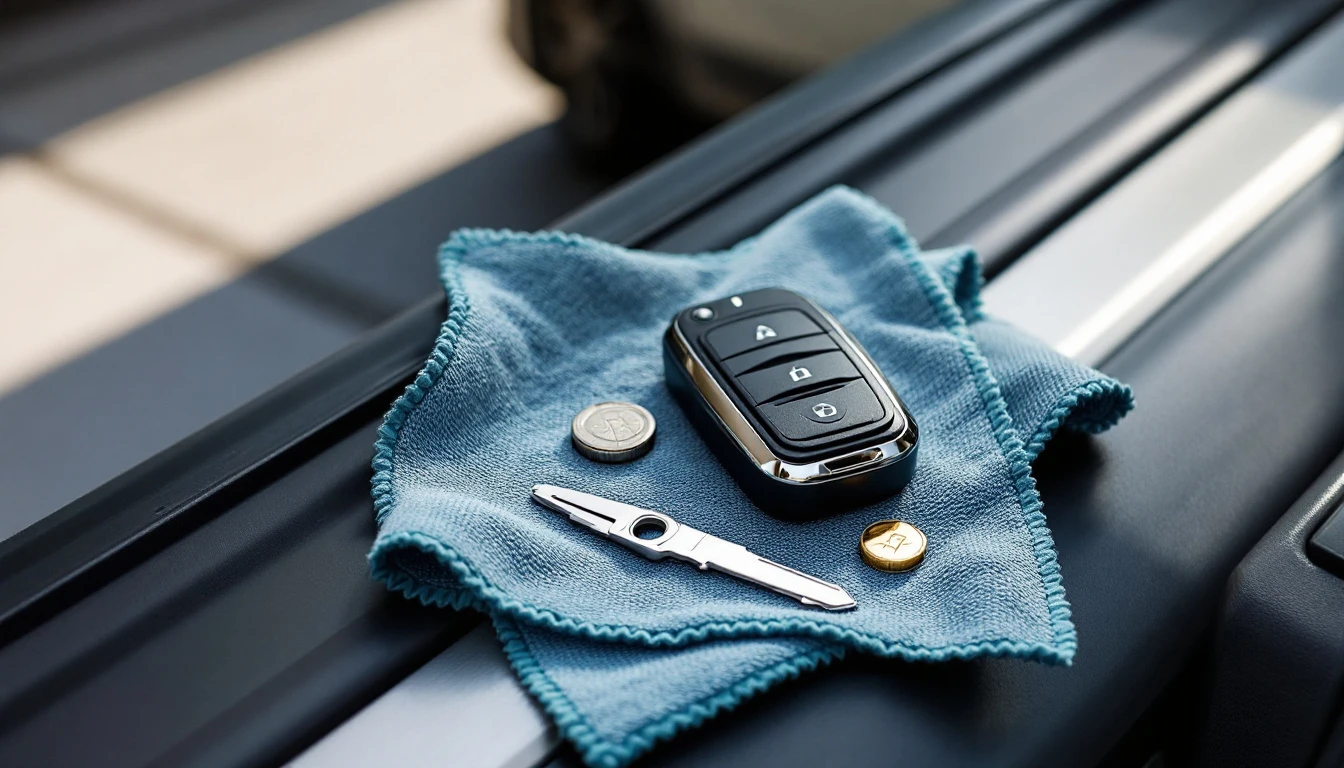
"My key stopped working and I don't know why." This is the one that genuinely needs diagnosis. A fob that has quit could be a dead battery, a damaged fob, an antenna or receiver issue, or a module that has lost its configuration — and those have wildly different repairs. Chrysler-family smart keys have their own behaviors that we walked through in detail in our Chrysler 300 smart key replacement guide, and the general logic of separating a key fault from an immobilizer fault is laid out in our Mitsubishi Outlander and Eclipse Cross immobilizer programming article — different brand, identical reasoning.
What actually happens when a technician arrives
The sequence is consistent and there is nothing mysterious about it.
First, ownership is verified. Photo ID for whoever meets the technician, plus registration, title, or an insurance card in a matching name. On a company vehicle, add a work order or a short authorization letter if the person on-site is not the registered owner. This step is non-negotiable and it is the reason the whole credentialing system exists.
Second, the vehicle is identified precisely from the VIN — model, build configuration, and what security architecture it actually carries, rather than what the model year suggests it should.
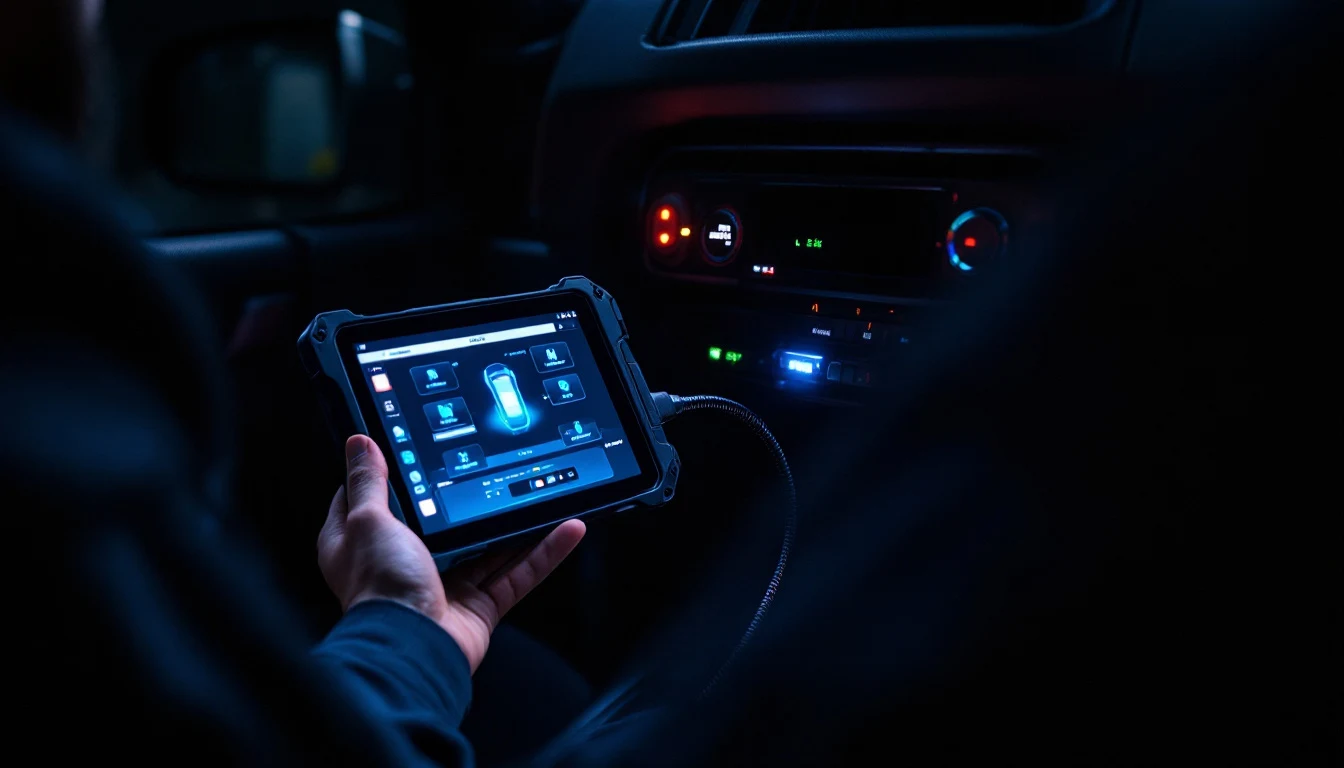
Third, the technician establishes an authorized session and reads the vehicle. This is where a lot of assumptions get corrected. Plenty of jobs that were described on the phone as "needs a module" turn out to need a key, and a few described as "needs a key" turn out to be something else.
Fourth, the actual work: key cutting and enrollment, or module configuration, depending on what the read showed. Then verification — every key tested, every function confirmed, remote and start behavior checked before anyone signs anything.
All of this happens where the vehicle is parked. Our ECU and module programming service is mobile, as is our car key replacement service, which matters when the vehicle in question is a truck that will not start.
Where we draw the line, publicly
Two things we will not do, and you should treat any shop that offers them as a warning sign.
We will not describe or perform anything that circumvents the gateway rather than passing through it properly. The whole point of the module is that it distinguishes authorized work from unauthorized work, and a shop that treats that distinction as an obstacle is telling you something about how they handle your vehicle's security.
We will not quote module-level work sight-unseen. The Federal Trade Commission's consumer guidance on auto repair (consumer.ftc.gov) is blunt about the value of an estimate based on an actual inspection rather than a guess, and module work is the clearest possible case. Anyone who confidently prices a module job over the phone for a vehicle they have never seen is either guessing or planning to revise it later.
For the newest model years and the highest-security trims, the honest position is the same one we take everywhere: capability changes faster than any article can track, and a technician confirms your exact setup before promising an outcome.
Fort Worth coverage
We are mobile-only, based in 76102, and running 24/7. Gateway-equipped Ram trucks, Jeeps, Chargers and Pacificas come to us from every corner of the Fort Worth service area — contractor lots up near Alliance Town Center, residential streets around the Cultural District, and office parking all over downtown. Because the work is done at the vehicle, a truck that will not start does not need to become a tow bill first. If you would rather set it up in advance than deal with it at 2 a.m., our contact page has the details.
Frequently Asked Questions
What is the Security Gateway on my 2018 or newer Ram?
It is a module that sits between the diagnostic port and the vehicle's internal networks. Reading information is largely unaffected, but writing changes — which is what key programming and module configuration require — needs an authorized, credentialed session. It is an anti-theft measure added across most of the FCA and Stellantis lineup starting around the 2018 model year.
Does this mean only the dealer can program my key?
No. Independent locksmiths and shops with proper authorized access work on these vehicles routinely. It does mean the pool of shops that can legitimately do it is smaller, so the right question to ask any provider is whether they have authorized access for 2018-and-newer FCA vehicles.
Does the Security Gateway make key replacement more expensive?
It mainly adds access and labor time rather than hardware cost. Key jobs on these vehicles still fall within the normal $150 to $850 range depending on key type, with all-keys-lost sitting toward the top. Module-level work is quoted after diagnosis rather than over the phone.
Why won't you quote module programming over the phone?
Because the correct answer depends entirely on what the vehicle reports. The same symptom can trace to a key, a fob, an antenna, a connection, or a module, and those are very different repairs. A technician diagnoses first and quotes the actual work before starting.
My fob stopped working. Is that a gateway problem?
Usually not. A fob that quit is most often a battery, a damaged fob, or a reception issue, and those are inexpensive to check. The gateway only becomes relevant once something has to be written to the vehicle, which is the programming step, not the diagnosis.
What do I need to have ready before a technician arrives?
The VIN, photo ID for whoever meets the technician, and proof of ownership such as registration, title, or an insurance card in the matching name. On a company vehicle, add a work order or authorization letter. Bring every key you have, including ones that no longer work.
Got a 2018 or newer Ram, Dodge, Jeep or Chrysler that needs a key or module looked at? Call Locksmith Fort Worth at (817) 674-3595 any hour. We are mobile-only, we come to the vehicle anywhere in the Fort Worth area, and we diagnose before we quote — never the other way around. Email contact@locksmithfortworth.net for non-urgent scheduling.
Written by the technicians at Locksmith Fort Worth, a mobile automotive locksmith service based in 76102 and serving the Fort Worth area 24/7.