My Car Only Starts When I Hold the Fob Against the Start Button (Fort Worth)

Quick answer: If your car starts only when the fob physically touches the start button, the vehicle is using its built-in backup mode — it cannot hear the fob by radio, so it is reading the chip inside it at close range instead. The cause is almost always a dead fob battery ($5 or less), and less often a failing fob or a vehicle-side antenna. Diagnosis in Fort Worth runs $75–$150; a replacement smart key runs $250–$500. Call (817) 674-3595 before you buy a fob you may not need.
As of September 2026, this is one of the most useful symptoms a car can give you, and almost nobody realizes it.
Here is what happened. Your push-button car stopped starting normally. At some point — either by accident or because you read it somewhere — you held the fob right up against the start button, or into a slot in the console, and the car fired up. Now that is the only way it starts.
That is not a workaround you discovered. That is a designed feature doing exactly what it was built for. And the fact that it works tells you a great deal about what is wrong, which is why this is worth reading before you spend money.
What the backup mode actually is
Your smart key does two entirely separate jobs.
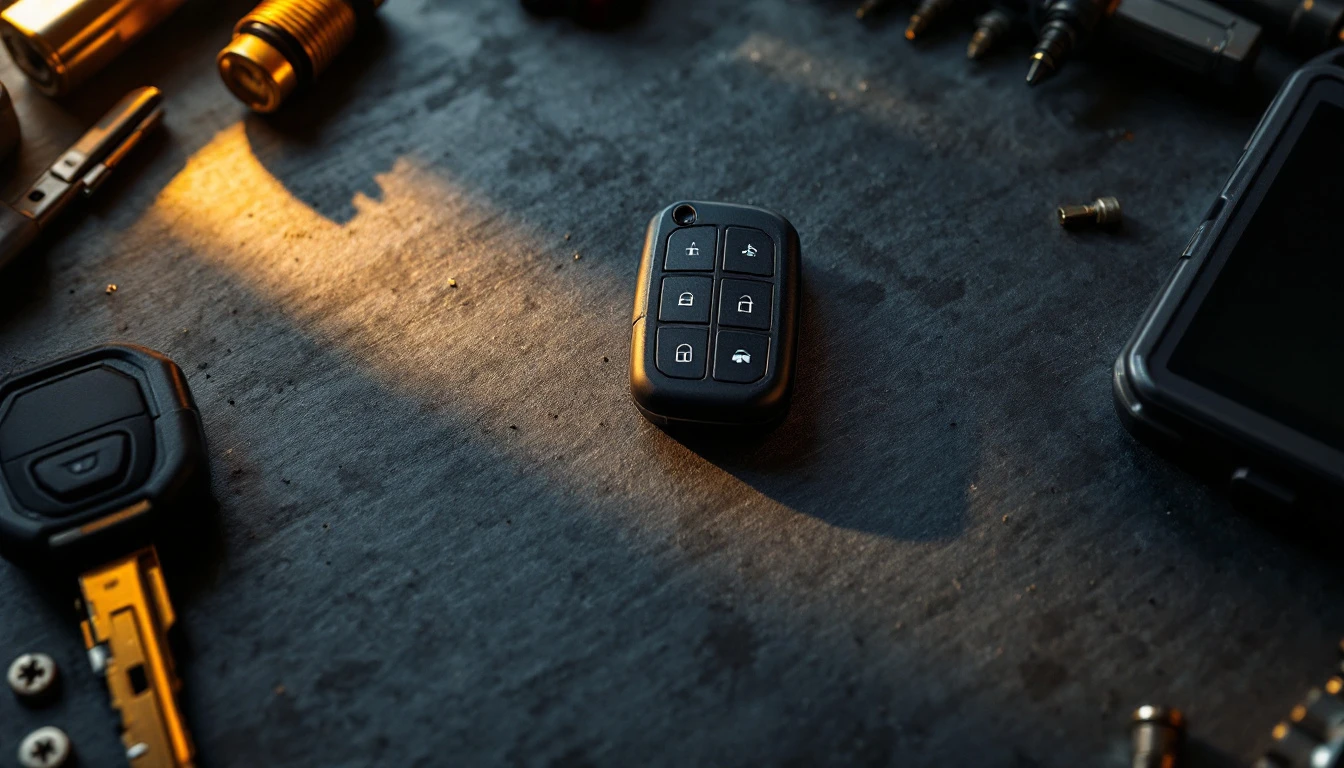
Job one is radio. The fob broadcasts a low-power signal that the car listens for. This is what lets you walk up with the key in your pocket, touch the door handle, sit down and press start without taking the key out. This side of the fob runs on the little coin battery inside it.
Job two is the chip. Buried in every smart key is a passive transponder — the same basic technology as an old-fashioned chip key. It has no battery of its own. It is powered by the car, by induction, when it is held within an inch or two of a specific spot. That spot is usually the start button itself, sometimes a marked area on the steering column or a slot in the center console or armrest.
Manufacturers built job two in precisely because job one runs on a battery that will eventually die, and being stranded because of a coin cell would be unacceptable. Your owner's manual almost certainly documents the procedure.
So when the car starts only on contact, you have learned something specific and valuable: the chip and the immobilizer are both working fine. The car recognizes your key as legitimate. What has failed is the ability of the key and car to talk to each other at a distance.
That narrows the problem enormously, and it rules out the expensive possibilities.
The three causes, in order of likelihood
1. Dead or dying fob battery — by far the most common
The coin cell in a smart key typically lasts two to four years. It does not fail cleanly. It fades, which is why this symptom tends to arrive gradually: first the car only responds when you are close, then only when the fob is in your hand rather than your pocket, then not at all until you touch it to the button.
Cold accelerates it. A battery that was marginal in August will strand you the first genuinely cold morning in Fort Worth, which is why we take a run of these calls every time the temperature drops.
Cost to fix: the price of a CR2032 or CR2025, generally under five dollars. Most fobs open with a coin or a small flathead along the seam, and many have a hidden emergency blade key that doubles as the pry tool. If you are not comfortable opening it, any locksmith or parts counter will do it in a minute.
This is the first thing to try and it costs nothing to rule out. Replace the battery before you buy anything else.
2. A failing fob
If a fresh battery does not restore normal operation, the fob's radio side may have failed. This happens for boring physical reasons: it went through the wash, it lived in a pocket for eight years, it was dropped on concrete enough times, moisture got into the board, or a solder joint cracked from being sat on.
The tell is that the chip still works — that is why the contact start succeeds — while the transmitter does not. The passive chip is a far simpler and more rugged component than the radio, so it routinely outlives it.
Cost to fix: a replacement smart key, $250–$500 depending on make and model, with European brands like Mercedes and BMW running $400–$850.
The good news here is important: because you still have a functioning key, this is a spare-key job, not an all-keys-lost job. The vehicle has something to reference, which keeps you in the cheaper column. Do not let this drag on until the fob stops working entirely and you lose that advantage.
3. A vehicle-side antenna or receiver problem
Least common, and the only one where the fob is not at fault. The car's receiver or one of its interior antennas may have failed or come loose. Occasionally the issue is interference rather than failure — a strong RF source, or a fob stored right next to a phone or another fob.
The diagnostic that separates this from cause two is simple and free: try your other key. If your second fob behaves normally, the car is fine and fob number one is the problem. If both fobs require contact starting, the problem is on the vehicle side.
That single test resolves most of these calls, which is why we ask it on the phone before dispatching anyone.
Cost to fix: diagnosis $75–$150, with the repair depending entirely on what is found. This can extend into module or antenna work — our guide on when a car needs module programming and not just a key covers where that line sits.
The three causes side by side
| Cause | How you confirm it | Typical Fort Worth cost (2026) |
|---|---|---|
| Dead or dying fob battery | Fresh coin cell restores normal range | Under $5 |
| Failed fob transmitter | New battery changes nothing; second key works normally | $250–$500 replacement key ($400–$850 Mercedes, BMW) |
| Vehicle receiver or antenna | Both fobs require contact starting | $75–$150 diagnosis, repair depends on findings |
The order matters. Working down that table costs almost nothing until the last row, and most people never get past the first.
What this symptom rules out
It is worth being explicit about the money you are not about to spend.
It is not all keys lost. You have a working key. The most expensive category of key work does not apply to you.
It is not the immobilizer. The car accepted your key. The anti-theft system is doing its job correctly. If it were not, you would see a security light and no start at all — a different symptom covered in our key fob unlocks but the car will not start guide.
It is not the ignition. There is no lock cylinder to wear out on a push-button car.
It is not the vehicle battery. A weak car battery causes slow cranking, dim lights and dash warnings. It does not selectively break the fob's radio link while leaving the chip readable. Note the reverse case though: if your car battery recently died or was replaced, some vehicles need the fob re-synchronized afterward — see our dead battery and key recognition guide.
The five-minute check, in order
1. Replace the fob battery. Cheapest possible fix and the most likely cause. Note the number printed on the old cell and match it.
2. Try your other key. If it works normally, the first fob failed. If it does not, the car is the problem.
3. Move it away from your phone. Phones, tablets, laptop bags and a second fob can all interfere. Hold the fob on its own, away from everything else.
4. Check where you are parked. Underground garages and spots near large transmitters can weaken the link. If it starts normally out in the open, that is worth knowing.
5. Note whether it has been getting worse. A gradual decline points strongly at a battery. A sudden total failure points at the fob itself or the car.
If you have done all five and it still only starts on contact, that is the point to call someone. Our push-to-start smart key page covers what replacement involves.
Is it safe to keep driving like this?
Mostly yes, with two real caveats.
The first: on many vehicles the backup contact procedure is required for starting, but once running the car will continue running normally, and you may not be able to restart it after shutting off if conditions change. Do not rely on it for a long trip until you know how your specific car behaves.
The second, and the one that actually costs people money: this is a warning, not a stable state. The fob is on its way out. If you ignore it until the chip side fails too, you go from a $250–$500 spare-key job to an all-keys-lost job with a towing conversation attached. Fixing it while you still have a working key is meaningfully cheaper.
Make-specific behavior varies. Ford owners will recognize this pattern from our Ford smart key not detected guide; Hyundai owners should read our Hyundai smart key will not start guide; BMW's Comfort Access behaves slightly differently and is covered in our BMW Comfort Access fob guide. If your car is a Nissan and nothing above applies, our Altima and Maxima all-keys-lost guide covers the harder end of the scale.
Frequently Asked Questions
Why does my car start when I hold the key against the start button?
Because every smart key contains a passive transponder chip that the car can read at very close range without any battery power. Manufacturers built this in as a backup for exactly this situation. It working means your key is legitimate and the immobilizer is fine — only the radio link has failed.
Is my key fob dead?
Probably its battery is, not the fob. Replace the coin cell first; it costs a few dollars and fixes most cases. If a fresh battery does not restore normal operation, the fob's transmitter has likely failed and a replacement is $250–$500 for most vehicles.
Can I keep driving the car like this?
Short term, generally yes, but treat it as a warning. You still have a working key, which keeps a replacement in the cheaper spare-key category. If you wait until the key fails entirely, the same job becomes an all-keys-lost job and costs more.
How do I know if it is the fob or the car?
Try your second key. If the second fob works normally at a distance, the first fob is the problem. If both fobs require contact starting, the issue is on the vehicle side — a receiver or antenna — and needs diagnosis, typically $75–$150.
Does the start button contact trick work on every car?
Most push-button vehicles have some version of it, but the location varies: the start button itself, a marked spot on the steering column, or a slot in the console or armrest. Your owner's manual documents yours.
Will replacing the fob battery erase its programming?
No. The programming lives in the chip and in the vehicle's memory, not in the battery. Changing the battery does not un-pair your key. A small number of vehicles want a brief re-sync afterward, which takes seconds.
References
- NHTSA — vehicle safety and equipment information
- NASTF — vehicle security information for the independent repair trade
- FCC — radio frequency devices and interference guidance
- ALOA Security Professionals Association
- FTC — consumer protection and auto repair guidance
- Ready.gov — vehicle emergency preparedness
Car in Fort Worth that only starts when the fob touches the button? Change the battery first. If that does not fix it, call (817) 674-3595 — we will diagnose it at the car and tell you honestly whether you need a new key.