BMW 3 Series & 5 Series Steering Lock and Ignition Faults in Fort Worth (2026)

Quick answer: Ignition-side work on a BMW 3 Series or 5 Series in Fort Worth generally sits between $150 and $550, but the first job is establishing whether you have an ignition problem at all. A steering wheel that stays locked, a steering lock warning on the dash, or a start button that produces nothing is very often not a key fault — and buying a key will not fix it. A technician diagnoses at the vehicle first. Call (817) 674-3595.
As of August 2026, this is the BMW scenario that costs owners the most money for the least reason. The car will not start. The steering wheel is locked solid. Maybe there is a message about the steering lock, maybe the start button just refuses to acknowledge a press. The owner concludes the key has died, orders one, waits, has it programmed, and the car sits exactly as it sat before — because the key was never the problem.
We would rather you not spend that money. This guide covers what is actually happening in these two model lines, how to separate a genuine key fault from a steering lock fault, and — the part most articles skip — where this work stops being a locksmith job and becomes somebody else's.
Two eras, two completely different failures
The 3 Series and the 5 Series have both been produced across a long span, and the "won't start, wheel locked" complaint means something different depending on which side of the technology line your car sits on.
The mechanical era
Older 3 and 5 Series cars use a conventional key in a conventional ignition lock. Turn the key, the cylinder rotates, and a mechanical steering lock releases as part of that motion. The immobilizer layer on these cars — the EWS generations — decides separately whether the key is authorized to allow the engine to run.
On these vehicles a locked wheel that will not release is usually mechanical. A worn cylinder, a worn key, a lock mechanism that has jammed, or a steering lock pin that has bound up against pressure on the wheel. This is familiar territory and it responds to familiar repairs: a key cut to code, a cylinder rebuild, or a cylinder replacement.
The classic self-inflicted version is worth naming. If you parked with the front wheels turned hard against a curb, the steering lock pin is now under load and will resist releasing. Rocking the steering wheel gently side to side while attempting the start relieves that pressure. That trick has ended a lot of tow calls before they started, and it costs nothing to try.
The electronic era
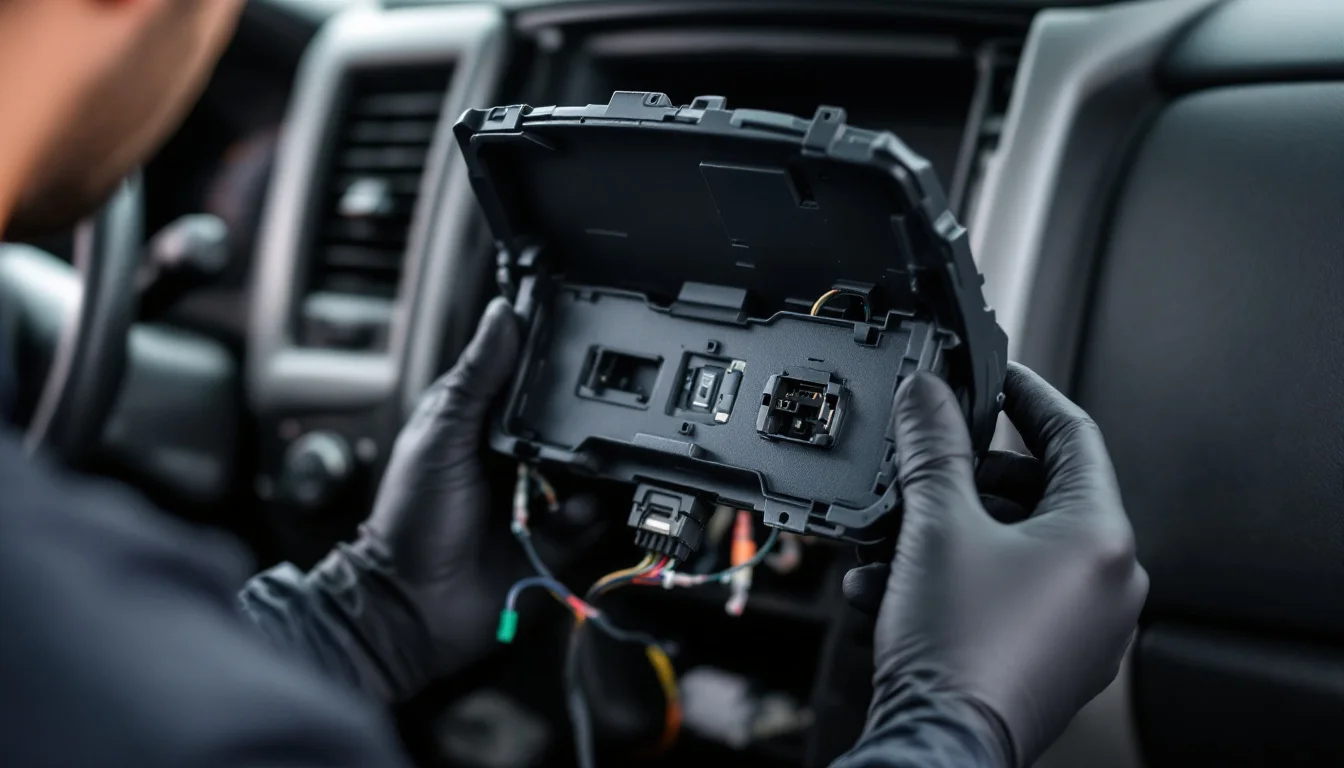
Later 3 and 5 Series cars replaced that arrangement. There is no mechanical rotation releasing a pin — instead an electronically controlled steering lock actuator engages and disengages on command, coordinated with the car's access and start system. This is what people mean when they say ELV.
When that actuator or its control path fails, the car behaves alarmingly. The wheel stays locked. A steering lock message appears. The start button may do nothing at all, because the car will not authorize a start sequence while it believes the steering column is still secured. Everything about the presentation feels like a dead key, and none of it is.
Our BMW 3 Series EWS and CAS3 key replacement guide covers the genuinely key-related side of these same generations, which is useful reading if you are trying to work out which bucket you are in.
Telling the two apart before you spend
Here is the comparison that matters. Find the row that matches your car's behaviour.
| What the car is doing | Older mechanical-ignition cars | Later electronic steering lock cars | Who should handle it |
|---|---|---|---|
| Wheel locked, key or button does nothing, wheels parked against a curb | Steering lock pin under load | Steering lock pin under load | Try rocking the wheel first, costs nothing |
| Key will not rotate in the lock at all | Worn key or worn lock cylinder | Not applicable, no cylinder | Locksmith, $150–$450 |
| Key rotates but the car is electrically dead in that position | Ignition switch behind the cylinder | Not applicable | Locksmith or mechanic, $200–$550 |
| Engine cranks strongly, never fires, theft indicator lit | Key authorization or immobilizer | Key authorization or immobilizer | Locksmith, key and immobilizer lane |
| Dash shows a steering lock message, wheel stays locked | Rare on this era | Steering lock actuator or its control path | Diagnosis first, often outside locksmith scope |
| Start button unresponsive, no crank, no theft light | Not applicable | Steering lock, access system, or power supply | Diagnosis first, then referral if needed |
Ignition figures are ranges confirmed after diagnosis. Where the table says diagnosis first, that is not hedging — it is the only honest answer for those two rows.
Why owners keep buying keys they do not need
Three things conspire.
The symptom is at the start button, so people blame the thing they press. It is a reasonable instinct and it is usually wrong on these cars.
Key faults and steering lock faults share a headline. Both produce "my BMW will not start." A genuinely dead or unauthorized key and a stuck steering lock look identical from the driver's seat unless you know what to look at.
Somebody online said it was the key. Forum diagnosis is confident and cheap. It is also generic, and BMW model years vary enormously in how their access and start systems behave.
Here is the useful discriminator. A key problem and an immobilizer problem generally let the engine crank. The starter turns, the engine spins, and it never catches — usually with a theft indicator making itself known. A steering lock problem generally prevents the car from even attempting that. No crank, no attempt, and often a specific message about the steering.
If your fob is genuinely misbehaving — intermittent range, unlock working but start not, the car sometimes recognising it and sometimes not — that is a different and real issue, covered in our BMW Comfort Access key fob not working guide.
What diagnosis looks like at your car
You call (817) 674-3595 and describe three things: the model and year, whether the engine cranks, and whether there is a steering lock message on the dash. Those three facts sort most cars into the right lane before anyone leaves the shop.
A technician meets the vehicle wherever it stopped — a driveway, a parking structure, a street near Sundance Square, a garage where somebody already tried the obvious things. We verify photo ID and proof of ownership, then work from cheapest to most expensive: check battery voltage, try relieving steering pressure, examine the key and its condition, and connect to the diagnostic port to read what the car itself believes is wrong.
That last step is decisive. The car usually knows. Reading it is how we distinguish a genuine steering lock actuator fault from a low battery, a wiring problem, an access system fault, or a key that has actually stopped being recognised. Guessing at any of that with parts is how people spend $600 fixing a $0 problem.
You get a firm price before work begins on anything we can complete. Our ignition repair service covers the mechanical lane, and the Federal Trade Commission's auto repair guidance (consumer.ftc.gov) is a good standard to hold any provider to on price commitments.
For comparison, the same symptom-sorting logic on a much simpler vehicle is laid out in our Toyota Camry and Corolla ignition repair guide — the BMW version is harder mostly because more of the failure is electronic.
The honest boundary, stated plainly
This is the section we would want to read if we were the customer.
A confirmed electronic steering lock actuator replacement may not be a locksmith job. It is a component in the steering column assembly, and on many of these cars replacing it is mechanical work requiring column access, and in some cases dealer-level programming afterward to bring the new unit into the car's security arrangement. We will tell you that after diagnosis rather than opening your column and discovering it together. Where that is the answer, you will get a clear explanation of what we found so you are not starting from zero at the next shop.
We will not sell you a key to fix a steering lock. If the diagnosis says the key is fine, we say the key is fine. That is the whole point of this article.
Battery health has to be ruled out first. A weak or dying battery produces bizarre behaviour on these cars, including refusals to start that mimic far more expensive faults. It is the first thing to check and the cheapest thing to fix.
No towing service is offered. We are mobile-only and automotive-only. If the outcome is that your BMW needs a shop, you will need a tow arranged separately.
Proof of ownership is required for any security-relevant work. Photo ID plus registration, title, or an insurance card matching the car. Texas locksmiths operate under the DPS Private Security Program (dps.texas.gov), and the vetting framework behind legitimate access to vehicle security data is maintained by the National Automotive Service Task Force (nastf.org). NHTSA (nhtsa.gov) documents why electronic immobilization is deliberately hard to work around, ALOA (aloa.org) publishes guidance on choosing a locksmith, and TxDMV (txdmv.gov) is the place for Texas title and registration questions.
Frequently Asked Questions
My BMW steering wheel is locked and it will not start. Is my key dead?
Probably not. A key or immobilizer fault normally still lets the engine crank without catching, usually with a theft indicator lit. A locked wheel with no crank at all, especially alongside a steering lock message, points at the steering lock rather than the key.
What should I try before calling anyone?
Rock the steering wheel gently left and right while attempting to start. If the car was parked with the front wheels turned against a curb, the locking pin is under load and that pressure alone can prevent release. It costs nothing and resolves a surprising number of these calls.
How much does BMW ignition work cost in Fort Worth?
Ignition repair on these models generally runs $150 to $550 depending on whether the fault is a worn key, a lock cylinder, or the switch behind it. The exact price is confirmed after a technician diagnoses at the vehicle, because the same complaint has several very different causes.
Can a locksmith replace an electronic steering lock actuator?
Often not. On many of these cars that component sits within the steering column assembly and replacing it is mechanical work, sometimes requiring dealer-level programming afterward. We diagnose first and tell you plainly if the answer is that your car needs a shop rather than a locksmith.
Why do the older and newer models behave so differently?
Because the mechanism changed. Older cars release a mechanical steering lock through the physical rotation of the ignition cylinder, while later cars use an electronically commanded actuator tied to the start system. The same customer complaint therefore has completely different underlying causes across the two eras.
Could a weak battery cause all of this?
Yes, and it is worth ruling out immediately. Low or unstable voltage produces strange refusals to start on these cars that convincingly imitate expensive electronic faults. Checking battery health first is the cheapest step in the entire diagnostic sequence.
References
- NHTSA — National Highway Traffic Safety Administration
- NASTF — National Automotive Service Task Force
- FTC Consumer Advice — auto repair and service
- Texas DPS — Private Security Program
- ALOA — Associated Locksmiths of America
- TxDMV — Texas Department of Motor Vehicles
- SAE International — automotive engineering standards
If your 3 Series or 5 Series is sitting with a locked wheel and a dead start button, call Locksmith Fort Worth at (817) 674-3595 before you order a key. We diagnose at the vehicle, tell you exactly what we find, and say so honestly when the answer is that this one belongs at a shop. Mobile-only, 24/7, throughout the Fort Worth area.
Written by the technicians at Locksmith Fort Worth, a mobile automotive locksmith service based in 76102 and serving the Fort Worth area 24/7.