Ford Transit & E-Series Van Key Replacement in Fort Worth: The Work-Van Guide (2026)
Quick answer: In Fort Worth in 2026, replacing a key for a Ford Transit, Transit Connect, or E-Series/Econoline van typically runs $150–$850 all-in from a mobile locksmith. An older Econoline transponder key sits near the bottom of that range, a Transit remote-head key lands in the middle, and a proximity fob or an all-keys-lost job on a newer Transit reaches the top. We come to the job site, so a loaded van never has to be towed. Call (817) 674-3595 with your VIN for a firm number.
As of July 2026, work vans are the vehicles we get called out to most urgently, because a van that will not start is not just a stranded driver — it is a crew standing around, a customer waiting, and a day of billable work evaporating. Ford dominates that category in Tarrant County. Between the Transit, the smaller Transit Connect, and the long-running E-Series/Econoline that still hauls tools all over the Metroplex, ford car key replacement on a commercial van is a weekly call for us. The good news is that nearly every one of these vans can be keyed on-site, in the parking lot or at the curb, without a tow and without a dealership appointment.
This guide covers the key generations Ford used across its van lineup, what each costs to replace in Fort Worth, the specific headaches that come with fleet vehicles, what you need to have ready, and how the job actually runs when a technician arrives.
The key generations across Ford's van lineup
Ford's vans span an unusually wide technology gap. A 2004 Econoline and a 2024 Transit are separated by three distinct key architectures, and the one your van uses sets the price far more than the badge does.
E-Series and Econoline: blade and transponder keys
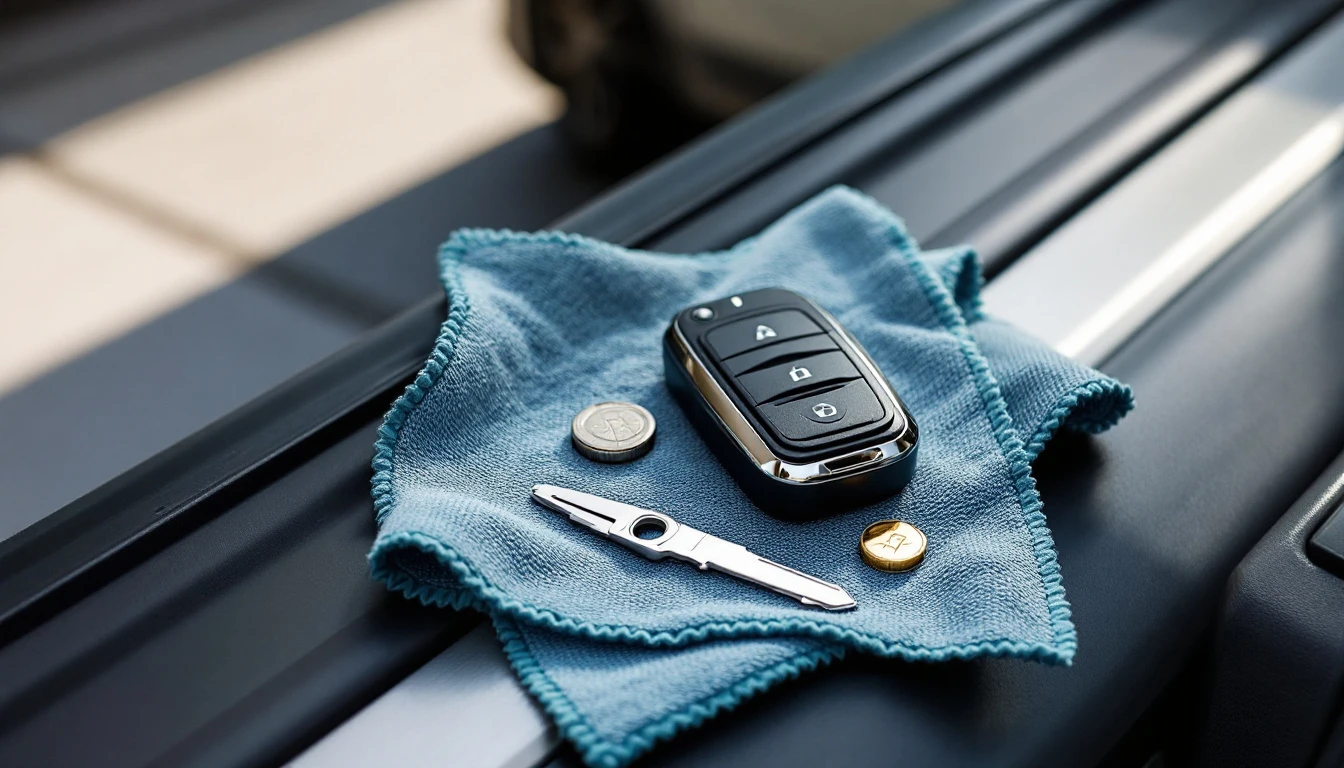
The E-Series (badged Econoline through 2014, then E-Series for cutaway and chassis models) is the old-school end of the lineup. Vans from the mid-1990s onward use a transponder key — a cut metal blade with a chip embedded in the head that talks to Ford's PATS anti-theft system. Some fleet-spec Econolines were ordered with a separate keyless entry remote, and a handful of very early or very stripped units use a plain non-chipped blade with no electronics at all.
These are the least expensive keys in the Ford family to replace. The blank is cheap and the programming session through the OBD-II port is short. If your Econoline cranks strongly but will not fire and the dash theft light is flashing, that is PATS refusing to authorize the key — a symptom we break down in our Ford PATS anti-theft light guide.
Transit Connect: flip keys and remote-head keys
The compact Transit Connect arrived in the US market in 2010 and moved through a couple of key styles. Early ones used a straightforward transponder key. Later ones adopted an integrated remote-head key — the blade, the chip, and the lock/unlock buttons all in one housing — and some trims got a switchblade-style flip key. Certain later trims moved to push-button start with a proximity fob. The pricing step is real: you are paying for remote electronics on top of the key itself, so a remote-head key costs meaningfully more than a bare transponder key for the same van.
Full-size Transit: remote-head keys and proximity fobs
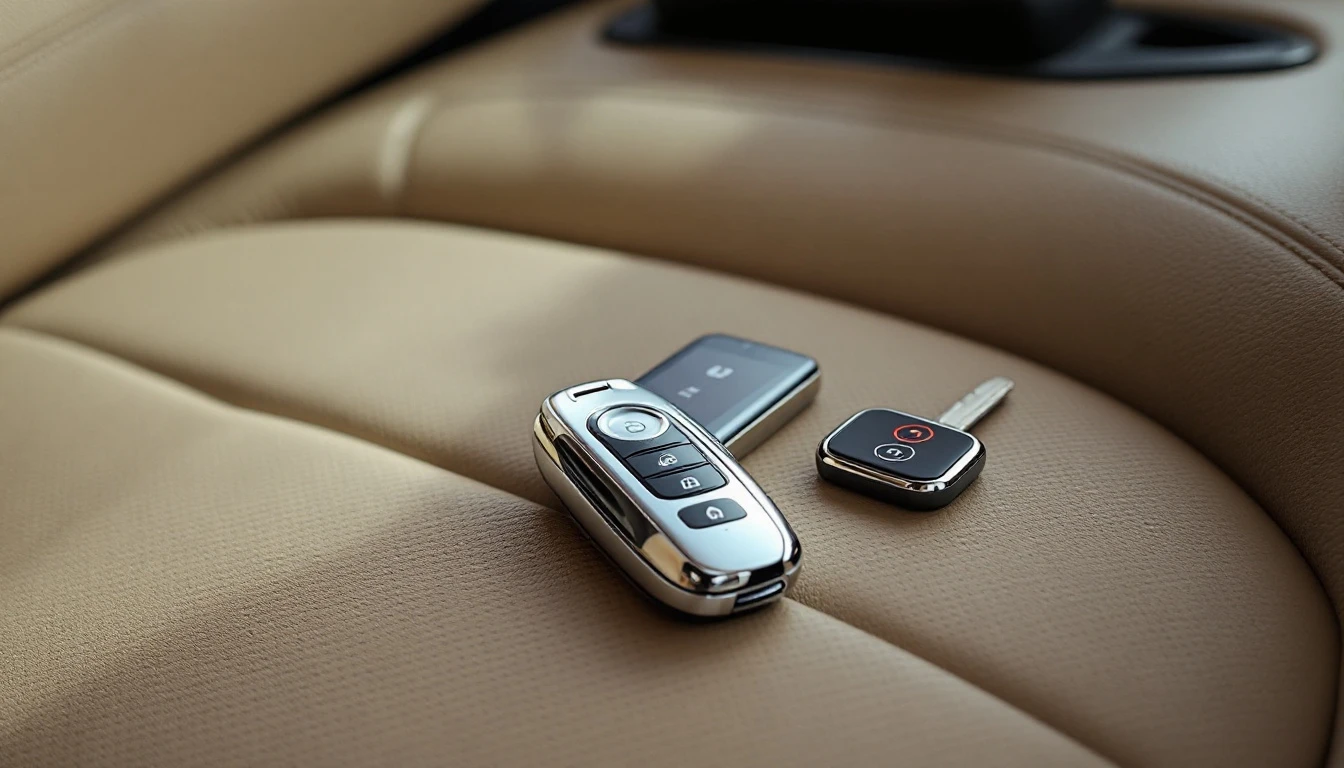
The full-size Transit replaced the Econoline as Ford's mainstream cargo and passenger van in 2015. Base cargo trims typically shipped with a remote-head key; higher trims and later model years increasingly use a proximity smart fob with push-button start, no ignition cylinder, and an emergency blade hidden inside the fob for the door.
Proximity fobs carry the most electronics and sit at the top of the price band. They also introduce a failure mode that is not really a key failure — a fob the van cannot detect, usually a dead battery or an antenna issue. If your van shows a "key not detected" message rather than refusing to crank, read our walkthrough on when a Ford smart key is not detected before assuming you need a new fob.
What Ford car key replacement costs for a work van in Fort Worth (2026)
Everything below is the all-in mobile price: key hardware, cutting, and programming performed at your location anywhere in the Fort Worth area. Your exact figure depends on year, model, trim, and whether any working key still exists.
| Van and key type | Typical vehicles | Fort Worth locksmith price (2026) | Typical on-site time |
|---|---|---|---|
| Transponder blade key | 1998–2014 Econoline, early Transit Connect | $150–$280 | 30–45 min |
| Remote-head or flip key | 2013+ Transit Connect, 2015+ Transit cargo trims | $220–$430 | 40–60 min |
| Proximity smart fob | Later Transit and Transit Connect push-button trims | $330–$650 | 45–90 min |
| Any van, all keys lost | Transit, Transit Connect, E-Series with no working key | $350–$850 | 60–120 min |
| Additional matched key, same visit | Any of the above, cut and programmed together | $95–$260 each | Adds 10–25 min |
Two things drive the spread. First, all-keys-lost always costs more than adding a spare. With no working key the technician has to pull the key code from the VIN, cut from code rather than duplicate, and put the immobilizer through a full programming session. That process is walked through step by step in our all-keys-lost VIN-to-new-key guide. Second, keys made together on one visit cost far less per key than keys made on separate visits, because the diagnostic and setup time is shared. For a fleet, that single fact is worth planning around.
The fleet reality: one key floating between five drivers
Almost every commercial van call we run has the same backstory. The van was delivered with two keys. One went into an office drawer and disappeared during a move or a staff change. The other has been in daily circulation for years, passed between drivers, and worn down to a blade that barely turns. Then it gets lost or snaps, and the whole crew is stuck.
That situation is expensive in a way the key price does not capture. If a plumbing or HVAC van sits dead for half a day, the lost revenue routinely exceeds the entire cost of keying the van. The fix is unglamorous: keep at least one spare per van, stored off the vehicle, and know which key belongs to which VIN before you need it.
A few practices that consistently save our fleet customers money:
- Key every van in the fleet on one visit. Batch jobs cut the per-van cost significantly because setup time is shared.
- Tag keys by VIN, not by driver. Drivers change; VINs do not.
- Store one spare per van off-site. In the shop, in a locked office cabinet, anywhere that is not inside the van it opens. The DHS Ready campaign (ready.gov) makes the same point about household spares, and it applies double to a business that depends on rolling assets.
- Replace the worn daily-driver key before it snaps. A key that already sticks is telling you something. Our broken key extraction guide exists because that warning gets ignored a lot.
Our car key replacement service covers all of this, and multi-van scheduling is routine for us — a technician can work through several vehicles in one stop at a yard near Alliance Town Center or a contractor lot along the north I-35W corridor.
VIN and proof of ownership on a company vehicle
Legitimate locksmith access to factory key codes runs through the National Automotive Service Task Force's Vehicle Security Professional program (nastf.org), which requires vetting and a full audit trail. Practically, that means we verify the person asking for a key is entitled to one. On a personal vehicle that is simple. On a company van it takes one extra step.
Have ready:
- The VIN. On a Transit or Transit Connect it is on the driver-side door jamb sticker and visible through the base of the windshield. On an Econoline, check the door jamb and the windshield plate.
- Photo ID for the person on-site. Driver's license or state ID.
- Proof of ownership or authority. Registration, title, or an insurance card in the company name — plus, if the person meeting the technician is not the registered owner or an officer, a work order or short authorization letter on company letterhead. A texted photo of the letter is fine.
- Any surviving key, even a broken or non-working one. It can shorten the job and sometimes lower the price.
None of that is red tape for its own sake. The Federal Trade Commission (consumer.ftc.gov) and the FBI (fbi.gov) have both documented how vehicle key fraud works, and verification is exactly what keeps a stranger from having a key cut to your van while you are on a job. Texas locksmiths are regulated under the Texas DPS Private Security Program (dps.texas.gov), and you are entitled to ask about licensing before anyone touches the vehicle.
Why mobile beats towing a loaded van
Towing a work van is not the same as towing a sedan. A cargo van full of copper, compressors, ladders, or tooling is heavy, awkward, and valuable. Once it goes on a hook you are paying for the tow, you are exposing the contents to a night in a dealer lot, and you are almost certainly not getting the van back the same day.
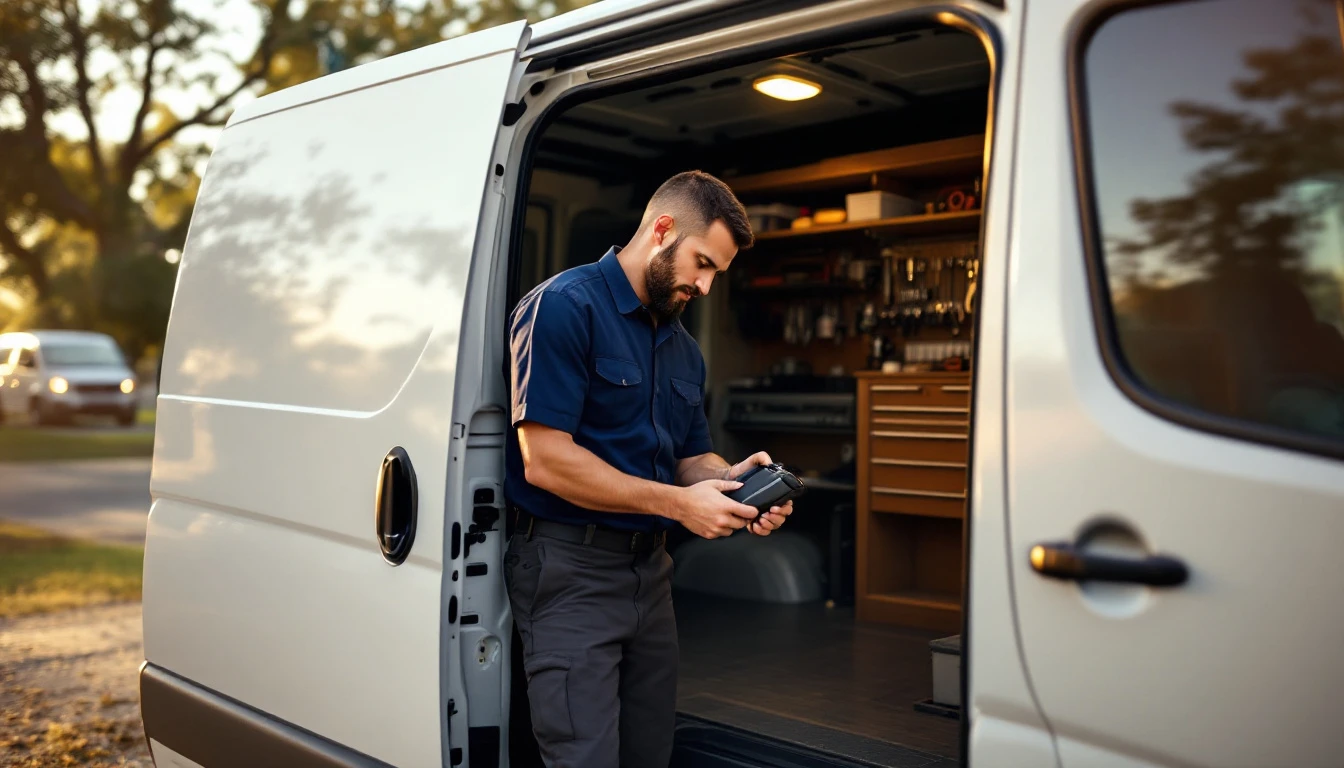
Mobile service inverts that. The technician drives to the van, verifies ownership, cuts the blade on-site (by code when no key survives, by duplication when one does), connects to the OBD-II port, and enrolls the new key into the van's immobilizer. Proximity fobs follow the same pattern through the keyless module. You start the van, test the remote, and pay when it works. Typical on-site time is 30 to 90 minutes, and we run 24/7 — the 5:30 a.m. call before a crew rolls out is completely normal.
One caution worth repeating: do not buy the fob online first. Many used proximity fobs are permanently locked to their original vehicle, and counterfeit automotive electronics are a documented problem that NHTSA (nhtsa.gov) has warned about broadly. If a customer-supplied fob fails to program, you still owe for the visit, so the savings usually vanish.
When it is not the key
Some van no-start calls are not key problems. If a known-good key suddenly stopped working, if the theft light behaves strangely, or if the van cranks normally with no fuel or spark response, the fault may live in a module rather than in the key. Immobilizer and body-module work is a different service with a different process — a technician diagnoses first, then quotes. Most immobilizer and BCM programming falls in the $150–$400 range; powertrain-side work is always diagnose-then-quote because the answer depends entirely on what the van tells us. Our ECU and module programming service covers that lane, and the deeper explanation lives in our Ford PCM and ECM module programming guide and the more general module vs. key article.
If the key turns but the cylinder feels gritty, sloppy, or refuses to rotate, that is an ignition issue instead — usually $150–$550 depending on the van — and our ignition repair service handles it curbside.
Frequently Asked Questions
How much does a Ford Transit key cost in Fort Worth?
In 2026 a Transit key from a mobile locksmith in Fort Worth typically runs $220 to $430 for a remote-head key and $330 to $650 for a proximity smart fob, all-in with cutting and programming. If no working key remains, expect $350 to $850 because the technician must pull the key code from the VIN and run a full immobilizer session.
Can a locksmith make a key for my E-Series van with no key at all?
Yes. With photo ID and proof that the van belongs to you or your company, a licensed locksmith retrieves the factory key code from the VIN, cuts a new blade from code, and programs the transponder through the OBD-II port at your location. No tow and no dealership visit are required.
Do I need paperwork if the van is registered to my business?
Usually one extra document. Bring the registration or insurance card in the company name, plus a work order or a short authorization letter on company letterhead if the person meeting the technician is not the registered owner. A photo of the letter on a phone is acceptable.
Is it cheaper to key several fleet vans at once?
Yes, noticeably. Diagnostic setup and travel are shared across the visit, so each additional van and each additional matched key costs less than it would as a separate call. Fleet operators who batch their spares typically spend far less than those who key vans one emergency at a time.
How long will my work van be down?
Most van key jobs take 30 to 90 minutes on-site. A spare transponder key for an older Econoline can be finished in about half an hour. An all-keys-lost proximity fob on a newer Transit can take up to two hours including ownership verification and programming.
Should I buy a Transit fob online to save money?
Generally no. Many used proximity fobs are locked to their original vehicle, and counterfeit units frequently fail programming. If a fob you supply fails, you still owe for the service visit, so a correct part supplied by the locksmith is usually cheaper once the risk is priced in.
References
- NHTSA — National Highway Traffic Safety Administration
- NASTF — National Automotive Service Task Force
- FTC Consumer Advice — auto repair and service
- ALOA — Associated Locksmiths of America
- Texas DPS — Private Security Program
- TxDMV — Texas Department of Motor Vehicles
- Ready.gov — DHS preparedness planning
Down a van and losing billable hours? Call Locksmith Fort Worth at (817) 674-3595 any hour, day or night. We are mobile-only, we come to your job site or yard anywhere in the Fort Worth area, and we can key one van or your whole fleet in a single stop. Email us at contact@locksmithfortworth.net for fleet scheduling.
Written by the technicians at Locksmith Fort Worth, a mobile automotive locksmith service based in 76102 and serving the Fort Worth area 24/7.