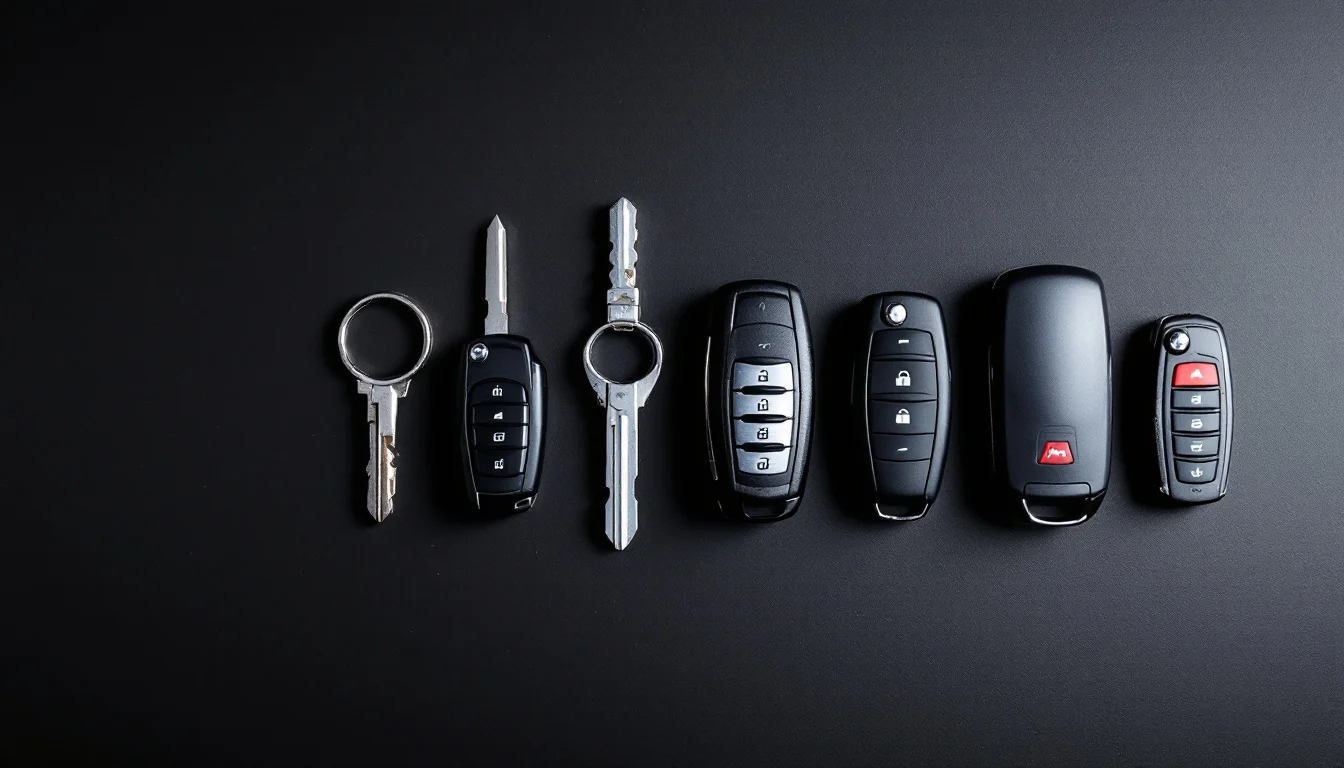
Ford Instrument Cluster Replacement and PATS Key Programming in Fort Worth
Quick answer: On many Ford and Lincoln vehicles, the instrument cluster holds part of the PATS anti-theft system. Replace the cluster and the vehicle may crank and not start, with the theft light flashing, until the cluster and engine computer are matched to each other and the keys are programmed back in. In Fort Worth that programming runs $150–$400 for most vehicles, done at the vehicle. Have every key you own present. Call (817) 674-3595.
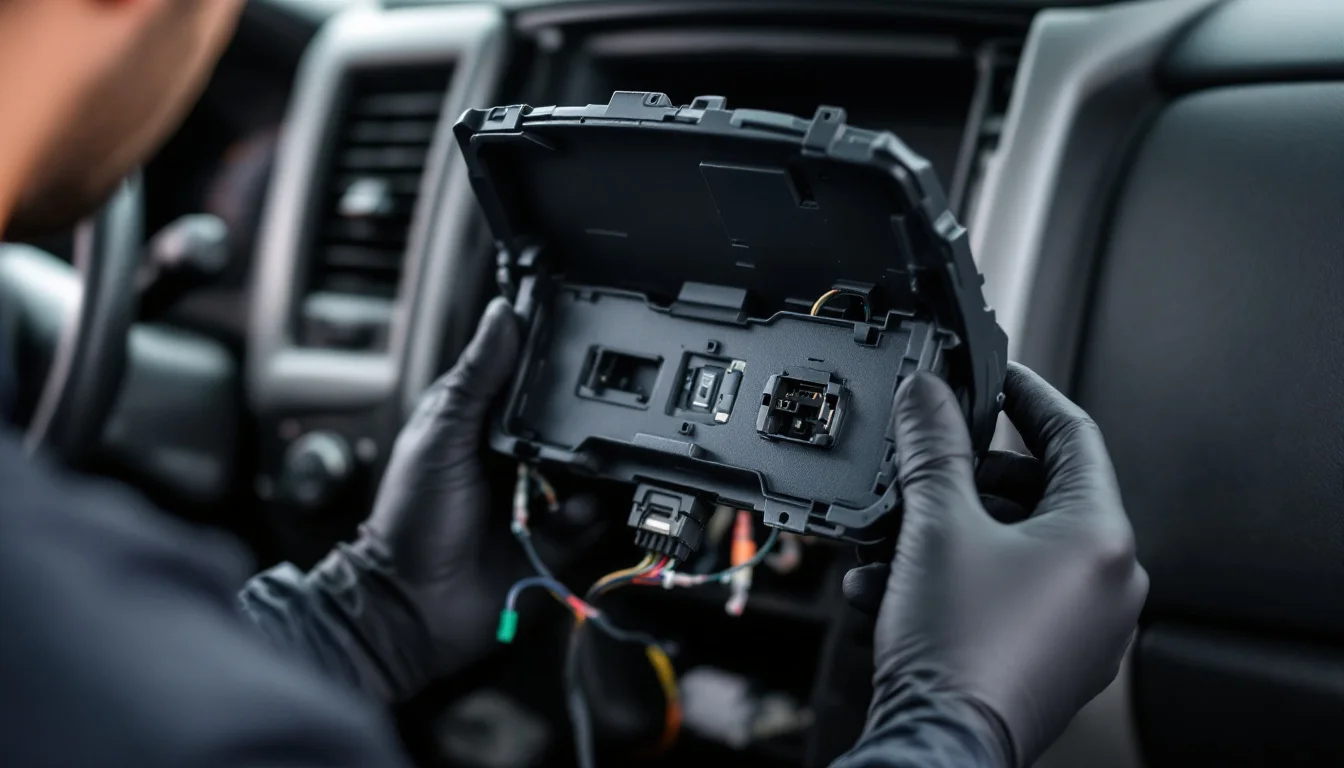
As of October 2026, replacement instrument clusters are easy to find. Salvage yards and online sellers list them for most Ford trucks and SUVs, and swapping one is a job many owners and shops can do in an afternoon with basic hand tools.
The surprise comes afterward. The new cluster lights up, the gauges sweep, and the truck cranks without starting. Nothing was installed wrong. On a large share of Ford and Lincoln vehicles, the cluster is not just a display. It is part of the security system, and a cluster from another vehicle is, as far as your truck is concerned, a stranger.
This guide explains why that happens, which vehicles are affected, what the programming involves and what you should have ready before anyone drives out.
Why a gauge cluster can stop a Ford from starting
Ford's Passive Anti-Theft System, PATS, has been on its vehicles since the late 1990s. The idea is simple. A chip in the key has an electronic identity. The vehicle reads it when you turn the key or press the start button, and the engine only runs if the identity is one the vehicle has stored.
What changed over the years is where the vehicle does that checking. Ford has used several layouts:
- A stand-alone PATS module on some early systems.
- The powertrain control module handling PATS itself on others.
- The instrument cluster acting as the PATS controller on many trucks, SUVs and cars, particularly through the 2000s.
- The body control module taking over that role on many newer vehicles.
On the cluster-based layouts, the cluster stores the key identities and holds a security identity that it shares with the powertrain control module. On every start, the two modules check each other. If the cluster is replaced, the new cluster has no record of your keys, and its security identity does not match what the engine computer expects. The engine computer does what it was designed to do when it does not get the right answer: it disables the start.
That is the whole mystery. The vehicle is not broken. Two of its computers no longer recognize each other.
Which Ford and Lincoln vehicles are affected
There is no single year range that covers everything, because Ford moved PATS around between models and generations. As a general guide:
- Many 2000s-era trucks and SUVs, including F-150s, Expeditions and Explorers of that period and their Lincoln counterparts, commonly tie PATS into the instrument cluster.
- Many cars of the same era, including Mustangs, Focuses and Fusions, use the cluster in the same way.
- Many newer vehicles moved the PATS role to the body control module. On those, a cluster swap raises different questions, mostly about configuration and mileage, and the security work centers on the body module instead. See our guide to Ford BCM and smart junction box programming.
Which layout your vehicle has is determined by the VIN and confirmed with a scan. We check before quoting, because the answer changes the job.
What you will notice after the swap
The symptoms of a cluster and PATS mismatch are consistent:
- The engine cranks strongly and will not start, or starts and dies within a second or two.
- The theft indicator flashes rapidly while cranking, instead of going out after a brief prove-out.
- The odometer may show dashes or an unfamiliar mileage.
- Every key behaves the same way. No key works, because the new cluster has none of them stored.
If the theft light on your Ford is flashing and there was no cluster work, the cause is something else. Start with Ford PATS anti-theft light fixes. And if the engine cranks without starting and you are not sure the anti-theft system is involved, our guide to an engine that cranks but will not start shows how to tell.
What the programming involves
Putting a cluster-based Ford back on the road after a swap comes down to three steps. The exact procedure differs by model and year, so this is the outline, not a recipe.
1. Matching the modules. The cluster and the powertrain control module are put through a security procedure, commonly called a parameter reset, so that they share a matching security identity again. Until that is done, the engine computer will keep refusing the start no matter how many keys are programmed.
2. Programming the keys. The replacement cluster has no keys stored that belong to you. If it came from another vehicle, it may have that vehicle's keys stored instead. The stored keys are erased and your keys are programmed in. Many of these systems require at least two keys to be programmed before the vehicle will start, which is why we ask you to have every key present.
3. Verifying. Each key is tested for a clean start. The theft indicator should prove out and go dark. The remaining modules are scanned for faults left behind by the swap.
Ford's security procedures include a timed access delay on many models, so the visit takes longer than the hands-on work suggests. Plan for it.
New, remanufactured and used clusters
Where the cluster came from affects how smoothly the job goes.
| Cluster source | What it carries | Programming needed | What to watch for |
|---|---|---|---|
| New from the dealer | Blank security data, no keys | Module matching and key programming | Configuration for your options; mileage handled through the dealer |
| Remanufactured or repaired original | Usually your own data if your unit was rebuilt | Often little or none if your own unit is returned | Ask whether you get your own cluster back |
| Used from a salvage yard or online | Another vehicle's keys, security data and mileage | Module matching, key erase and key programming | Part number and options must match; mileage will be wrong |
| Your original, reinstalled | Your data | None if nothing else changed | Applies when the swap is being reversed |
Our price for the security side of this work, matching the modules and programming the keys, is in the $150–$400 band for most vehicles. The cluster itself, and any repair of your original, is priced by whoever supplies it.
Two practical points follow from the table.
Having your original cluster repaired is often the easiest path. If the fault is in the gauges, the display or the lighting, a repair service that fixes and returns your own unit keeps your security data and your mileage intact. Ask about that before buying a used one.
A used cluster has to be the right one. Clusters that look identical can differ by engine, transmission, trim and options. A mismatched part number can leave you with warning lights or dead gauges even after the security side is sorted. Compare the part number on your original before you buy.
The mileage question
On most of these vehicles, the odometer reading is stored in the instrument cluster. A used cluster arrives showing the mileage of the vehicle it came from.
This is not a detail to shrug off. Federal law requires the mileage to be disclosed accurately when a vehicle is sold, and tampering with an odometer to misrepresent mileage is illegal. If a cluster replacement leaves the odometer reading different from the vehicle's true mileage, the difference has to be documented and disclosed. NHTSA publishes guidance on odometer fraud and the disclosure rules.
Our position is straightforward. We program the security side so the vehicle starts and the keys work. We do not roll mileage back, and we will not set an odometer to a figure that misrepresents the vehicle. If your swap creates a mileage discrepancy, keep the paperwork for the replacement cluster, note the true mileage at the time of the swap and talk to the cluster supplier or dealer about correct handling for your vehicle.
What to have ready
A little preparation saves a second trip.
- Every key you own for the vehicle. Keys that are not present when the keys are erased and reprogrammed will no longer start it. On systems that need two keys, one key is not enough.
- The original cluster, if you still have it. Even a dead one is useful for comparing part numbers.
- The part number of the replacement.
- A healthy, charged battery. Programming with a weak battery risks an interrupted procedure, which can create new problems. If the truck has been cranking for days trying to start, charge the battery first.
- Proof of ownership. A photo ID plus registration or insurance that matches the vehicle. We verify ownership before any security programming.
If you are down to one key, we can cut and program a second one during the same visit. A spare transponder key runs $130–$230 when it is added alongside existing keys. See our Ford and Lincoln spare key cost guide.
When all the keys are lost too
Sometimes the cluster swap is not the only problem. A vehicle bought at auction or inherited may arrive with a swapped cluster and no working keys at all. That combines module matching with an all-keys-lost job, and it is priced accordingly: all-keys-lost runs $200–$500 for most Ford and Lincoln vehicles, with module programming on top if the security system needs it. Our Lincoln Continental and MKT all-keys-lost guide describes how that work goes on the Lincoln side.
Dealer or mobile programming?
A Ford dealer can do this work. The vehicle has to get there, which for a no-start means a tow, and it has to wait for a service appointment.
Mobile programming brings the equipment to the driveway or the shop where the truck is sitting. For independent repair shops in Fort Worth that have done the mechanical swap and hit the no-start, this is the common arrangement: the shop does the install and we handle the security programming on site.
Not every case can be solved in a driveway. A damaged replacement cluster, a wrong part number or a fault in the engine computer itself will stop the procedure. If a scan shows that, we will tell you what we found and what the next step is.
For related Ford work, see Ford PCM and ECM module programming and, for the Lincoln trucks, Navigator and Aviator module programming. Other makes handle module security in their own ways. Ram and Dodge, for example, add a gateway between the diagnostic port and the modules, covered in Ram and Dodge security gateway module programming, and Mitsubishi has its own immobilizer registration process, covered in Mitsubishi immobilizer programming.
Avoiding the problem in the first place
If your cluster is failing and you have not replaced it yet:
- Ask about repairing your original before buying a replacement.
- Confirm by VIN whether your vehicle's cluster is part of PATS, so the no-start does not catch you off guard.
- Schedule the programming for the same day as the swap, so the vehicle is not stranded in between.
- Gather every key first.
We come to the vehicle anywhere in Fort Worth, including the Stockyards and Alliance. See our ECU and module programming service for what a visit covers.
Frequently Asked Questions
Why won't my Ford start after replacing the instrument cluster?
On many Ford and Lincoln vehicles the instrument cluster is part of the PATS anti-theft system. A replacement cluster does not have your keys stored and its security identity does not match the engine computer, so the engine computer blocks the start until the modules are matched and the keys are programmed.
How much does Ford cluster and PATS programming cost in Fort Worth?
The security programming, matching the cluster to the engine computer and programming the keys, runs $150 to $400 for most vehicles. The cluster itself is priced by whoever supplies it. We confirm the price for your exact vehicle before starting.
Do I need two keys to program a replacement Ford cluster?
On many Ford PATS systems, at least two keys have to be programmed before the vehicle will start after the stored keys are erased. Have every key you own present. If you only have one, a second can be cut and programmed during the same visit.
Can a used instrument cluster be programmed to my Ford?
Often, yes, provided the part number and options match your vehicle. A used cluster carries another vehicle's keys, security data and mileage, so it needs module matching and key programming, and the mileage difference must be documented.
Will the mileage be correct after a cluster swap?
Not automatically. The odometer reading is usually stored in the cluster, so a used cluster shows the donor vehicle's mileage. Federal law requires accurate mileage disclosure. We do not alter mileage to misrepresent a vehicle.
Can you program the cluster at my shop or driveway?
Yes. We bring the programming equipment to the vehicle anywhere in Fort Worth. The battery should be healthy and every key should be present.
References
- NHTSA — odometer fraud and mileage disclosure
- NHTSA — vehicle theft prevention and anti-theft technology
- NHTSA — VIN decoder
- NASTF — vehicle security information for the independent repair trade
- ALOA Security Professionals Association
- FTC — consumer guidance on auto repair
- Texas DPS — Private Security Program, which licenses locksmiths in Texas
Swapped a Ford or Lincoln cluster and now it will not start? Call (817) 674-3595. We match the modules and program the keys at your vehicle anywhere in Fort Worth, 24/7. See our ECU and module programming service.