Car Key Copy Cost in Fort Worth (2026): Kiosk, Hardware Store, Locksmith or Dealer
Quick answer: A car key copy in Fort Worth costs $130–$230 for a transponder (chip) key and $200–$450 for a smart or push-to-start key when you still have a working key, cut and programmed at your vehicle. Remote-head and flip keys run $200–$350. A kiosk or hardware store can copy the metal of many older keys cheaply, but most cannot program the chip, so the copy opens the door and will not start the car. Call (817) 674-3595 for an exact quote by year, make and model.
As of October 2026, the question we hear most from Fort Worth drivers who want a second key is not "how much is it." It is "where should I take it." The answer changes the price, and it changes whether the copy works.
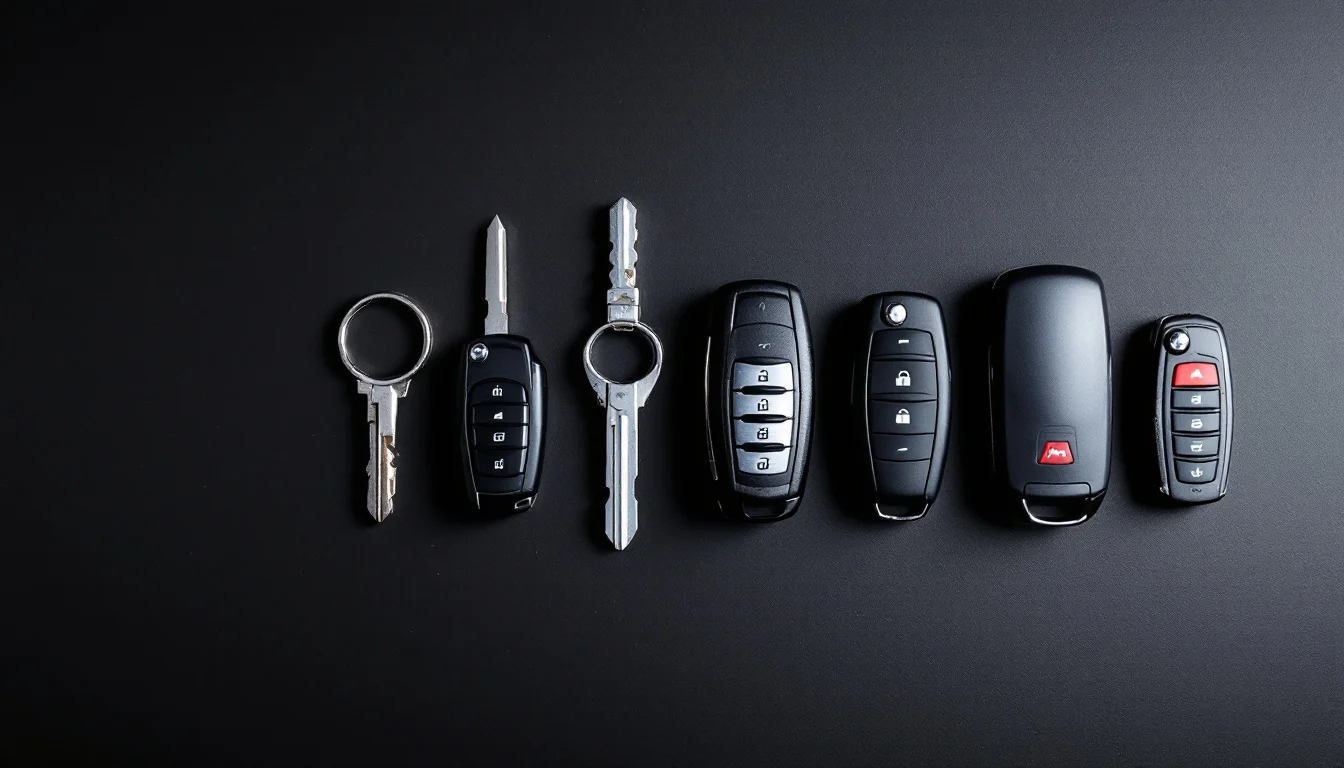
A car key is really two things. One is a piece of cut metal. The other, on almost every vehicle built since the late 1990s, is an electronic identity the car has to recognize before the engine will run. Copying the metal is easy and cheap. Copying or adding the electronic part is where the four places you can go, a self-service kiosk, a hardware store, a mobile locksmith and a dealership, stop being interchangeable.
This guide compares all four honestly, lists what each kind of key costs in Fort Worth this year, and explains how to tell in about a minute which option fits your car.
The two halves of a car key copy
Every copy job breaks into two questions.
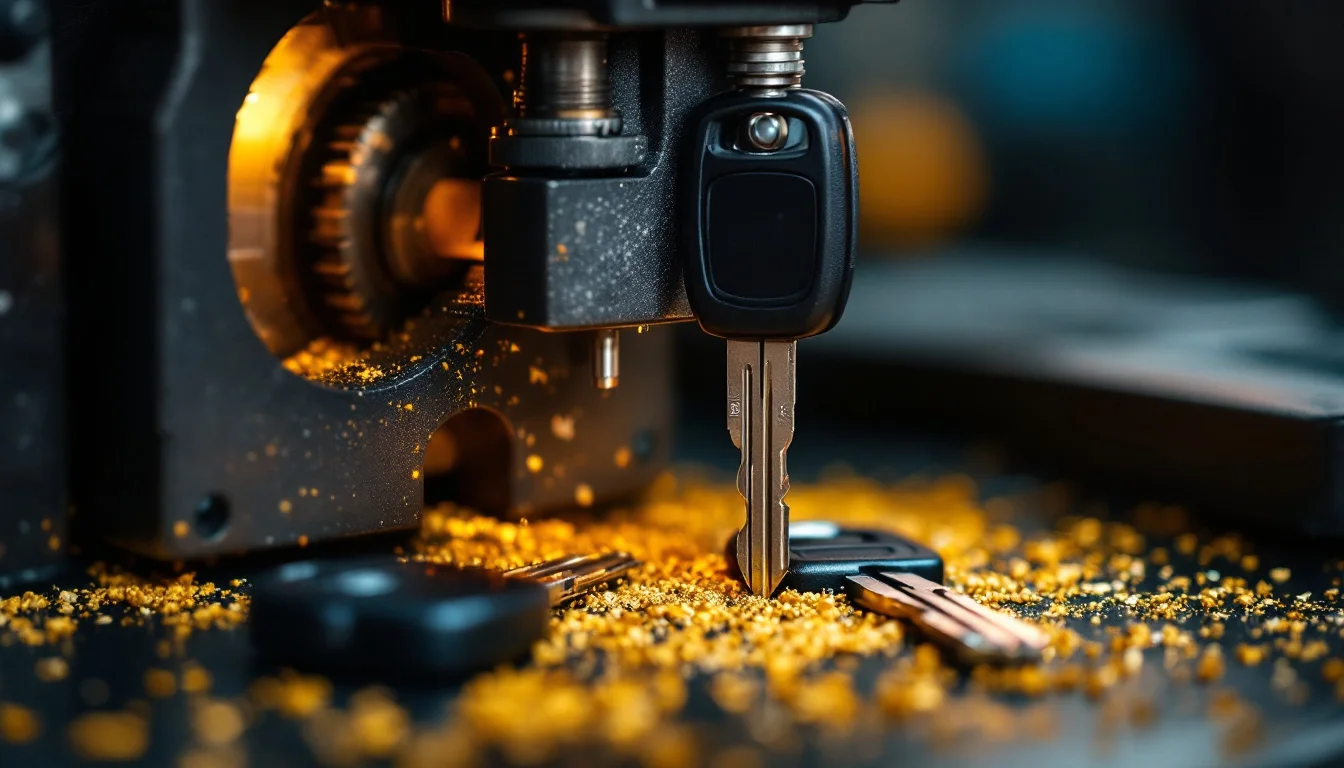
Can the blade be cut correctly? A traditional edge-cut key has cuts along the edge, like a house key. Many vehicles from the mid-2000s on use a high-security key, sometimes called a laser-cut or sidewinder key, with a groove milled down the face of a thicker blade. Edge-cut keys can be duplicated on basic equipment. High-security keys need a different machine, and not every counter has one.
Can the car be made to accept it? If your key has a transponder chip, a correctly cut blade is only half a key. The vehicle's immobilizer checks the chip when you turn the ignition. If it does not recognize the chip, the engine cranks without starting, or starts and stalls, depending on the make. Smart keys go a step further. There may be no blade in the ignition at all, and the entire job is electronic.
A copy is only finished when both questions are answered. Most disappointing key copies are jobs where only the first one was.
If you are not sure whether your key has a chip, our guide to how to tell if you need a transponder key walks through the signs for common vehicles.
Option 1: a self-service kiosk
Key kiosks sit near the entrance of many grocery and big-box stores around Fort Worth. You insert your key, the machine scans it, and it either cuts a copy on the spot or offers to mail one.
What kiosks do well. For a plain metal key with no chip, such as many vehicles from the mid-1990s and earlier, a kiosk copy is fast and inexpensive. Some kiosks can also identify certain chip keys and offer a chipped copy for a limited list of vehicles, sometimes cut on site and sometimes shipped to you later.
Where kiosks fall short. A kiosk reads the key you hand it. It does not read your car. That has three consequences:
- It copies the wear. If your original is worn, the copy starts life worn too. Our post on why a copied key opens the door but will not turn the ignition covers this failure in detail.
- It cannot add a key to your vehicle's memory. Vehicles that need each new key registered through the diagnostic port are outside what a kiosk can do.
- It cannot do anything for smart keys, and it offers no help if the copy does not work once you are back in the parking lot.
A kiosk is a reasonable choice for an old truck with an all-metal key. For most vehicles on the road in 2026, it produces a door key at best.
Option 2: a hardware or auto parts store
The key counter at a hardware store, home center or auto parts store is a step up, because a person is involved and the selection of blanks is usually wider.
What the counter does well. Plain metal car keys are a routine job. Many counters also stock a range of transponder blanks and can clone certain chip keys, which means electronically copying the identity of your existing key onto a new chip so the car cannot tell the two apart. For the vehicles on their list, and with a good original to copy from, this can work.
Where the counter falls short.
- The list is limited. Cloning works on some transponder types and not others. Many newer chips cannot be cloned at a counter at all, and the associate usually finds that out by trying.
- High-security blades are hit or miss. Not every store has the machine for laser-cut keys.
- No smart keys. Proximity fobs for push-to-start vehicles have to be programmed to the car with diagnostic equipment, with the car present.
- The car is not there. The copy gets tested when you drive home. If it does not start the car, you make another trip, and the refund policy on cut keys varies from store to store.
- A clone is a twin, not a new key. A cloned key shares its identity with the original. That is fine for a simple spare, but it matters on vehicles that let the owner add keys when two separate programmed keys are present. Two keys with one identity may count as one.
A hardware store is a sensible stop for an older car with a basic key. Ask before they cut whether the price includes a working chip and what happens if the copy does not start the car.
Option 3: a mobile automotive locksmith
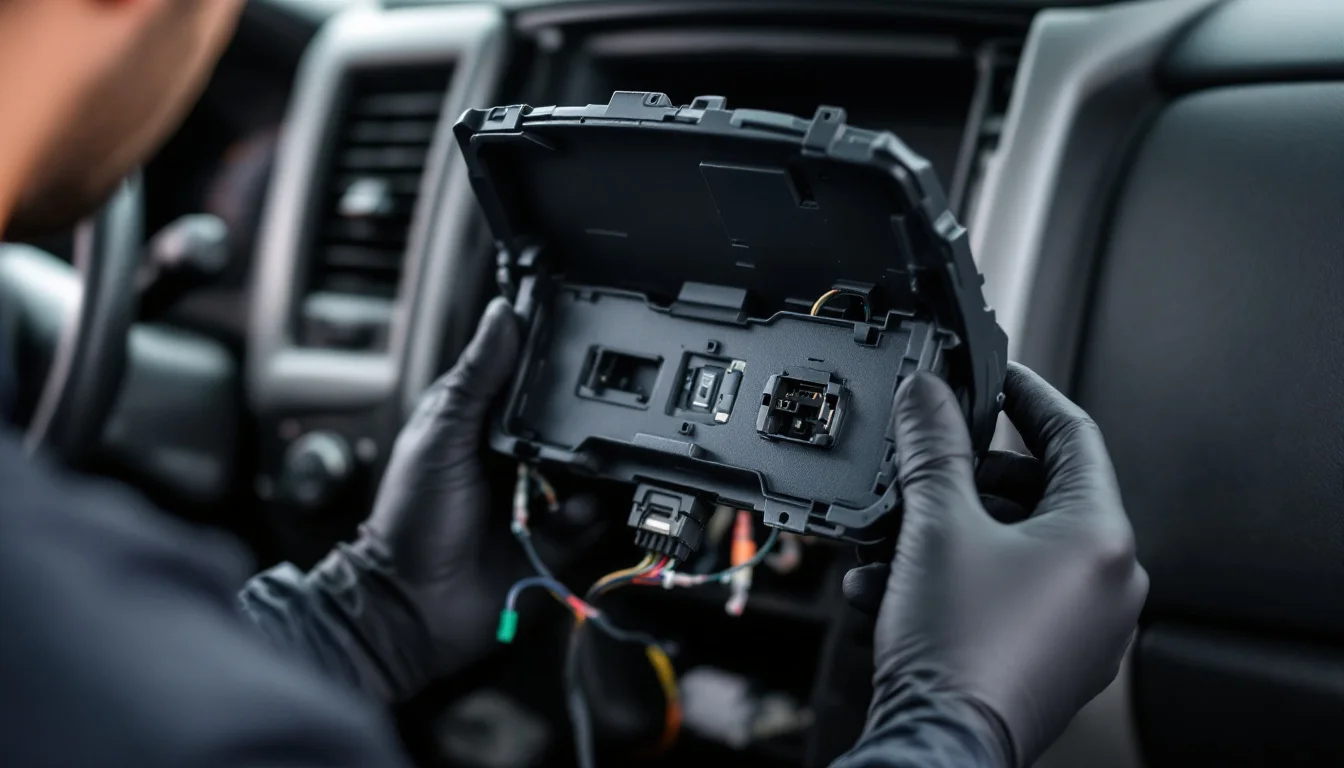
A mobile automotive locksmith brings the cutting machine and the programming equipment to the vehicle. That last part is the real difference: the car is present for the whole job.
What that makes possible.
- Cutting to code. Instead of tracing a worn key, the blade can be cut to the vehicle's original key code. The new key is cut the way the first key was cut at the factory, not the way your ten-year-old key looks today.
- Programming a new identity. The new key is added to the vehicle's own memory as a separate key. That is the same result a dealer produces.
- Smart keys and push-to-start fobs. These are programmed at the vehicle, and the proximity functions, the buttons and the emergency blade are all tested before the job is called done.
- Testing on the spot. The key is tried in the door, the ignition or start button, and the remote buttons while the technician is still standing there. If something is wrong, it gets fixed then.
What it costs. With a working key in hand, a transponder spare runs $130–$230 and a smart-key spare runs $200–$450 in Fort Worth, cut and programmed at your vehicle. Remote-head and flip keys generally fall in the $200–$350 band. See our spare car key service for what is included.
Where a locksmith is not the answer. For a pre-transponder vehicle with a plain metal key, a locksmith is more service than the job needs, although we are glad to cut one. And a small number of the newest or most restricted models may still require a dealer for certain keys. A good locksmith will tell you that on the phone instead of driving out to discover it.
Option 4: the dealership
The dealer's parts and service departments can supply and program keys for the brands they sell.
What the dealer does well. The key will be the manufacturer's part. For the handful of models where key programming is tightly restricted, the dealer may be the only source. If the vehicle is already at the dealership for other work, adding a key during the same visit can be convenient.
Where the dealer falls short for a simple copy.
- Price. Dealer keys are commonly the most expensive of the four options, and programming is often billed as a separate labor line on top of the part.
- Time. Keys are frequently ordered rather than stocked, and programming needs a service appointment.
- The vehicle has to go to them. For a spare, that means time out of your day. For a lost key, it can mean a tow.
Our comparison of dealership versus locksmith for car keys goes deeper on cost and speed. For a straightforward spare on a common vehicle, the dealer is rarely the fastest or the least expensive route.
What each option can do, and what a working copy costs
The table shows what each place can typically do for each kind of key, alongside our 2026 Fort Worth price for a finished, tested key.
| Key type | Kiosk | Hardware or parts store | Dealer | Mobile locksmith in Fort Worth (2026) |
|---|---|---|---|---|
| Plain metal key, no chip | Yes, cheapest option | Yes, cheap | Yes, usually ordered | Yes, quoted by vehicle |
| Edge-cut transponder key | Limited vehicle list | Some, by cloning | Yes | $130–$230 as a spare |
| High-security (laser-cut) transponder key | Rarely | Some stores | Yes | $130–$230 as a spare |
| Remote-head or flip key | Rarely | Limited | Yes | $200–$350 |
| Smart or push-to-start key | No | No | Yes | $200–$450 as a spare |
| Mercedes-Benz or BMW key | No | No | Yes | $400–$850 |
| No working key left to copy | No | No | Yes, vehicle towed in | $200–$500 for most domestic and Asian makes |
Two things stand out. First, the cheap options thin out quickly as keys get newer. Second, the last row is not a copy at all. Once there is no working key, nobody can copy anything, and the job becomes an all-keys-lost replacement. That is the row a spare key exists to keep you out of.
How to decide in one minute
Answer three questions about your vehicle.
1. Does the car start with a push button? If yes, you have a smart key. Skip the kiosk and the hardware store. Your options are a mobile locksmith or the dealer. Our push-to-start smart key cost and timeline guide covers what the job involves.
2. If it uses a turn key, is there a chip? A thick plastic head, a security or key-shaped light on the dash that blinks when the car is off, and a model year after the late 1990s all point to a chip. If there is one, a kiosk or counter copy only works if they can clone your specific chip type. Ask before they cut.
3. Is your original key in good shape? If it is worn smooth, sticks in the ignition or needs a wiggle, do not trace it. Have the new key cut to code so it does not inherit the wear.
If the answers are "no button, no chip, key in good shape," the kiosk or the hardware store is a fine choice. For nearly everything else, a locksmith or the dealer is where a working copy comes from.
What changes the price
Within each band, the exact quote depends on a few things.
The key technology. A basic transponder blade key costs less than a remote-head key, which costs less than a proximity smart key. The parts are more expensive at each step, and so is the programming time.
The make. Ford, Chevrolet, Chrysler, Dodge, Kia and Hyundai are usually toward the lower end of each band. European brands cost more because of the key hardware and the security process. Mercedes-Benz and BMW keys run $400–$850.
How many working keys you have. A copy assumes at least one working key. Some vehicles are simpler to add a key to when two programmed keys are present, and some let the owner do it. With one key, programming is done with equipment. With none, the price moves to the all-keys-lost band of $200–$500 for most domestic and Asian makes.
The condition of the original. A worn original is not a problem when the key is cut to code. But if the ignition itself is worn, a perfect new key may still bind. A wafer rebuild runs $150–$280 and a full cylinder replacement $280–$550, and it is better to learn that before buying a second copy that sticks the same way.
Whether you supply the key. A fob bought online can sometimes be programmed, and sometimes cannot. It has to match your vehicle's frequency and chip, and some used smart keys cannot be reassigned to a second vehicle. We will tell you on the phone whether yours is likely to work. Our key fob programming cost guide breaks down programming-only jobs.
Time of day. A spare key is the one car-key job you get to schedule. Booking it during normal hours, at your home or workplace, keeps it at the standard price.
The costly mistake: buying the copy twice
The most expensive key copy is the one that does not start the car. It looks like this.
A driver has one working key for a ten-year-old sedan and wants a spare. A kiosk or counter cuts a copy for a low price. The copy opens the door. In the ignition it either does not turn, because it copied the original's wear, or it turns and the engine does not stay running, because there is no programmed chip. The driver has now paid for a door key, still has one working key, and still needs a real spare.
Sometimes the story ends worse. The unprogrammed copy goes on the key ring and gets forgotten. Months later the original is lost, and the "spare" turns out not to start the car. Now it is an all-keys-lost job, often at night, in a parking lot.
None of this means cheap copies are a scam. It means a copy has to match the car. If your key has a chip, the copy needs a chip the car accepts. Before you pay anywhere, ask one question: "Will this key start my car, and what happens if it doesn't?"
If a copy already let you down, our guide on what it means when a key fob unlocks the doors but the car will not start explains the difference between the remote half and the immobilizer half of a key.
What to have ready when you call
A quote takes about a minute with the right details:
- Year, make and model, and the trim if you know it.
- How the car starts: turn key or push button.
- How many working keys you have, and whether the one you have is worn or damaged.
- The VIN, from the dash or your insurance card, if you want the quote exact. On some models the trim decides the key type.
- Proof the vehicle is yours. A photo ID plus registration or insurance. We check ownership before cutting or programming any key. A reputable locksmith or dealer will, and you should be wary of anyone who does not.
Texas licenses locksmith companies through the Department of Public Safety's Private Security Program. Whoever you hire, it is reasonable to ask for the company's license number.
Where we come to you
We are a mobile service, so the copy is made where the vehicle is: your driveway, your office lot or a job site. We cover Fort Worth from downtown and Sundance Square to the TCU area and north to Alliance, along with the rest of Fort Worth. A typical spare takes well under an hour once we arrive.
Frequently Asked Questions
How much does it cost to copy a car key in Fort Worth?
With a working key to start from, a transponder key copy runs $130 to $230 and a smart or push-to-start key runs $200 to $450, cut and programmed at your vehicle. Remote-head and flip keys run $200 to $350. Plain metal keys for older vehicles cost far less and can be copied at a kiosk or hardware store.
Can a hardware store copy a car key with a chip?
Sometimes. Many hardware and auto parts stores can clone certain transponder keys, but the list of vehicles is limited and many newer chips cannot be cloned at a counter. They cannot program smart keys. Ask before they cut whether the copy will start the car and what their policy is if it does not.
Why does my copied key open the door but not start the car?
The metal was copied but the chip was not, or the chip is not one your car recognizes. The door lock only reads the cuts. The immobilizer also checks the chip, so an unprogrammed copy opens the door and the engine will not run.
Is a locksmith cheaper than the dealer for a spare key?
For most common vehicles, yes. A mobile locksmith cuts and programs the key at your vehicle, usually the same day, and the price is typically lower than a dealer key plus separate programming labor. A small number of restricted models may still need the dealer.
Can a smart key be copied?
A smart key is not copied in the traditional sense. A new fob is programmed to the vehicle as an additional key using diagnostic equipment, with the car present. In Fort Worth that runs $200 to $450 when you still have a working key.
Do I need my original key to get a copy?
To copy, yes. Without any working key the job becomes an all-keys-lost replacement, where the key is generated from the vehicle itself. That runs $200 to $500 for most domestic and Asian makes and more for Mercedes-Benz and BMW.
How long does a car key copy take?
A plain metal copy takes a few minutes. A transponder or smart key cut and programmed at your vehicle usually takes well under an hour once the technician arrives.
References
- NHTSA — vehicle theft prevention and anti-theft technology
- NASTF — vehicle security information for the independent repair trade
- ALOA Security Professionals Association
- FTC — consumer guidance on auto repair
- Texas DPS — Private Security Program, which licenses locksmiths in Texas
- Ready.gov — car safety and emergency preparedness
Down to one key? Get the copy made while it is still a copy. Call (817) 674-3595 — we come to your vehicle anywhere in Fort Worth, 24/7, and the key is tested before we leave. See our spare car key service for details.