Key Fob Stopped Working After a Battery Change? (Fort Worth Fixes)
Quick answer: If your key fob stopped working right after you changed its coin battery, the cause is usually the swap itself: the cell went in upside down, it is the wrong size, it is weak stock, or a contact tab got bent. Those fixes cost under $5. If the fob still will not work, diagnosis in Fort Worth runs $75–$150 and reprogramming $150–$400. Call (817) 674-3595.
As of September 2026, this is one of the most frustrating calls we take, because the person on the phone did the responsible thing. The fob was getting weak, they bought a battery, they swapped it, and now the fob does nothing at all.
The good news: a fob that worked with a weak battery five minutes ago is almost never broken by a new one. Something about the swap went slightly wrong, and it is usually visible.
One quick note before we start. This article is about the small coin cell inside the fob. If your car's main 12-volt battery died or was replaced and the car now will not recognize the key, that is a different problem, covered in our dead battery and key recognition guide.
Likely causes, ordered by how often we see them
1. The battery is in upside down
This is the most common cause by a wide margin. Coin cells look nearly the same on both faces, and many fob housings give you no obvious marking. Put it in flipped and the fob is simply dead.
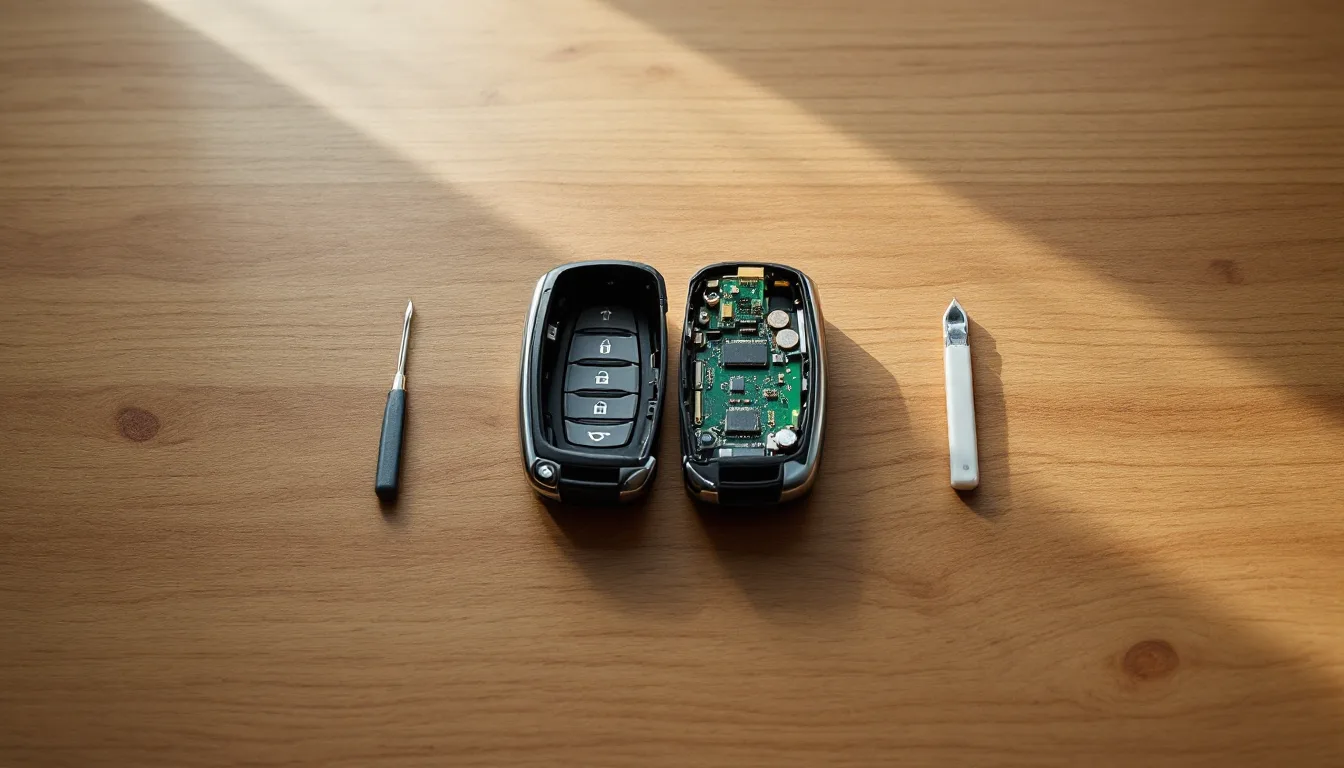
Quick check: open the fob and look at the cell. The side with the size code and the plus sign is the positive side. In most fobs the positive side faces up, away from the circuit board, but not all. The surest guide is how the old battery sat. If you did not note it, look for a small plus sign molded into the housing or printed on the board near the holder.
Cost: nothing.
2. The wrong size cell
Common fob cells include the CR2032, CR2025, CR2016 and CR2450. The first two digits are the diameter in millimeters and the last two are the thickness in tenths of a millimeter. A CR2025 is 2.5 millimeters thick and a CR2032 is 3.2. They are the same width, so either one drops into the holder.
That is the trap. A thinner cell may not press firmly against the contacts once the case is closed, and a thicker cell can stop the case closing or crack it.
Quick check: read the number on the old cell, if you still have it, and match it exactly. If you threw it away, your owner's manual lists the correct size.
Cost: a few dollars for the right cell.
3. A bad, cheap or old-stock cell
Coin cells lose charge on the shelf, and bargain multipacks vary in quality. A brand-new battery can be weak out of the package.
Quick check: try a second fresh cell, ideally a name-brand one from a store that sells a lot of them. If the fob comes back to life, the first battery was the problem.
Cost: a few dollars.
4. A bent or dirty contact tab
The small metal tabs that touch the battery are thin. Prying the old cell out with a screwdriver, or pushing the new one in at an angle, can flatten or twist a tab so it no longer presses against the cell. Finger oils and a little corrosion on the tabs can do the same thing more quietly.
Quick check: look at the tabs with a flashlight. They should spring up slightly toward the battery. If one looks flat or bent sideways, it may not be making contact. Wipe the new cell with a clean dry cloth before fitting it, and avoid handling its faces.
Cost: usually nothing if you can see it. We do not recommend bending tabs back with a metal tool, because a slip can short the board. If you are unsure, have it looked at.
5. The board was knocked loose or a solder joint cracked
Prying a fob case open is where real damage happens. A flathead forced into the wrong seam can crack the housing, push the circuit board out of its seat, or put enough stress on it to crack a solder joint where the battery holder or a button attaches. The fob may then work intermittently, work only when squeezed, or not at all.
Quick check: open it again carefully and see whether the board is sitting flat and fully seated in the housing. Look for a cracked case, a battery holder that moves, or a button that feels different than before. Intermittent behavior that changes when you press on the case is a strong sign.
Cost: if the board is damaged, the fob usually needs replacing rather than repairing. A replacement smart key runs $250–$500 for most vehicles; if you still have another working key, a spare smart fob runs $200–$450.
6. The car wants a quick resync
A small number of vehicles expect the fob to reintroduce itself after the battery has been out. The programming is not lost, since it lives in the fob's memory and the car's memory rather than in the battery, but the rolling code the remote uses can fall out of step. Buttons then do nothing for a while even though the fob is healthy.
Quick check: your owner's manual describes any resync step for your vehicle, which is often as simple as pressing a button a few times near the car or starting the car with that key. On many vehicles simply using the key normally brings it back.
Cost: nothing if the manual step works. If the car genuinely needs the key reprogrammed, that is a $150–$400 job depending on make and model; a tech confirms your exact setup before quoting.
7. Water got in during the swap
If you opened the fob outdoors in the rain, set it down on a wet counter, or opened it while your hands were damp, moisture can reach the board. Condensation from moving a cold fob into a warm room can do the same.
Quick check: if you see any moisture, take the battery out, leave the fob open somewhere dry for a day, then try again with the battery in. Do not use a hair dryer on high heat.
Cost: nothing if it dries out cleanly. If corrosion sets in, the fob may need replacing.
8. The fob was failing anyway
Sometimes it is a coincidence. The weak performance that sent you shopping for a battery was not the battery at all but the fob's transmitter wearing out. Fobs live hard lives in pockets, cup holders and washing machines, and the radio side is less rugged than the chip inside.
Quick check: if you have ruled out everything above, try your spare key. If the spare works normally with its own battery, the first fob has failed.
Cost: replacement at the smart key or flip key bands below. Because you still have a working spare, you stay in the cheaper spare-key column.
Causes, checks and costs at a glance
| Cause | Quick check | Typical Fort Worth cost (2026) |
|---|---|---|
| Battery upside down | Plus side matches how the old cell sat | Free |
| Wrong cell size | Number on the cell matches the old one exactly | Under $5 |
| Weak or old-stock cell | A second fresh name-brand cell fixes it | Under $5 |
| Bent or dirty contact tab | Tabs flat or twisted under a flashlight | Free to $75–$150 diagnosis |
| Board loose or cracked solder | Works only when you squeeze the case | $200–$450 spare smart fob, $250–$500 replacement |
| Car needs a resync | Owner's manual step brings it back | Free, or $150–$400 programming |
| Water in the fob | Visible moisture; dries out and works | Free, or replacement if corroded |
| Fob failing anyway | Spare key works normally | $200–$450 spare smart fob |
For flip keys with a remote, replacement runs $200–$350. European brands like Mercedes and BMW run higher, $400–$850.
If you have a push-button start car
Here is the reassuring part for push-button owners. Even with a completely dead fob, most push-to-start vehicles can still start. Every smart key carries a small passive chip that the car can read at very close range without any battery power. Holding the fob against the start button, or placing it in a marked spot on the column or in the console, lets the car read that chip.
So if your fob died after a battery change and the car starts only when you touch the fob to the button, the chip and the immobilizer are fine. Only the fob's radio side is not working, which points straight back at the battery, the contacts or the board. Our guide on a car that only starts when you hold the fob to the start button explains that backup mode in detail.
Watch the dash too. Many push-button cars show a message like key not detected when the fob's radio signal is missing. If that message appears right after your battery swap and goes away when you touch the fob to the button, you have confirmed the fob is the issue, not the car.
Safe checks you can do right now
1. Check the orientation. Match how the old cell sat, or find the plus sign on the housing.
2. Check the size. Match the number on the old cell exactly. Close is not good enough.
3. Try a fresh name-brand cell. Bargain multipacks are the most common hidden culprit.
4. Look at the contacts. Tabs should spring toward the battery. Wipe the new cell clean before fitting it.
5. Test your spare key. If the spare works, the car is fine and the issue is this fob.
6. Watch the dash message. A key not detected warning that clears when you touch the fob to the start button means the fob's radio is not reaching the car.
If you have done all six and the fob still is not working, that is the point to call.
Make-specific notes
Hyundai owners should read our Hyundai smart key will not start guide. Ford truck owners will recognize this pattern from our guide on the F-150 smart key not detected. BMW's Comfort Access has its own quirks, covered in our BMW Comfort Access key fob guide.
A few vehicles tie the key to deeper security modules, which is where a battery swap problem occasionally turns into programming work. Owners of Mitsubishi Outlanders and Eclipse Crosses should see our guide to Mitsubishi immobilizer programming, and newer Ram and Dodge owners our guide to Ram security gateway module programming. Those are the exception, not the rule. Most battery swap problems end with a correctly seated cell.
What not to do
Do not keep prying at the case. If it will not open cleanly, find the seam or the release slot. Many fobs hide a mechanical emergency key that doubles as the correct pry tool.
Do not buy a replacement fob online and expect it to work. A new fob has to be programmed to your specific car. An unprogrammed fob, however identical it looks, will not start or unlock anything.
Do not wait until your only other key fails too. If one fob died and you are down to one working key, get a spare made now. Losing your last working key turns a spare-key job into an all-keys-lost job, which costs more. Our spare car key page explains why.
When to call a pro
Call when any of these are true:
- You have checked orientation, size and a fresh name-brand cell, and the fob is still dead.
- The fob works only when you squeeze the case or press the battery.
- The housing cracked or the board looks loose.
- Your spare key also stopped working after a battery change.
- You are down to one working key and want a spare made before it fails.
We start with an on-site diagnosis, $75–$150, and tell you honestly whether the fob can be saved. If it needs programming, that runs $150–$400; if it needs replacing, see our push-to-start smart key page for how that visit works. We are mobile only and come to the car anywhere in Fort Worth, including Sundance Square, West 7th and Camp Bowie. If you are stranded late at night, our guide to after-hours car key emergencies covers what to expect.
Frequently Asked Questions
Why did my key fob stop working after I changed the battery?
Most often the new cell is upside down, the wrong size, weak out of the package, or a contact tab got bent during the swap. All of those are fixable for a few dollars or nothing at all. Less often, prying the case open knocked the circuit board loose.
Does changing the fob battery erase its programming?
No. The programming lives in the fob's memory and in the car, not in the battery. A small number of vehicles want a quick resync afterward, described in the owner's manual, but the key is not un-paired by a battery change.
Is a CR2025 the same as a CR2032?
They are the same width but not the same thickness. A CR2032 is 3.2 millimeters thick and a CR2025 is 2.5. A thinner cell can drop into the holder and still fail to press against the contacts. Always match the number on the old battery.
Can I still start my push-button car with a dead fob?
Usually yes. Most push-button cars can read the passive chip inside the fob when you hold it against the start button or a marked spot on the column or console. That lets you drive while you sort out the fob.
How much does it cost if the fob really is broken?
In Fort Worth, a replacement smart key runs $250 to $500 for most vehicles, and a spare smart fob runs $200 to $450 while you still have a working key. Mercedes and BMW run $400 to $850. Diagnosis first costs $75 to $150.
Should I buy a replacement fob online?
Only if you plan to have it programmed. A new fob must be programmed to your specific car before it will unlock or start anything, and some online fobs are not compatible. Call first so you do not pay for a key that cannot be used.
References
- NHTSA — vehicle safety and equipment information
- NASTF — vehicle security information for the independent repair trade
- FCC — radio frequency devices and interference guidance
- FTC — consumer protection and auto repair guidance
- ALOA Security Professionals Association
- Texas DPS — Private Security Program, which licenses locksmiths in Texas
Key fob dead after a battery change? Check the orientation and the size first. If it still will not work, call (817) 674-3595 and we will come to your car anywhere in Fort Worth, find the real cause, and tell you honestly whether you need a new fob.