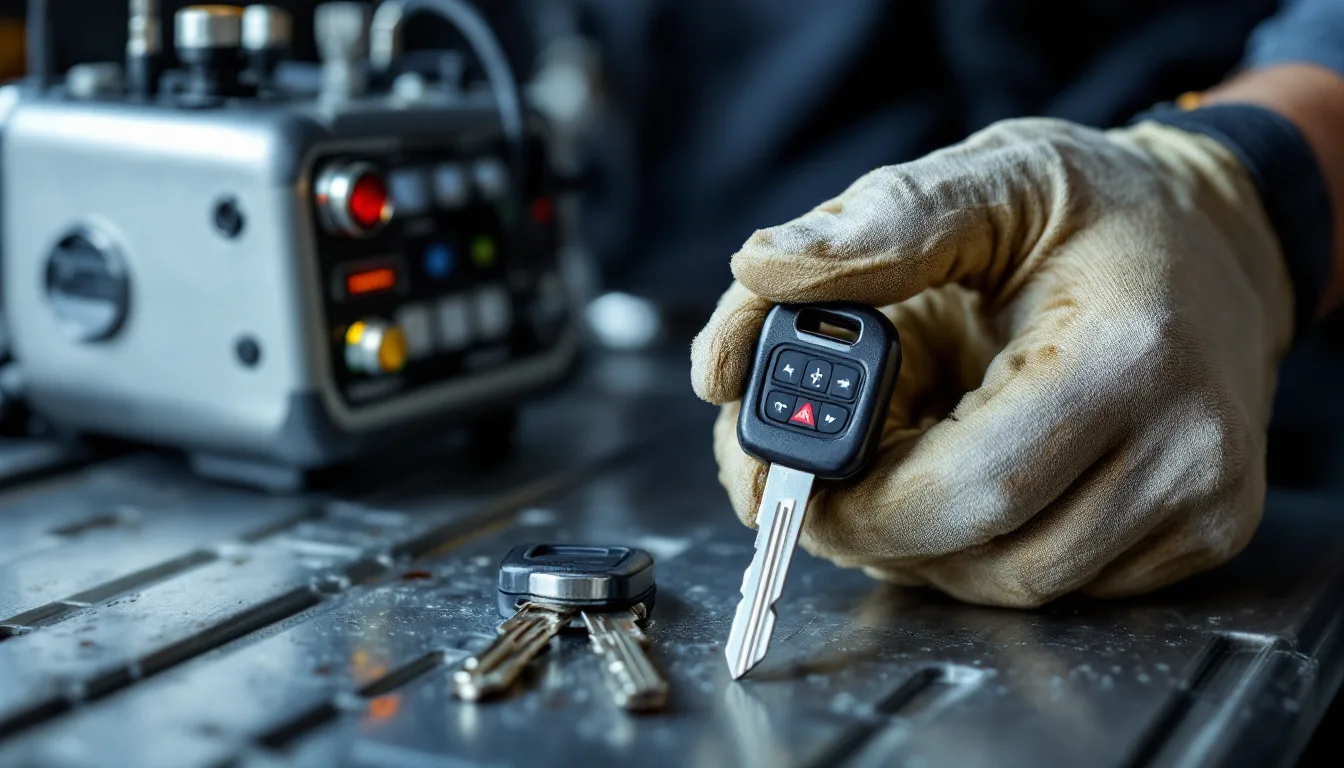
Copied Car Key Opens the Door but Won't Turn the Ignition (Fort Worth)
Quick answer: If a copied key unlocks your door but will not turn the ignition, the copy is almost always the problem, not the car. Usually it was cut from a worn original, cut on the wrong blank, or your ignition reads cuts the door lock ignores. A key originated by code runs $150–$250 for a basic transponder key in Fort Worth; an ignition wafer rebuild runs $150–$280. Call (817) 674-3595.
As of September 2026, this is one of the most common calls we get from people who just paid a few dollars for a copy and are now standing in a parking lot wondering what they did wrong.
You did nothing wrong. You got a key close enough to open one lock and not the other.
Before anything else: stop forcing it. Leaning on a key that will not turn is how a cheap copy becomes a snapped blade stuck inside your ignition.
Why the door and the ignition can disagree
Your door lock and your ignition cylinder are both keyed to the same key, but they are not identical locks.
On a lot of vehicles, especially older GM, Ford, Chrysler and Honda models, the door cylinder reads only some of the cuts on the key, while the ignition reads all of them. A key can be slightly wrong in a spot the door never checks and the ignition always checks.
So a door that opens tells you only that the key is right where the door looks. It says nothing about the rest of the blade.
The ignition is also the lock you use hardest. Its internal wafers wear, and the original key wears with them, which matters a great deal when someone copies that key.
Likely causes, ordered by how often we see them
1. The copy was made from a worn original
This is the big one. A key duplicating machine traces the key you hand it. If your original is ten years old and its cuts have rounded off, the copy faithfully reproduces that wear, and then adds a little error of its own on top.
Your original still works because it and your ignition wore down together. The copy's tiny extra error pushes it past what the cylinder will accept.
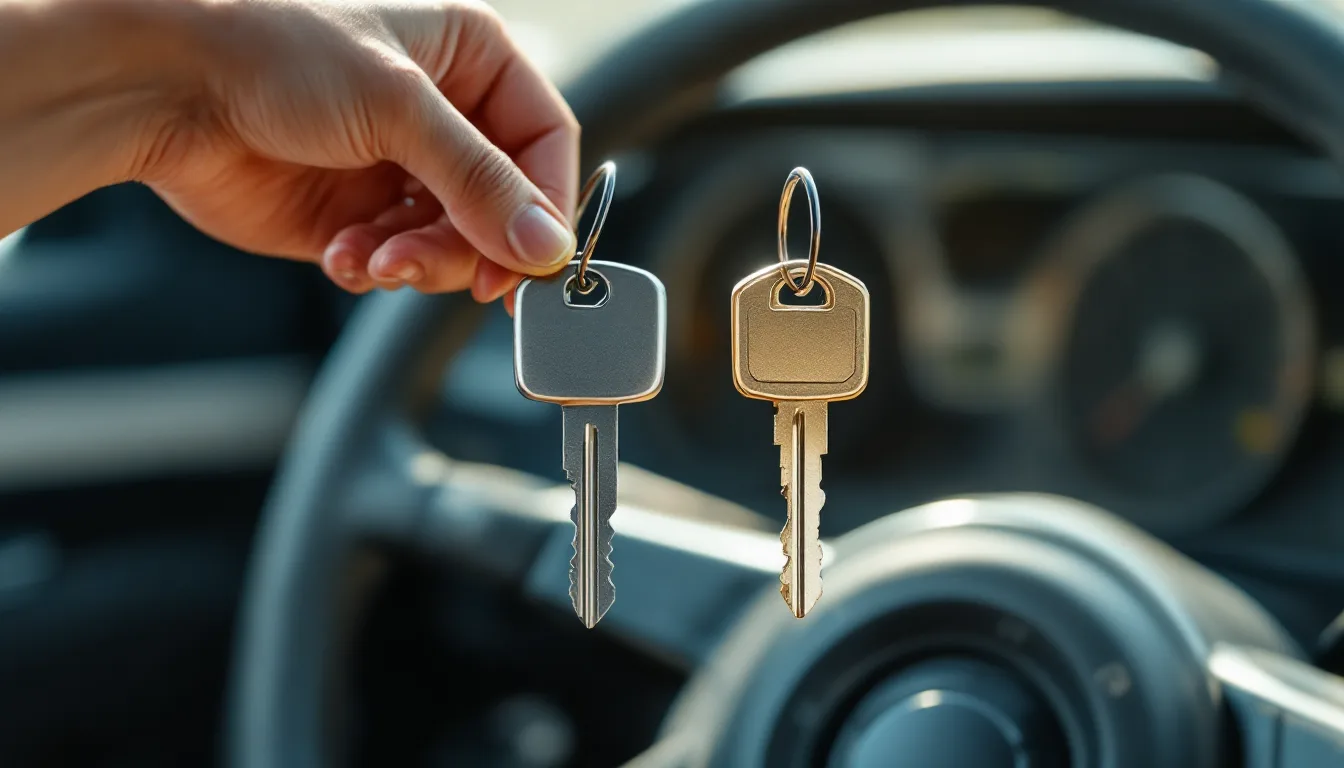
How to tell: hold the original and the copy side by side. If the original's peaks look rounded or shiny and the edges are soft, that is your answer. The worse the original looks, the more likely this is the cause.
The fix: do not copy the worn key again. A locksmith can originate a fresh key to factory specification from the vehicle's key code, which is tied to the VIN, or by decoding the lock. A code-cut key matches what the lock was designed to accept, not what your old key has worn into. For a basic transponder vehicle that runs $150–$250 in Fort Worth, and it includes the chip programming the car needs to start.
2. The door and ignition read different cuts
As described above, on many older GM, Ford, Chrysler and Honda vehicles the door cylinder uses fewer wafers than the ignition. A copy that is wrong in one of the positions the door skips will unlock the door every time and never turn the ignition.
How to tell: try the copy in the trunk or tailgate lock, if your vehicle has one. Those sometimes read a different set of positions again. A key that works in some locks and not others, with no resistance at all in the ones that work, points strongly at a cut that is off in a single position.
The fix: the same as cause one. A key cut to code gets every position right, including the ones your door never reads.
3. The copy was cut on the wrong blank or cut poorly
Key blanks that look identical are not always identical. The keyway groove, the blade thickness and the shoulder that stops the key in position can all differ slightly. A blank close enough to slide into the door may bind in the ignition, and self-serve machines vary in calibration.
How to tell: does the copy slide all the way into the ignition as smoothly as the original? If it drags, sticks, or stops short, the blank or the shoulder is the problem, not the cuts. Look at the tip and the shoulder of both keys side by side; they should line up exactly.
The fix: a proper key on the correct blank, cut to code. There is no adjusting a copy on the wrong blank.
4. The ignition is worn and tolerates only the original
Sometimes the copy is fine and the ignition is the weak link. A cylinder with worn wafers can end up so loose and so shaped around the original that it accepts that one key and nothing else, including a perfectly cut new one.
How to tell: a fresh key cut to code will not turn it either, while the old key still works, often with some jiggling. You may already have noticed the original getting fussy: needing a wiggle, sticking in cold weather, or occasionally refusing to turn at all. Those are the early signs of a failing cylinder.
The fix: an ignition wafer rebuild runs $150–$280, which reworks the cylinder so it reads a correct key properly again. If the cylinder is too far gone, a full cylinder replacement runs $280–$550, plus $50–$150 if a new key must be cut and programmed to match it. Our ignition repair page explains the difference.
5. Steering-wheel lock tension
This one fools people constantly, and it costs nothing to rule out. When you park with the wheels turned, or someone bumps the wheel after the car is off, the steering lock pin sets under pressure and holds the ignition cylinder tight. Even the correct key will not turn.
How to tell: put the key in and gently rock the steering wheel left and right while you turn the key with light pressure. If it suddenly frees up and turns, that was all it was. Try this with the copy too. If the copy then turns and the car starts, you never had a key problem at all.
The fix: free.
Not the same symptom: the key turns but the car will not start
Keep one important distinction in mind. Everything above is about a key that will not turn. If your copy turns the ignition to start but the engine cranks and dies, or does not crank at all, and perhaps a security light flashes, the metal is fine. The problem is the transponder chip.
Most vehicles from the late 1990s onward need a chip in the key that the car recognizes before it will run. A hardware store copy often has no chip, or a chip that was never programmed to your car. Our guide on how to tell whether you need a transponder key covers this, and our key fob unlocks doors but the car will not start guide walks through the no-start side. If you drive a Ford, read about the Ford PATS anti-theft light, because a flashing theft light after a new key is almost always an unprogrammed chip.
Causes, checks and costs at a glance
| Cause | How to tell | Typical Fort Worth cost (2026) |
|---|---|---|
| Copied from a worn original | Original's cuts look rounded and shiny | $150–$250 new transponder key cut to code |
| Door and ignition read different cuts | Copy opens some locks smoothly, not the ignition | $150–$250 new transponder key cut to code |
| Wrong blank or poor cutting | Copy drags, sticks or stops short going in | $150–$250 new transponder key cut to code |
| Worn ignition cylinder | Even a code-cut key will not turn it | $150–$280 wafer rebuild, or $280–$550 replacement |
| Steering-wheel lock tension | Key turns when you rock the wheel | Free |
| Key broken off in the cylinder | Part of the blade stays inside | $75–$150 extraction |
Flip keys with a remote run $200–$350, and European brands such as Mercedes and BMW run higher, $400–$850, because the key itself costs more.
Safe checks you can do right now
None of these involve tools or taking anything apart.
1. Rock the steering wheel while turning the key. Gentle pressure only. This rules out the steering lock in ten seconds.
2. Compare the two keys side by side. Line up the shoulders and tips. Look at the height of each cut. Any obvious difference is your answer.
3. Check how the copy goes in. It should slide all the way home as smoothly as the original. Resistance going in means blank or shoulder trouble.
4. Try the copy in every lock. Door, trunk, tailgate, glove box if keyed. A pattern of some yes and some no points at a single wrong cut.
5. Check whether the original is getting fussy. If it needs a wiggle, the ignition may be worn, and a copy was never going to work.
6. Stop there. No lubricant spray, no tapping, no pliers. Force is how keys break.
Why you should not force it
A copied key that does not fit exactly is under uneven stress in the cylinder. Metal from a cheap blank is often softer than an original. Turn hard enough and the blade snaps at the shoulder, leaving the business end inside the ignition.
Now the broken piece has to come out before anything else can happen, carefully, because pushing it deeper can damage a cylinder that was otherwise fine. Extraction runs $75–$150 in Fort Worth. Our broken car key extraction guide covers what that visit looks like.
When the ignition itself is the problem
If a key cut correctly to code will not turn your ignition, and your original is getting harder to turn, the cylinder is failing. That is a separate decision from the key.
A wafer rebuild reworks the parts inside your existing cylinder and is the cheaper route when the housing is sound. A full replacement swaps the whole cylinder when the housing is damaged or the wear is too far along, and may need a new key cut and programmed to match.
This is also where people confuse a mechanical fault with an electronic one. A key that will not turn is mechanical. A key that turns but will not start is usually electronic. Our guide to ignition cylinder versus immobilizer faults lays out how to tell which you have.
Some vehicles are notorious for worn ignitions. If you drive one of these, the fussy-original warning sign is worth taking seriously early. Owners of GM crossovers should read our Chevrolet Equinox and Traverse ignition repair guide, and owners of older Lincolns our Lincoln Town Car and LS ignition repair guide.
What a proper key actually costs, and why it beats another copy
If the only original you have is worn, every copy inherits the wear. A key originated by code is cut to the factory depths for your vehicle, so it works in every lock. For most vehicles with a basic transponder, a new key cut and programmed runs $150–$250. If you still have a working key, a spare is often cheaper, $130–$230 for a transponder key; our spare car key page explains why having a working key keeps the price down.
Dealers can also cut by code, but they typically charge more and may need to order the key, which can leave you without a second key for days. We cut and program at the car, anywhere in Fort Worth, 24/7. See our car key replacement page for how the visit works.
When to call a pro
Call when any of these are true:
- The copy will not turn even after you rock the steering wheel.
- Your original is worn, and you want a key that will actually last.
- A code-cut key or a second good key also will not turn the ignition.
- A key has broken off inside the cylinder.
- The key turns but the car will not start, or a security light flashes.
We are mobile only. We come to where the car is, whether that is a driveway in Fort Worth, a lot near Sundance Square, or a side street by the TCU area, and we can tell you at the car whether you need a new key, an ignition repair, or neither.
Frequently Asked Questions
Why does my copied car key open the door but not turn the ignition?
Usually because the copy is slightly off in a position the door lock does not read but the ignition does. Many older GM, Ford, Chrysler and Honda door cylinders read fewer cuts than the ignition. Copies made from a worn original or on the wrong blank make this far more likely.
Can I just get another copy made?
You can, but if your original key is worn, every copy inherits that wear. A key cut to factory code from the vehicle's key code avoids the problem entirely. For a basic transponder key in Fort Worth, a new key cut and programmed runs $150 to $250.
Is it safe to keep trying to turn the copied key?
No. A key that does not fit exactly is under uneven stress, and cheap blanks are often softer metal. Forcing it can snap the blade inside the ignition, and extraction runs $75 to $150 before you can even deal with the key.
How do I know if the ignition is the problem instead of the key?
If a key cut correctly to code still will not turn the ignition, and your original has been needing a wiggle or sticking, the cylinder is worn. A wafer rebuild runs $150 to $280; a full cylinder replacement runs $280 to $550.
My copied key turns but the car will not start. Is that the same problem?
No. A key that turns but will not start usually has a transponder chip that is missing or not programmed to your car. The metal is fine; the car does not recognize the chip. That needs programming, not a new cut.
Could it just be the steering wheel lock?
It could, and it costs nothing to check. Gently rock the steering wheel left and right while turning the key with light pressure. If the key frees up and turns, the steering lock was holding the cylinder tight and the key was never the issue.
References
- NHTSA — vehicle safety and equipment information
- NASTF — vehicle security information for the independent repair trade
- ALOA Security Professionals Association
- FTC — consumer protection and auto repair guidance
- Texas DPS — Private Security Program, which licenses locksmiths in Texas
- Ready.gov — vehicle emergency preparedness
Copied key that opens the door but will not turn the ignition? Stop forcing it. Call (817) 674-3595 and we will come to the car anywhere in Fort Worth, tell you exactly why the copy fails, and cut you a key that works in every lock.