Car Key Replacement Cost in Fort Worth: Price by Make (2026)
Quick answer: Car key replacement in Fort Worth costs $150–$850 all-in. As of July 2026, a basic non-transponder blade key sits at the bottom of that range, a chipped transponder key runs $150–$300, a remote-head or flip key $200–$450, and a push-to-start proximity smart fob $300–$700; all-keys-lost jobs on a premium European vehicle reach the $850 ceiling. Make, key type, and whether any key still works are what move the number. Call (817) 674-3595 for an exact quote on your VIN.
Search car key replacement cost Fort Worth and every honest source hands you a range rather than a number. That range is wide for a reason, and the reason is not vagueness — it is that "a car key" in 2026 covers everything from a stamped piece of brass to a wireless computer that authenticates against three separate modules before the engine is allowed to run. A 2004 pickup key and a 2024 crossover fob are not remotely the same product, and pretending they cost the same would be useless to you.
This page is the cost hub for the whole site. Below you will find a price-by-make table, the four factors that genuinely move the price, an honest dealer-versus-locksmith comparison on both money and timeline, and a short list of what to have ready so the technician is not waiting on paperwork. Make-specific deep dives are linked throughout — start here, then follow the link for your vehicle.
Car key replacement cost in Fort Worth by make (2026)
Every figure below is an all-in mobile price: the key or fob hardware, blade cutting, and programming performed at your vehicle anywhere in the Fort Worth area. Ranges are wide within a make because a base-trim work truck and a loaded SUV from the same brand and year take completely different keys.
| Make | Common key types you will see | Spare / duplicate (working key exists) | All keys lost |
|---|---|---|---|
| Ford | Transponder key, flip key, proximity fob | $150–$450 | $300–$650 |
| Chevrolet / GMC | Transponder key, remote-head key, proximity fob | $160–$450 | $320–$650 |
| Chrysler / Dodge / Jeep | Transponder key, fobik, proximity fob | $150–$450 | $320–$650 |
| Toyota / Lexus | Chipped key, remote-head key, smart fob | $180–$500 | $350–$700 |
| Honda / Acura | Chipped key, remote-head key, smart fob | $180–$480 | $340–$650 |
| Nissan / Infiniti | Chipped key, remote-head key, Intelligent Key fob | $180–$500 | $350–$680 |
| Hyundai / Kia | Chipped key, folding key, smart fob | $170–$470 | $330–$650 |
| Volkswagen / Audi | Switchblade key, proximity fob | $250–$600 | $400–$800 |
| BMW | Remote key, comfort access fob | $300–$650 | $450–$850 |
| Mercedes-Benz | Infrared SmartKey, chrome key fob | $350–$700 | $500–$850 |
A few honest notes on that table. Premium European makes sit at the top of the $150–$850 band because the hardware costs more and the security procedures take longer — and on some of those vehicles a technician has to confirm feasibility against your exact year, model, and trim before committing to a price. That is not a hedge; it is the difference between an estimate and a fabrication. Our Audi key replacement cost guide walks through what pushes an Audi to one end of its range or the other, and the Mercedes all-keys-lost process guide explains why that brand is the most involved job on the list.
The four things that actually move the price
Everything in that table is downstream of these four variables. If you understand them, you can predict roughly where your own vehicle lands before you ever pick up the phone.
1. Key type — by far the biggest lever
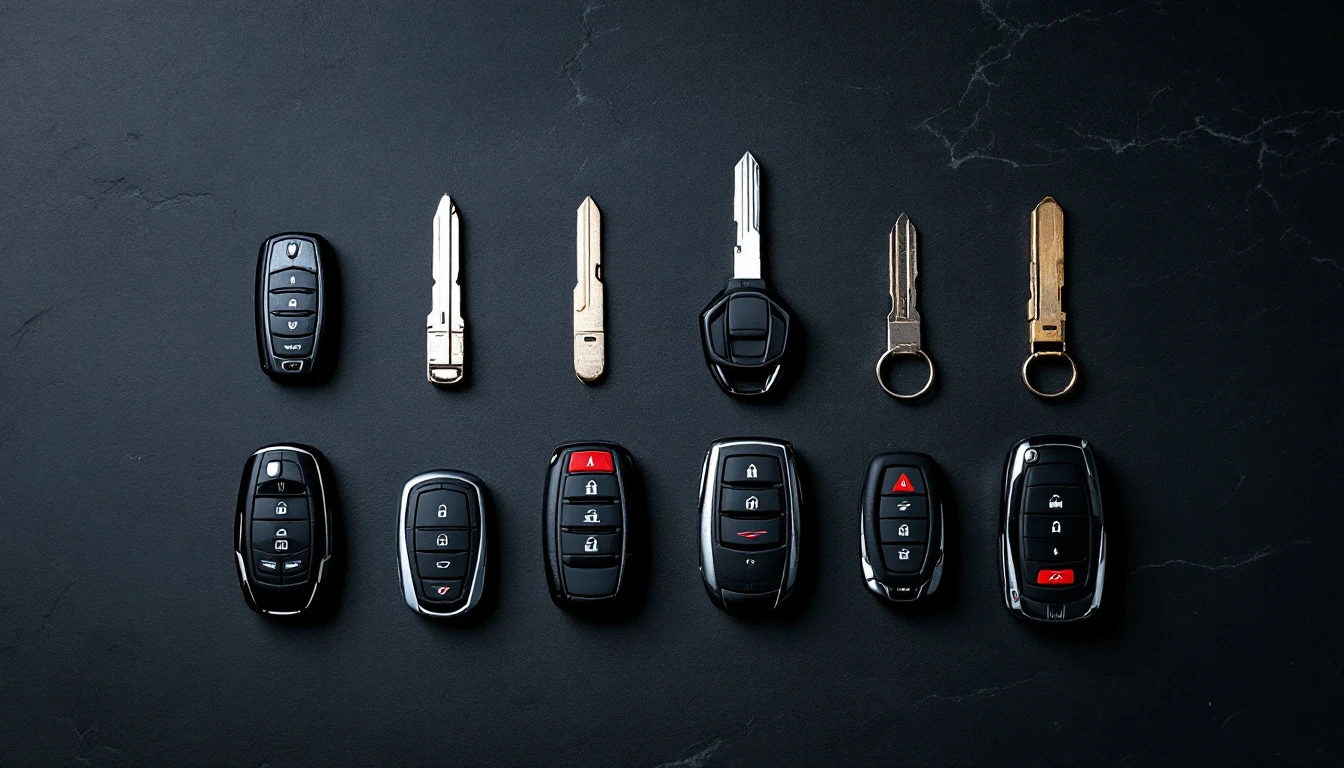
This matters more than the badge on the hood. Working from cheapest to most expensive:
- Non-transponder blade key. No chip, no electronics. Mostly older vehicles and some spare-only door keys. Bottom of the range.
- Transponder key. A chip in the plastic head answers the immobilizer. Cheap hardware, quick programming. Typically $150–$300.
- Remote-head or flip key. Blade plus chip plus lock/unlock buttons in one body. Typically $200–$450.
- Proximity smart fob. Push-to-start, keyless entry, the most electronics of any key. Typically $300–$700.
A 2010 economy sedan and a 2010 luxury sedan can be a $200 job and a $600 job purely because one takes a chipped blade key and the other takes a proximity fob.
2. All keys lost versus adding a spare
This is the second-biggest lever and the one people underestimate most. If you hand a technician a working key, the new blade gets duplicated from the original and the vehicle will enter an add-a-key programming mode with a recognized key present. Short job, low risk.
With nothing working, the technician has to get into the vehicle non-destructively, retrieve the factory key code tied to your VIN, cut the blade from that code rather than copying one, and put the immobilizer through a full programming session — which on many platforms includes a timed security wait that simply cannot be rushed. That is why every all-keys-lost column above is higher, and it is why our all keys lost service is priced separately from routine car key replacement.
The process differs by brand more than most people expect. Compare the Chevrolet all-keys-lost process with the Hyundai all-keys-lost process and you will see two genuinely different sequences and two different time commitments for what sounds like the same job.
3. Make and security level
Manufacturers implement immobilizers with wildly different levels of complexity. Domestic and mainstream Asian brands generally support key programming through the standard diagnostic port with well-established procedures, which keeps time down and price with it. Premium European vehicles frequently use encrypted, module-level security architectures that require more capable equipment, more time, and in some cases manufacturer-side authorization. That is the real reason a BMW fob and a Chevrolet fob are not the same price, even when they look similar in your hand.
4. Time of day and location
Nights, weekends, and holidays generally carry an after-hours premium, which is normal across every trade that answers the phone at 2 a.m. Where the vehicle is sitting matters too — a car in an accessible driveway is faster to work on than one in a stacked parking garage. Neither of these changes the fundamentals of the job, but both shift you within the range.
Dealer versus locksmith: cost and timeline
Both are legitimate paths and both can make you a key. The differences are real, and they show up in the total, not the part price.
The dealership has full manufacturer access and factory hardware. The catch is logistics. If you have no working key, the vehicle cannot be driven in, which means a tow across town on top of the key. Parts departments frequently order fobs rather than stocking every variant, so a same-day job becomes a two-to-four-day job. And you are paying dealer labor rates for the programming time. On the part alone, dealer pricing is often competitive; on the finished total with a tow and a rental car for two days, it usually is not.
A mobile locksmith comes to wherever the car is — an office lot downtown, a driveway in the Cultural District, a job site up by Alliance Town Center — cuts the blade on site, and programs the key through the diagnostic port in the same visit. There is no tow, because the technician goes to the immobile vehicle rather than the reverse. A Fort Worth locksmith operating mobile-only, as we do, is typically finishing the job in the time it would take to arrange the tow.
Legitimate locksmith access to security key codes is not a loophole. It runs through the National Automotive Service Task Force's Vehicle Security Professional program (nastf.org), which requires vetted registration, identity verification, and a permanent audit trail on every code request. That is why a real technician asks for your ID and registration — the verification is the system working, not red tape.
The full side-by-side, including realistic timelines for each path, is in our dealership vs. locksmith comparison.
What to have ready
Five minutes of preparation shaves real time off the visit:
- Photo ID — a driver license or state ID.
- Proof of ownership — current registration, the title, or an insurance card matching the vehicle. If your paperwork is out of order, the Texas DMV (txdmv.gov) is where that gets resolved.
- The VIN, if you can read it through the windshield. It speeds up code retrieval.
- Year, model, and trim. Trim is the detail most people skip and the one that most often changes the part.
- An honest key count. How many keys existed, how many work now, and whether any are damaged. This single answer determines which column of the table you are in.
- Any surviving keys, even broken ones. A cracked housing with an intact chip can change the job.
How to spend less on this next time
Get a spare made before you need one. It is the only real way to move yourself out of the all-keys-lost column, and the savings are not marginal — on most vehicles the spare costs roughly half of what the emergency version costs, and it is scheduled rather than urgent so there is no after-hours premium. Keeping a spare key stored somewhere other than the vehicle is straightforward preparedness, the same principle the federal Ready campaign (ready.gov) applies to any single point of failure in daily life.
Do not buy the fob online first. Marketplace proximity fobs fail to program often enough that the gamble rarely pays. Many used fobs are permanently locked to their original vehicle, and counterfeit automotive electronics are a documented problem NHTSA (nhtsa.gov) has warned consumers about. If a customer-supplied fob will not take, you still owe for the service call, so the discount evaporates.
Get the price agreed before work starts. The Federal Trade Commission's auto repair guidance (consumer.ftc.gov) says it plainly: settle the scope and the price in advance. In the locksmith trade specifically, be alert to the pattern the FBI (fbi.gov) has documented as a consumer fraud category — an unrealistically low online quote that becomes a large cash demand once someone is standing at your car. A real company gives a range on the phone, arrives in a marked vehicle, verifies ownership, and takes cards.
Ask about the specific failure. Sometimes the fob is fine and the battery is dead. Sometimes the car will not start because of an ignition or immobilizer issue rather than the key, and no new key will fix it. A technician who checks before selling you hardware is the one you want.
Frequently Asked Questions
How much does car key replacement cost in Fort Worth?
Between $150 and $850 all-in from a mobile locksmith in 2026. Basic transponder keys run $150 to $300, remote-head and flip keys $200 to $450, and push-to-start proximity fobs $300 to $700. All-keys-lost jobs and premium European vehicles reach the top of the range.
Why is a key fob so much more expensive than a regular key?
A proximity fob contains a battery, a transmitter, a rolling-code security chip, and an emergency blade, and it has to be paired to multiple vehicle modules rather than just an ignition antenna. A plain transponder key is a piece of cut metal with a passive chip in the head. The hardware cost and the programming time are both several times higher on a fob.
Is it cheaper to get a car key from a locksmith or the dealership?
Usually the locksmith, once the whole job is counted. Dealer part pricing can be similar, but a vehicle with no working key has to be towed in, fobs are often ordered rather than stocked, and dealer labor is billed at shop rates. A mobile locksmith cuts and programs at your vehicle in a single visit with no tow.
Does it cost more if I lost all my keys?
Yes, meaningfully. With a working key present, the new blade is duplicated and the vehicle enters a short add-a-key mode. With nothing working, the technician must gain entry, pull the key code from the VIN, cut from code, and run a full immobilizer session that on some vehicles includes a mandatory timed wait. Expect the higher end of your make range.
Can a locksmith make a key for any make and model?
Most makes and models, yes, including all-keys-lost work on the great majority of vehicles on the road. Some premium European platforms and certain very new models require capability that has to be confirmed against your exact year, model, and trim first. A good technician tells you that up front rather than discovering it in your driveway.
How long does it take to get a replacement car key?
Most Fort Worth jobs finish in 30 to 90 minutes on-site. A duplicate transponder key can be done in about half an hour; an all-keys-lost proximity fob on a premium vehicle can run two hours or more once ownership verification and full programming are included. The dealer path is usually measured in days, not minutes, because of the tow and parts ordering.
References
- NHTSA — National Highway Traffic Safety Administration
- NASTF — National Automotive Service Task Force, Vehicle Security Professional program
- FTC Consumer Advice — auto repair basics
- FBI — consumer fraud resources
- ALOA — Associated Locksmiths of America
- Texas DPS — Private Security Program
- Texas DMV — vehicle titles and registration
- Ready.gov — emergency preparedness
Want a number instead of a range? Call (817) 674-3595 with your year, make, model, and how many keys still work, and we will quote your job before a technician rolls — mobile service anywhere in Fort Worth, 24/7, no tow required.
Written by the technicians at Locksmith Fort Worth — mobile automotive locksmith service across Fort Worth and Tarrant County, 24/7.