Nissan Sentra, Versa & Altima Ignition Repair in Fort Worth (2026)
Quick answer: In Fort Worth in 2026, Nissan ignition repair on a Sentra, Versa, or Altima typically runs $150–$550 all-in from a mobile locksmith. If the key will not turn at all, you are looking at a mechanical problem — a worn key, a worn cylinder, or a steering lock binding under load. If the key turns and the engine cranks but will not run, that is an immobilizer or key-recognition problem instead, and it is a different repair. Call (817) 674-3595 for an on-site diagnosis.
As of July 2026, high-mileage Nissan commuters are one of the most common ignition-repair calls in Fort Worth, and it makes sense. A Sentra, Versa, or Altima that has spent eight or ten years running I-35W and Loop 820 twice a day has accumulated an enormous number of ignition cycles — every commute, every errand, every school run is another turn of the key against the same wafers. Wear is not a defect on these cars. It is arithmetic.
The frustrating part for owners is that two completely different faults present the same way at the curb: the car will not start. This guide separates them properly. It covers the mechanical failures that stop the key from turning, the steering-lock interference that fools people into buying parts they did not need, the immobilizer faults that look identical from the driver's seat but are not, what each repair costs, and how a curbside job actually runs.
The two families of Nissan "ignition problem"
Every no-start on a key-start Nissan lands in one of two families, and one question separates them.
Does the engine crank?
If the answer is no — the key will not rotate, or it rotates and nothing happens at all — you are in the mechanical family. Something between your hand and the starter circuit is not completing.
If the answer is yes — the engine turns over strongly and either never fires or fires and immediately dies — the mechanical side is proven good. The cylinder turned, the switch reached the start position, and the starter engaged. That is an immobilizer, fuel, or spark issue, and swapping the ignition cylinder will not fix it.
That single question saves people hundreds of dollars, and it is why an honest technician asks it on the phone before quoting anything. The full version of this decision tree is in our ignition cylinder vs. immobilizer fault guide.
Mechanical family: why the key stops turning
Worn key, worn cylinder, or both
Every time a key goes into an ignition, its cut faces slide across small spring-loaded wafers inside the cylinder. Both surfaces wear. Over a decade of daily use the key's peaks round off and the wafer edges soften, and eventually the worn key can no longer lift the worn wafers to the exact line where the cylinder is free to rotate.
This almost never fails overnight. There is usually a slow decline: the key works on the second try, then only if you jiggle it, then only if you push it in slightly and pull back a hair. Drivers develop a personal trick that works right up until the morning it does not.
The single most useful diagnostic you can run yourself is free: try the spare key. If the spare turns the ignition smoothly and the daily key does not, the key is the worn half, not the cylinder. A freshly cut key by code is the cheapest possible outcome of this call, and it happens more often than people expect.
Steering-lock interference
This one gets misdiagnosed constantly. When you park a Nissan with the front wheels turned, or on a crown or slope, the weight of the car loads the steering column against the steering lock pin. That pin then binds hard enough that the ignition cylinder physically cannot rotate — even though nothing is worn or broken.
The tell is that the key will not turn at all, but the resistance feels solid rather than sloppy. The fix is free: grip the steering wheel and rock it left and right, gently but firmly, while turning the key. Nine times out of ten the pin releases and the car starts normally.
If that trick works every time, you have a parking habit, not a repair. If it used to work and now does not, the lock mechanism or cylinder may genuinely be failing and it is worth a look.
Debris, wear particles, and lubricant mistakes
Ignition cylinders collect pocket lint, sand, and brass dust from years of key wear. A cylinder that turns roughly or feels gritty is often carrying contamination.
The mistake we clean up after most often is a well-meaning owner spraying general-purpose penetrating oil into the ignition. Wet lubricants in a lock cylinder attract and hold every particle of dust that comes in on the next key, and a cylinder that felt slightly rough becomes a cylinder that will not move at all. If you want to try something before calling, use a dry lubricant intended for locks — never household penetrating spray.
A broken key in the cylinder
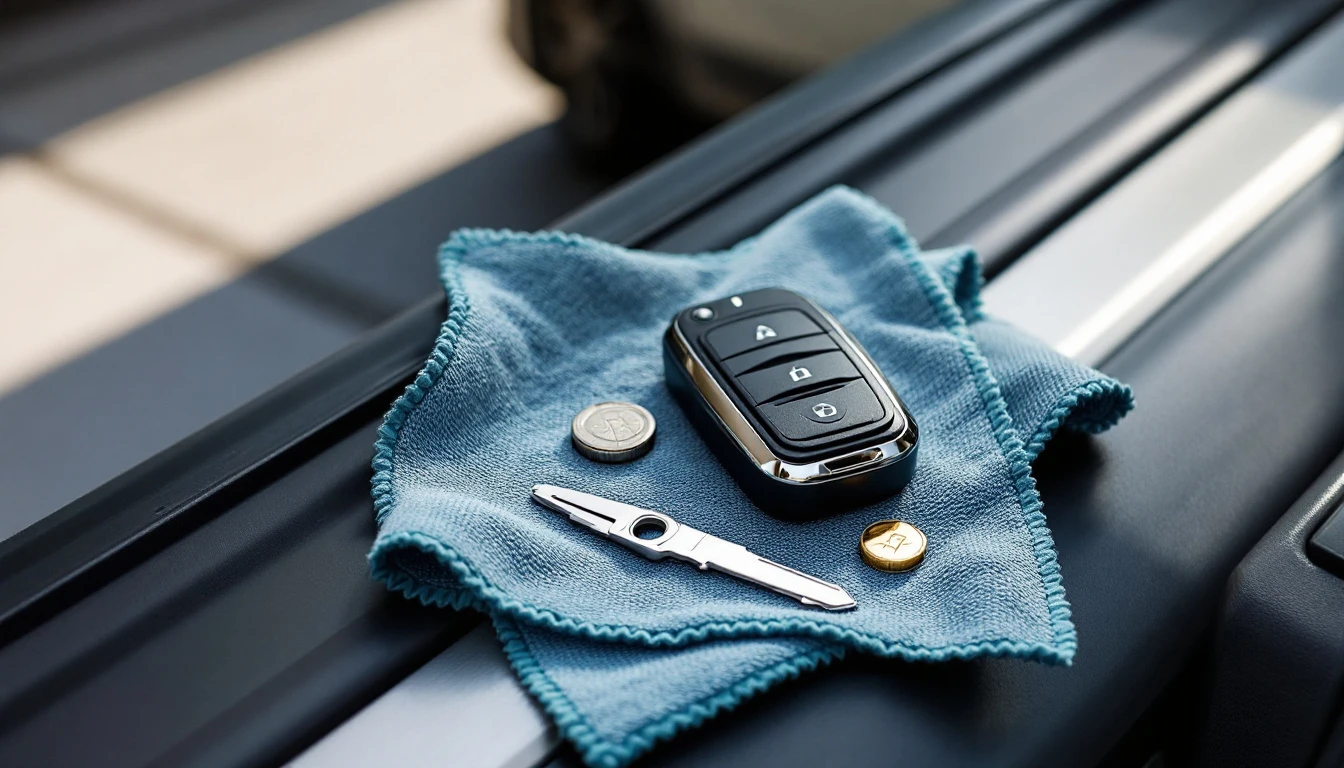
Worn Nissan keys eventually get thin at the shoulder, and a thin blade under twisting force snaps. If part of your key is stuck in the ignition, do not try to fish it out with pliers or superglue — both routinely turn a straightforward extraction into a cylinder replacement. The proper process is covered in our broken key extraction guide, and it is usually a quick job when done with the right tools.
Immobilizer family: cranks but will not run
If the engine turns over and refuses to fire, the ignition hardware is doing its job. Nissan's anti-theft system is refusing to authorize the engine because it did not receive a valid credential from the key.
Common causes, roughly in order of how often we see them:
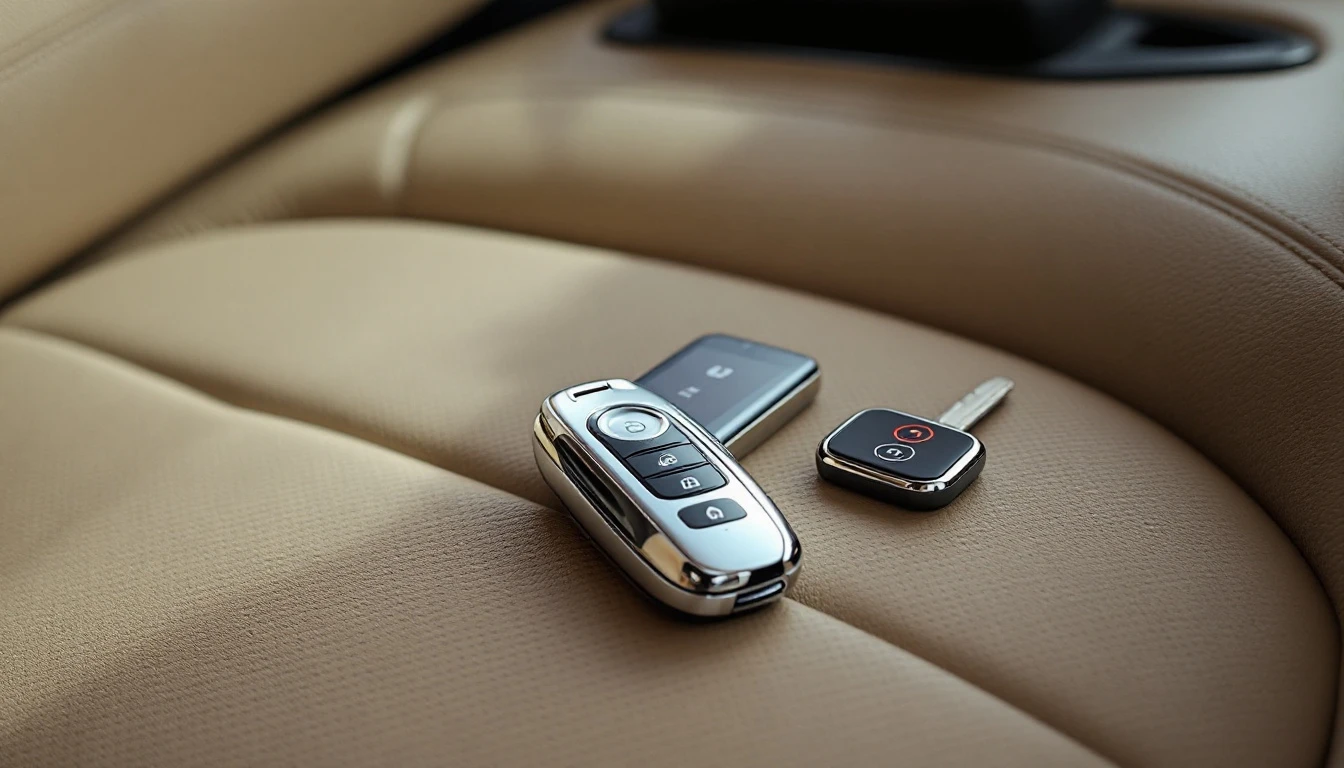
A failed transponder chip. The chip in the key head is a passive component, but it can fail — usually after impact, water exposure, or long-term wear. The key still turns the cylinder perfectly, because the metal blade is unaffected. The engine simply will not stay running.
A key that was never fully enrolled. A key cut somewhere that copied the blade but never programmed the chip will turn the ignition and crank the engine, and never start it. If a recently made key behaves this way, that is your answer.
A vehicle-side anti-theft fault. Less common, but real: the immobilizer or body control module can lose its key data or latch into a security state. This is a diagnostic path, not a parts-swap path. Most immobilizer and body-module programming falls in the $150–$400 range, but a technician confirms the exact price for your specific vehicle after diagnosis rather than over the phone.
A security light on the cluster is the strongest single clue that you are in this family rather than the mechanical one. If it is on, flashing, or behaving unusually while cranking, mention it when you call.
Nissan ignition repair cost in Fort Worth (2026)
Every figure is the all-in mobile price — parts, labor, and on-site work at your location in Fort Worth. Model, year, and whether a working key survives all move the final number.
| Nissan ignition job | Typical vehicles | Fort Worth price (2026) | Typical on-site time |
|---|---|---|---|
| New key cut by code (worn key, cylinder OK) | Sentra, Versa, Altima with traditional key | $150–$300 | 30–45 min |
| Broken key extraction from the ignition | Any Nissan, blade snapped in the cylinder | $150–$320 | 30–60 min |
| Cylinder rebuild / re-key to your existing key | High-mileage Sentra, Versa, Altima | $180–$400 | 45–75 min |
| Full ignition cylinder replacement | Any key-start Nissan | $250–$550 | 60–120 min |
| Transponder key replacement (cranks, will not run) | Chipped-key Sentra, Versa, Altima | $150–$350 | 30–60 min |
Notice that the two cheapest lines — a fresh key and an extraction — solve a large share of the calls that come in described as "my ignition is broken." That is the whole reason to get a diagnosis before authorizing hardware.
How the curbside job goes
We are mobile-only and run 24/7, so the repair happens wherever the car sits: a driveway, an apartment lot, a workplace deck, or the shoulder where it quit on the way home. Everywhere in Fort Worth and the surrounding area is in range.
You call (817) 674-3595 with the year, model, and — importantly — whether the engine cranks. We give a realistic range on the phone, not a teaser number. On arrival, the technician verifies a photo ID and something tying you to the car: registration, title, or an insurance card with matching details. That check is required because ignition work confers the ability to start your vehicle, and legitimate access to manufacturer key data runs through the National Automotive Service Task Force's vetted Vehicle Security Professional framework.
Then the diagnosis runs in order: does the key turn, does the spare turn, does the wheel-rock trick release it, does the engine crank, is there a security light. Only then does a price get confirmed for the actual repair.
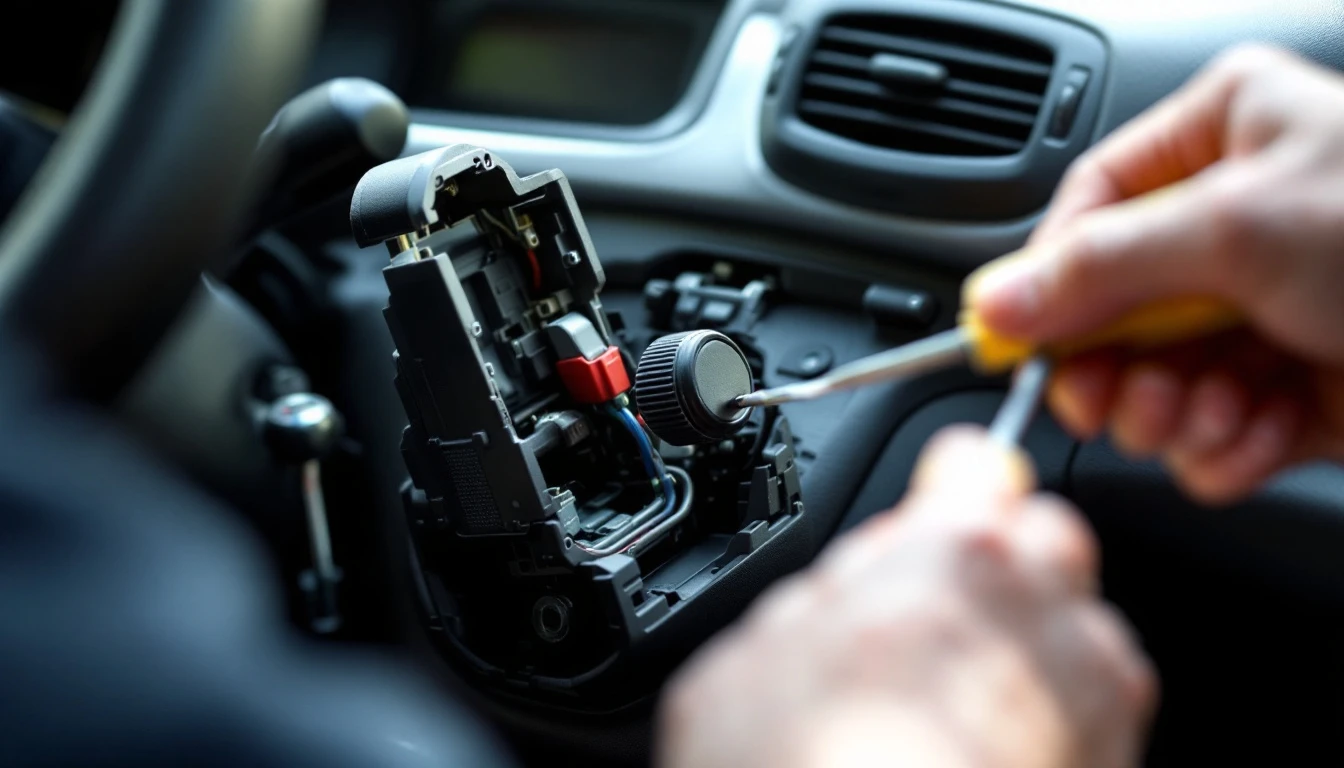
If the fix is a key, it is cut by code from the VIN and, on chipped models, programmed through the vehicle's data port. If the fix is hardware, the steering column trim comes off, the cylinder is released and withdrawn, and the replacement is fitted — re-keyed to your existing key whenever the hardware allows, so you keep carrying one key for the doors, trunk, and ignition.
Before you pay, you test it yourself: the car starts, it shuts off cleanly, the key comes out, the steering lock releases, the accessory position works. Our ignition repair service page has the complete scope.
Typical time on-site is 45 minutes to two hours, longer if all keys are lost and the vehicle needs full key-code retrieval and enrollment.
Preventing the next one
Ignition wear is not preventable forever, but it is delayable.
Take the weight off your key ring. A heavy ring hanging off the ignition applies constant leverage to the cylinder and accelerates wear on both the cylinder and the switch behind it. This is the single most effective habit change available to a commuter.
Rotate between two keys. If you carry a spare and alternate, you halve the wear on each blade. This is a real, if unglamorous, reason to have a second key made before the first one fails.
Park with the wheels straight when you can. It reduces steering-lock loading, which reduces the binding that gets mistaken for cylinder failure.
Do not force it. A key that needs increasing force is telling you something. Forcing it is how blades snap off inside cylinders, converting a $150 key into a $300 extraction or worse.
Skip the household penetrating spray. Dry lock lubricant only.
And in the spirit of the Ready campaign's household guidance: a spare key kept somewhere other than the vehicle belongs in any commuter's plan.
A word on quotes and licensing
Texas locksmiths are regulated under the Texas DPS Private Security Program, and you are entitled to ask about licensing before anyone opens your steering column. Both the FTC and the FBI have documented the low-quote bait-and-switch pattern in this industry: an unrealistically cheap advertised price that becomes a large cash demand once the car is partly disassembled. A legitimate company gives a realistic range on the phone, arrives in a marked vehicle, takes cards, and does not renegotiate mid-job. If a price changes dramatically on arrival with no new information, that is your signal to stop.
Frequently Asked Questions
Why will my Nissan Sentra key not turn in the ignition?
Most often a worn key blade, a worn ignition cylinder, or steering-lock binding. Try rocking the steering wheel firmly left and right while turning the key — if that frees it, the lock pin was loaded by the front wheels, not a broken part. If your spare key turns and the daily key does not, the key is the worn half and a fresh cut may be the entire repair.
How much does Nissan ignition repair cost in Fort Worth?
Between $150 and $550 all-in from a mobile locksmith in 2026. A new key cut by code runs $150–$300, broken key extraction $150–$320, a cylinder rebuild or re-key $180–$400, and a full cylinder replacement $250–$550. The exact figure depends on the model, year, and whether the new cylinder is matched to your existing key.
My Nissan cranks but will not start. Is the ignition bad?
No. Cranking proves the cylinder turned and the switch reached the start position, so the mechanical side is fine. A crank-no-start points at the transponder chip in the key, an unprogrammed key, or the vehicle's anti-theft system refusing to authorize the engine. A security light on the cluster reinforces that diagnosis.
Can you replace a Nissan ignition cylinder at my location?
Yes. Locksmith Fort Worth is mobile-only and available 24/7, so a technician comes to the vehicle, removes the column trim, and fits and re-keys the replacement cylinder on-site. There is no advantage to towing the car, since the work has to happen at the vehicle either way.
My key broke off in the ignition — can it be removed without replacing the cylinder?
Usually yes. A clean extraction with proper tools normally saves the cylinder, and the job runs $150–$320 including a replacement key. What causes damage is DIY attempts with pliers, tweezers, or adhesive, which frequently push the fragment deeper or wreck the wafers and turn a simple extraction into a full replacement.
Will a new ignition cylinder use my existing Nissan key?
In most cases yes. A replacement cylinder can normally be re-keyed to match your current key so you continue carrying one key for everything. On some models the hardware does not allow it, in which case you end up with a separate ignition key — the technician will tell you which applies before starting the work.
References
- NHTSA — National Highway Traffic Safety Administration
- NASTF — National Automotive Service Task Force
- FTC Consumer Advice — auto repair basics
- ALOA — Associated Locksmiths of America
- Texas DPS — Private Security Program
- Ready.gov — DHS emergency preparedness
- FBI — consumer fraud resources
If your Nissan key will not turn, snapped off in the ignition, or the engine cranks and dies, do not start buying parts on a guess. Call (817) 674-3595 and a mobile technician will diagnose the real fault at your car, quote a firm price before any work starts, and finish the repair on the spot — day, night, or weekend, anywhere in the Fort Worth area.
Written by the technicians at Locksmith Fort Worth — mobile automotive locksmith service across Fort Worth and Tarrant County, available 24/7 at (817) 674-3595.