Hyundai Veloster & Accent Ignition Repair in Fort Worth: Key Won't Turn? (2026)
Quick answer: On a Hyundai Veloster or Accent (roughly 2012–2022), a key that won't physically turn is almost always a mechanical problem — a worn ignition cylinder or a worn key — while a key that turns fine but the engine won't start points at the immobilizer or key electronics instead. Ignition repair runs $150–$550; key work runs $150–$850. Locksmith Fort Worth is mobile and 24/7: (817) 674-3595, ignition repair service.
As of August 2026, the Veloster and Accent are two of the compact Hyundais we see most for ignition complaints in Fort Worth — and that's not a knock on the cars. They're high-mileage, well-used, often second-owner vehicles, and the ignition cylinder is one of the few parts on a car that gets physically operated, under load, several times a day for a decade. Things that get touched wear out.
The point of this guide is to save you from paying for the wrong repair. "My key won't work" describes two completely different problems with two completely different prices, and the diagnostic question that separates them takes about five seconds in your own driveway.
The Five-Second Test: Does the Key Physically Turn?
Sit in the car and try the key. Then ask yourself one question, and be precise about the answer:
Does the key rotate in the cylinder — or does it not move at all?
- The key won't rotate, or fights you, or only turns partway. This is a mechanical problem. Worn cylinder, worn key, a bound steering lock, or debris. Cheapest family of causes, and firmly in ignition-repair territory.
- The key rotates all the way to START, the engine cranks but won't fire, or nothing happens electrically. This is not a cylinder problem. The mechanical part did its job. You're now looking at the immobilizer, the key's electronics, or an electrical fault.
- The key rotates but the engine won't crank at all and dash lights behave oddly. Ambiguous — could be an ignition switch (the electrical half behind the cylinder) rather than the cylinder itself, and could be battery-related. Needs diagnosis.
That split is the whole article. Everything below is detail on each side of it.
Side One: Mechanical Wear (The Common One)
An ignition lock cylinder is a lock, mechanically no different in principle from a door lock — small spring-loaded pins that have to line up before anything turns. After ten or twelve years of daily use, three things degrade together:
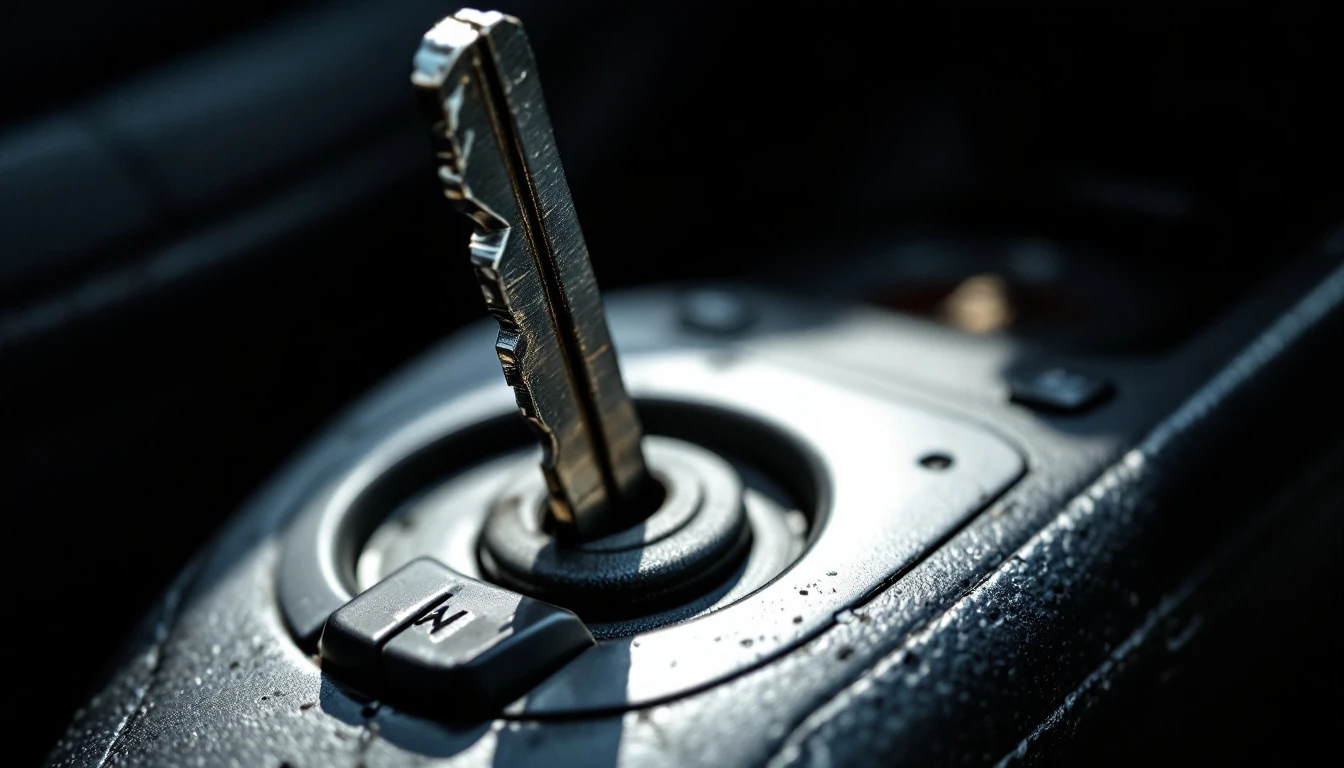
The key wears down. The cut edges of a metal key round off with use. A worn key in a healthy cylinder eventually stops lining the pins up correctly. This is why a spare key that's been sitting in a drawer for years will sometimes turn an ignition that the daily key no longer will — the drawer key isn't worn. If you have a spare, try it. It's the single most informative free test available to you.
The cylinder wears. Pins and springs get tired, tolerances open up, and the mechanism starts to bind at certain rotation points.
Weight kills ignitions. A heavy keyring — house keys, gym fob, bottle opener, a carabiner — hangs off the cylinder and loads it sideways every time you drive. In a small car with a lot of road input, that's constant. It is genuinely one of the most common accelerants of ignition wear, and it's free to fix: drive with the car key alone.
Fort Worth heat contributes too. A cabin that reaches extreme temperatures on a summer afternoon puts thermal cycling into every plastic and metal component in the column, and the National Highway Traffic Safety Administration (NHTSA) publishes stark data on how hot a parked car's interior gets in a Texas summer — those numbers are about occupant safety, but the same heat is working on your hardware.
Side One-B: The Look-Alikes That Aren't Broken
Before condemning a cylinder, rule out two things that fix themselves in seconds:
Steering wheel lock bind. If the wheel was turned as you parked, the steering lock can wedge against the cylinder and block rotation. Fix: apply light pressure on the steering wheel left and right while gently turning the key. Do not force the key — a snapped key inside the cylinder turns a small problem into a much larger one.
Not fully in Park. On automatics, an interlock prevents the key from turning or coming out unless the shifter is properly seated in Park. Nudge the shifter firmly into Park and retry.
Both of these send people to a locksmith weekly. Try them first.
Side Two: When the Key Turns But Nothing Starts
If the cylinder rotates freely and the car still won't start, the mechanical half is fine and you've moved into the electronic security chain. Hyundai's immobilizer authenticates the key before allowing the engine to run — a deliberate anti-theft design that the Insurance Institute for Highway Safety (IIHS) has repeatedly identified as one of the most effective single deterrents in vehicle theft prevention.
Signs you're on this side:
- The dash's security or immobilizer indicator flashes or stays lit.
- The engine cranks but won't fire, or fires and dies within a second or two.
- A different key behaves differently — one starts it, one doesn't.
- The problem began after the key got wet, was dropped hard, or went through a wash.
Our companion guide on the Hyundai smart key that won't start covers the push-to-start version of this same fork in more depth, and if it turns out you simply need to know whether your car uses a chipped key at all, how to tell if you need a transponder key settles that question quickly.
Symptom, Likely Cause, and Cost
| What you observe | Most likely cause | Which repair family | Cost band |
|---|---|---|---|
| Key won't enter the cylinder fully | Debris, damaged key, or damaged cylinder | Ignition repair | $150–$550 |
| Key enters but won't rotate at all | Worn cylinder or worn key; check steering lock and Park first | Ignition repair | $150–$550 |
| Key turns only partway, feels gritty | Cylinder wear | Ignition repair | $150–$550 |
| Key stuck, can't be removed | Cylinder or interlock fault | Ignition repair | $150–$550 |
| Spare key turns fine, daily key doesn't | Worn key, healthy cylinder | New key cut | $150–$850 |
| Key turns, engine cranks but won't fire | Immobilizer or key electronics | Key work or diagnostics | $150–$850, or diagnostic-then-quote |
| Key turns, nothing happens at all | Ignition switch, battery, or electrical | Diagnosis first | Diagnostic-then-quote |
| Security light flashing, no key works | Immobilizer or control module | Diagnosis first | Diagnostic-then-quote |
Notice the pattern down the right-hand column. Anything that is genuinely a lock or a key carries a published band. Anything that lives in the car's computer is diagnostic-then-quote — we don't put a number on module-side work before a technician confirms your exact setup, because an honest price depends on what the diagnosis finds. If your problem turns out to be on that side, ECU and module programming is the relevant service page.
What Ignition Repair Involves on a Veloster or Accent
When it's genuinely the cylinder, the work is straightforward and mobile — no tow, no shop:
- Verify it's mechanical. The tech confirms the cylinder is the fault, not the switch behind it and not the security system.
- Check the key. Sometimes the cheapest correct answer is a freshly cut key, not a new cylinder. A reputable tech will tell you that even though it's the smaller invoice.
- Access the cylinder. Column trim comes off; the cylinder comes out.
- Repair or replace. Depending on wear, the cylinder is serviced or swapped.
- Key it correctly. Where a new cylinder is fitted, the goal is normally one key that works everything — ignition and doors — rather than leaving you juggling two keys.
- Test in front of you. Multiple start cycles, key in and out, before the tech leaves.
We do this anywhere in Fort Worth — driveways off Camp Bowie, lots in the Cultural District, or wherever the car actually stopped working. It's the same repair family we cover in our Lincoln MKZ and MKC ignition repair guide, which is worth a read if you want to see how the same diagnostic logic applies on a very different platform.
Getting a Quote You Can Trust
Ignition problems are a classic setting for the low-phone-quote pattern the Federal Trade Commission's consumer advice documents across the service trades: an implausible number to win the call, then a much larger one once the tech is standing at your window. Three defenses that cost you nothing:
- Insist on diagnosis before price. A firm number for a problem nobody has looked at is a red flag, not a bargain.
- Ask which family the job is in. Ignition repair, key work, or module work? Each has a different honest answer, and a tech who can't articulate which one hasn't diagnosed it.
- Ask about licensing. Texas locksmiths are regulated through the Texas Department of Public Safety Private Security Program. It's a fair question and a professional answer takes two seconds.
Frequently Asked Questions
Why won't my Hyundai Accent key turn in the ignition?
Most often it's mechanical: a worn ignition cylinder, a worn key, or the steering lock binding. Before assuming a repair, wiggle the steering wheel gently while turning the key and make sure an automatic is fully in Park — those two free checks solve a surprising number of cases. If neither helps, it's cylinder or key wear, and repair falls in the $150–$550 band.
My spare key turns but my regular key doesn't. What does that mean?
That your cylinder is healthy and your daily key is worn out. The metal cuts on a key round off after years of use until they stop lining the lock's pins up correctly. The fix is a fresh key rather than a new ignition — a much smaller job, and one worth insisting on before anyone quotes you a cylinder replacement.
The key turns fine but my Veloster won't start. Is that the ignition?
No — if the key rotates, the mechanical part did its job. That points at the immobilizer, the key's electronics, or an electrical fault. Look for a flashing security light and check whether the engine cranks. That's a different diagnostic path with a different price, and module-side findings are diagnostic-then-quote.
How much does Hyundai ignition repair cost in Fort Worth?
Ignition repair falls in our $150–$550 band. Where you land depends on whether the cylinder can be serviced or needs replacing, and on your specific model year. A technician confirms the exact figure on site before any work starts.
Can you fix an ignition without towing the car?
Yes. Locksmith Fort Worth is mobile-only and 24/7 — ignition work is done at the vehicle wherever it is, which matters when the car can't start and therefore can't be driven anywhere. Home, workplace lot, or roadside all work.
Does a heavy keyring really damage the ignition?
Yes, and it's one of the most preventable causes we see. A loaded keyring hangs off the cylinder and applies constant sideways load every time the car moves, accelerating wear on the pins and the mechanism. Driving with the car key on its own is free and genuinely extends the life of the ignition.