Toyota Tacoma & 4Runner Spare Key in Fort Worth: Locksmith or Dealer? (2026)
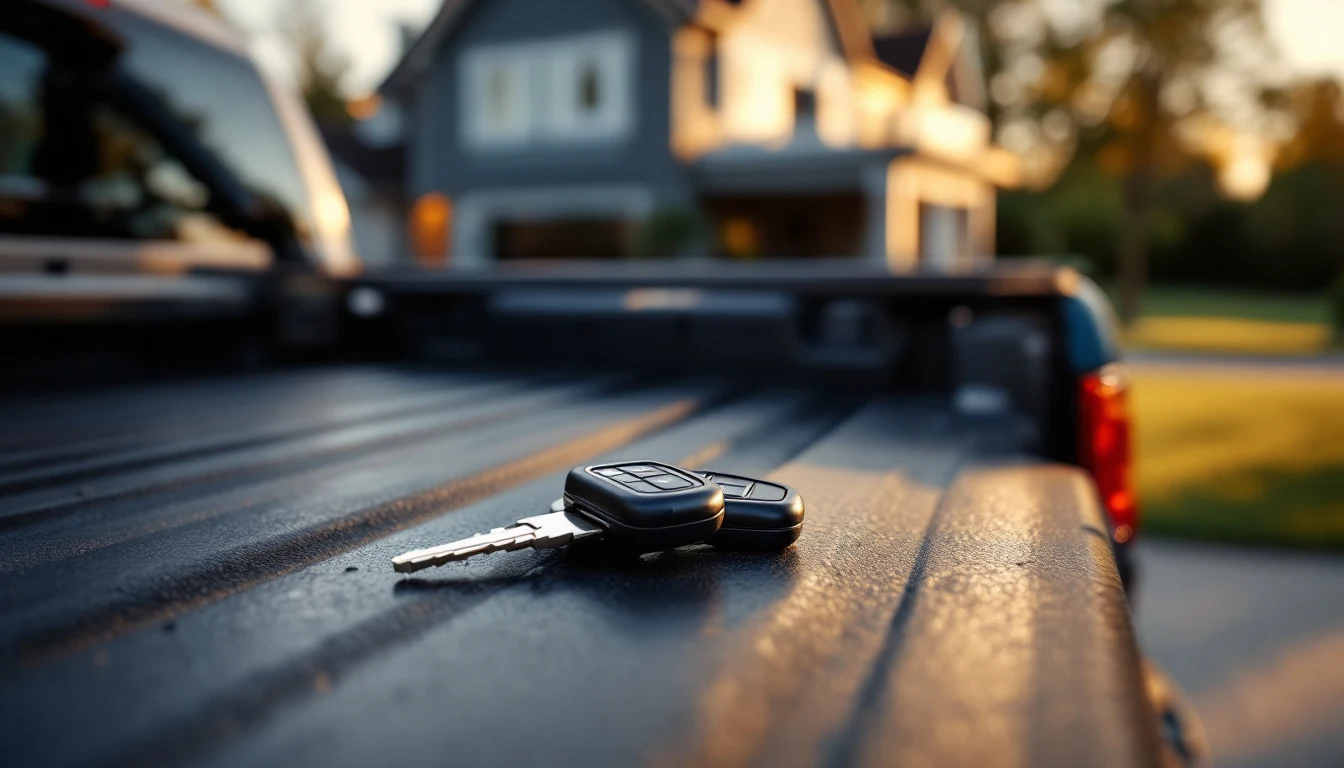
Quick answer: Yes — a licensed mobile locksmith in Fort Worth can cut and program a transponder key for a Toyota Tacoma or 4Runner, and for the large majority of these trucks the dealership is optional rather than required. A spare typically lands in the $150–$850 range depending on whether your truck uses a chipped blade key, a remote-head key, or a push-button smart fob, and it is always a fraction of what the same truck costs once every key is gone. Call (817) 674-3595 with your year, model, and VIN and you will get a firm number before anyone drives out.
That single question — can a local locksmith program a transponder key for my truck, or do I need the dealer? — is the one Tacoma and 4Runner owners ask us most. It is a fair question, because Toyota built a reputation for tight anti-theft integration and a lot of dealer service advisors have told customers that key work has to happen in the service bay. As of July 2026, that is simply not true for the overwhelming majority of Toyota trucks and SUVs on the road in Tarrant County. Key cutting, transponder enrollment, and smart-fob registration are all things a properly equipped mobile technician does in a driveway, a work lot, or a parking garage, usually in under an hour.
What follows is the practical version: how Toyota's key systems changed across Tacoma and 4Runner generations, what a spare actually costs in Fort Worth this year, the specific complaints we get called out for, and the one narrow situation where we will tell you a technician has to confirm feasibility before promising anything.
How Toyota's key systems changed across these two trucks
The Tacoma and 4Runner are unusually long-lived platforms. A second-generation Tacoma and a current-body 4Runner are separated by two full technology steps, and the step your truck sits on determines the price far more than the badge or the trim level does.
Chipped blade keys: the transponder era
From the late 1990s through the 2000s, Toyota moved its trucks onto transponder keys — a cut metal blade with a passive chip embedded in the plastic head. Turn the key and the immobilizer antenna around the ignition cylinder energizes the chip, reads its identity, and either authorizes the engine or leaves you cranking with no start. There are no buttons on the key itself; if the truck has keyless entry it is a separate remote on the keyring.
These are the least expensive Toyota keys to duplicate. The blank is inexpensive, the cut is straightforward, and the programming session through the OBD-II port is short. If you drive an older Tacoma with a plain-looking key and a small security light on the dash, this is almost certainly what you have. The general mechanics behind it are covered in our explainer on how car key programming actually works.
Remote-head keys: blade, chip, and buttons in one shell
The next step folded the keyless-entry remote into the key head. A remote-head key carries the cut blade, the transponder chip, and lock/unlock (and often panic or tailgate) buttons in a single molded housing. Toyota used these widely on Tacoma and 4Runner through the 2010s, and they remain extremely common on Fort Worth roads.
Two things change with a remote-head key. First, the price steps up, because you are buying remote electronics on top of the key. Second, there are now two separate programming operations — the transponder has to be enrolled into the immobilizer, and the remote functions have to be registered so the buttons actually work. A key that starts the truck but will not unlock the doors is usually a half-finished job, not a defective key.
Smart proximity fobs and push-button start
Later Tacoma and 4Runner trims moved to smart proximity fobs: no blade in the ignition, a push-button start, and a mechanical emergency blade hidden inside the fob body for the door. The truck detects the fob by short-range radio, and the immobilizer conversation happens without you touching anything.
Smart fobs carry the most electronics and sit at the top of the price band. Toyota and Lexus share a great deal of this architecture, which is why the process for a Tacoma smart fob looks very close to the one described in our Lexus IS and GS smart key replacement guide — same family of systems, same registration logic, different sheet metal. Smart fobs also introduce a failure mode that is not a key failure at all: a dead coin cell, or a fob the truck simply cannot see. Before you buy a replacement, it is worth ruling that out.
What a Tacoma or 4Runner spare costs in Fort Worth (2026)
Everything below is the all-in mobile price — key hardware, cutting, and programming done at your location anywhere in the Fort Worth area. Your exact number depends on model year, trim, and whether a working key still exists.
| Key type | Typical Tacoma / 4Runner fitment | Fort Worth price, spare (2026) | On-site time |
|---|---|---|---|
| Chipped blade transponder key | Older Tacoma and 4Runner, no buttons on key | $150–$260 | 25–40 min |
| Remote-head key | Most 2010s Tacoma and 4Runner trims | $190–$340 | 35–55 min |
| Smart proximity fob | Push-button-start trims | $290–$560 | 40–75 min |
| Same-visit second key | Any of the above, cut and programmed together | $90–$240 each | Adds 10–20 min |
| All keys lost (for comparison) | Any Tacoma or 4Runner with no working key | $320–$850 | 60–120 min |
That last row is the whole argument for getting a spare made. Look at the gap between a $190 remote-head spare and a $500-plus all-keys-lost job on the same truck, then add the tow or the ride you did not need when a working key existed. Our spare car key service exists mostly because that math is so lopsided.
Why a spare is so much cheaper than an all-keys-lost job
When one working key survives, the technician can duplicate the blade directly and run a short "add a key" session that an existing authorized key helps authenticate. Nothing has to be reconstructed.
With no key at all, three extra things happen. The blade has to be cut from code rather than copied, which means pulling the factory key code tied to your VIN through a vetted channel. Ownership has to be verified in a documented way. And the immobilizer has to go through a longer registration procedure, which on some Toyota systems includes a built-in waiting period the technician cannot shorten. More steps, more time, higher price. The full sequence is laid out in our all-keys-lost VIN-to-new-key walkthrough, and the same economics show up on the minivan side of the Toyota lineup in our Toyota Sienna spare key guide.
Federal consumer guidance is blunt about this category of avoidable expense. The FTC's consumer advice on vehicles and repair (consumer.ftc.gov) and the DHS Ready campaign (ready.gov) both make the same general point from different angles: the cheap time to solve a single-point-of-failure problem is before it fails.
What we actually get called out for
Tacoma
Worn blades top the list. A Tacoma key that has ridden in a work pocket for a decade develops rounded shoulders, and eventually it stops turning cleanly in a cylinder that has worn to match it. Owners tell us the key "only works if you jiggle it." That is a warning shot — the next stage is a snapped blade in the ignition, which turns a $200 spare into a much longer visit. The other frequent Tacoma call is the truck that cranks strongly but will not fire with the security light flashing, which points at the immobilizer refusing to authorize the key rather than at a fuel or spark problem. We separate those two in our guide to ignition cylinder versus immobilizer faults.
4Runner
The 4Runner calls skew toward remote functions and smart fobs. Buttons that stopped responding, a fob that unlocks only when you are standing at the driver's door, a second fob bought online that never registered. Battery-first is the right instinct — a coin cell is a few dollars and takes a minute — but if a fresh battery does not fix a fob that used to work, the fault is often in the fob's electronics or in how it was originally programmed. Families also hit the classic second-driver problem: one 4Runner, two drivers, one key, and nobody notices until it is gone.
What to have ready when the technician arrives
None of this is complicated, and having it ready is usually the difference between a 35-minute visit and an hour-long one.
- The VIN. Driver-side door jamb sticker, and visible through the base of the windshield on the driver's side.
- Photo ID for whoever meets the technician.
- Proof of ownership — current registration, title, or an insurance card matching the ID. If the truck is titled to a business or a family member, bring the registration plus a short note of authorization; a phone photo is fine.
- Any existing key, including one that is broken or intermittent. It can shorten the job.
Legitimate access to factory key codes runs through the National Automotive Service Task Force's Vehicle Security Professional program (nastf.org), which is built around vetting and an audit trail. That verification step is not bureaucracy for its own sake — it is exactly what prevents a stranger from having a key cut to your truck. Texas locksmiths are licensed through the DPS Private Security Program (dps.texas.gov), and you are entitled to ask about licensing before anyone opens a door. Vehicle theft prevention guidance from NHTSA (nhtsa.gov) is worth a read if you park a truck outdoors.
Where the honest boundary sits
Two situations get a diagnose-first answer rather than a phone quote.
The first is the newest model years. Toyota, like every manufacturer, keeps tightening key security, and the most recent chassis can require a different approach than the truck sitting next to it on the lot. We do not promise a same-hour result on a brand-new Tacoma or 4Runner sight unseen — a technician confirms your exact setup, then quotes.
The second is anything that turns out not to be a key problem. If a known-good key suddenly stopped working, if the security light behaves erratically, or if the truck lost several electronic functions at once, the fault may live in a module rather than in the key. That is a different service with a different process: diagnose first, quote after. Our ECU and module programming service covers that lane, and the general decision tree lives in our article on when a car needs module programming, not just a key.
Getting a spare made around Fort Worth
We are mobile-only and run 24/7, so the spare gets made wherever the truck already is. That is usually a driveway, but it is just as often an office lot near Alliance Town Center, a garage downtown by Sundance Square, or a curb near TCU while a student is in class. There is no shop to drive to and no drop-off window to plan around, which is the whole point — a spare key is a chore people put off, and it stops being a chore when the technician comes to you. Full coverage details are on our Fort Worth service area page.
Frequently Asked Questions
Can a Fort Worth locksmith program a transponder key for my Tacoma, or do I need the dealer?
A licensed mobile locksmith can cut and program transponder keys, remote-head keys, and smart fobs for the large majority of Tacoma and 4Runner model years. The dealership is one option, not the only one, and it usually means an appointment and getting the truck there. The narrow exception is the newest chassis, where a technician confirms your exact setup before quoting.
How much is a spare key for a Toyota 4Runner in Fort Worth?
In 2026 a spare typically runs $150 to $260 for a chipped blade key, $190 to $340 for a remote-head key, and $290 to $560 for a smart proximity fob, all-in with cutting and programming at your location. A second key made during the same visit costs less than a separate trip.
Is it really cheaper to make a spare before I lose my only key?
Yes, substantially. An all-keys-lost job on the same truck runs $320 to $850 because the blade must be cut from code, ownership verified, and the immobilizer put through a longer registration procedure. A spare made while a working key exists skips all of that.
My 4Runner fob unlocks the doors but will not start the truck. Is the fob dead?
Not necessarily. Remote functions and immobilizer authorization are two separate systems. A fob that opens doors but will not start the vehicle often points to an incomplete programming job or an immobilizer fault rather than a dead fob, and a technician can tell the difference quickly.
Do I need my title to get a key made?
Usually not. Current registration or an insurance card that matches your photo ID is normally enough. If the truck is titled to a business or another family member, bring the registration plus a short written authorization, which can be a photo on your phone.
How long does a Tacoma spare key take?
Most spares take 25 to 55 minutes on-site depending on key type. A smart proximity fob can take up to about 75 minutes. An all-keys-lost job on the same truck can run up to two hours including ownership verification.
Need a spare made before it becomes an emergency? Call Locksmith Fort Worth at (817) 674-3595 any hour, day or night. We are mobile-only, we come to your driveway or work lot anywhere in the Fort Worth area, and we can cut and program a Tacoma or 4Runner key while you keep working. Email contact@locksmithfortworth.net if you would rather schedule ahead.
Written by the technicians at Locksmith Fort Worth, a mobile automotive locksmith service based in 76102 and serving the Fort Worth area 24/7.


