Mercedes ESL & EIS Module Programming in Fort Worth: When It's Not the Key (2026)
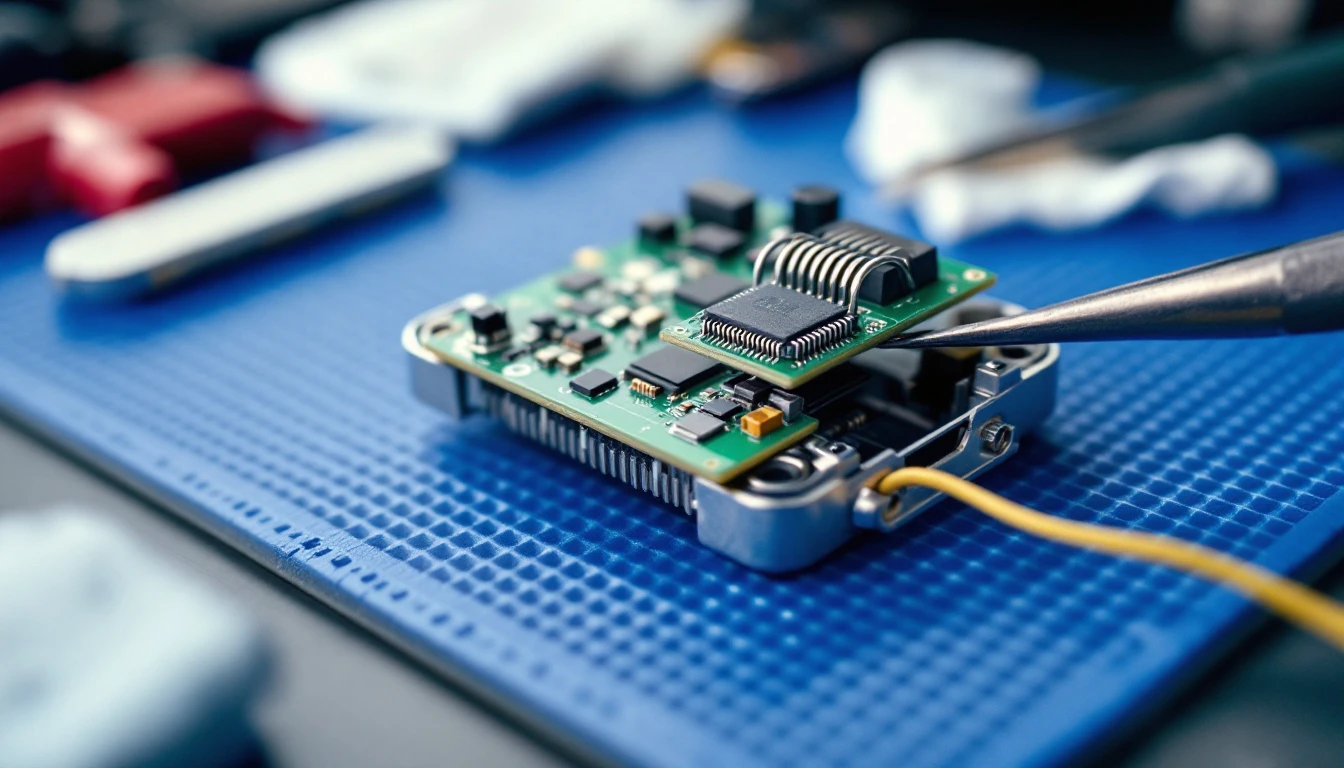
Quick answer: If your Mercedes key won't turn, the steering wheel stays locked, or the dash lights up but the engine never cranks — and a new key didn't fix it — you're probably looking at the electronic steering lock (ESL/ELV) or the EIS/EZS ignition module, not the key. That's computer-side work, and we quote it diagnostic-then-quote: no dollar figure until a technician confirms your exact setup. Locksmith Fort Worth is mobile and 24/7: (817) 674-3595, ECU and module programming.
As of August 2026, the most expensive mistake we see Mercedes owners make is buying their way down the wrong path. The symptom looks like a key problem. So they buy a key. The car still doesn't start. Then they buy another key, or a used ignition part off the internet, and the car still doesn't start — and now they're several hundred dollars into a problem they never diagnosed.
This guide is about recognizing that fork early. It's written at the owner's altitude: what the symptoms mean, why a key won't solve them, and what an honest service conversation should sound like. It is deliberately not a repair walkthrough.
Two Components, One Job
Every modern Mercedes has to answer a question before it will run: is this an authorized key for this specific car? Two components sit at the center of answering it.
The EIS/EZS is the electronic ignition switch module — the brain behind the slot or start button. It's what actually reads and authenticates the key, and what tells the rest of the car whether to wake up. Think of it as the bouncer with the guest list.
The ESL/ELV is the electronic steering lock. On many Mercedes models, the steering column is locked mechanically and released electronically — the car only unlocks the wheel once the ignition side is satisfied. Think of it as the door the bouncer opens.
Two things follow from that arrangement, and they explain almost every symptom in this article:
- These modules can fail independently of any key. They're electronics with their own wiring, their own power, and their own service life. A perfect key handed to a failed module is still a car that doesn't start.
- A failure in one looks like a failure in the other. If the wheel stays locked, is the lock stuck or did the ignition side never give permission? From the driver's seat, identical. That's why diagnosis is a real step and not a formality.
Symptoms, and What They Usually Are Not
Here's the fork laid out. Read the row that matches what your car is doing.
| What you're experiencing | What owners usually assume | Where it actually tends to point | Path forward |
|---|---|---|---|
| Key inserts but won't rotate; nothing electrical happens | "Worn ignition cylinder" | Ignition module not authorizing, or no power reaching it | Diagnose module side before touching the lock |
| Steering wheel stays locked; car may otherwise light up | "The steering lock jammed" | Electronic steering lock, or the permission it never received | Diagnostic-then-quote |
| Dash lights, radio works, but engine never cranks | "Dead battery or starter" | Authentication chain stopped before crank was allowed | Rule out battery first, then module diagnosis |
| Intermittent — starts fine some days, dead others | "Bad key battery" | Marginal module or connection; intermittency is a hallmark | Document the pattern, then diagnose |
| New key bought, car still won't start | "Bad key / bad programming" | Almost always the module side, not the key | Stop buying keys; diagnose |
| Key turns, engine fires, then dies | "Steering lock" | Immobilizer authentication failing after start | Diagnostic-then-quote |
That last-but-one row is the important one. If you have already bought a key and the symptom didn't change, that is diagnostic information. It effectively rules the key out. Buying a second one rarely produces a different result.
Why "Diagnostic-Then-Quote" Is the Only Honest Structure Here
We publish firm price bands for the work we can bound: keys and programming at $150–$850, ignition repair at $150–$550. We publish no number at all for module and computer-side work, and this article is the clearest example of why.
The symptom "steering stays locked" can resolve into several genuinely different jobs with genuinely different scopes. Nobody — not us, not a dealer, not the shop quoting confidently over the phone — can tell you which one you have without reading your specific vehicle. A number given before that point is either a guess dressed as a quote, or the opening move in a price that will change once someone is standing in your driveway.
The Federal Trade Commission's consumer guidance has documented that pattern across the service trades for decades: the low phone number, then the revision on arrival. The structural defense is the same everywhere — diagnosis first, firm written quote second, work only third, with the option to stop after step two.
So when you call about a Mercedes that won't turn or won't unlock its wheel, the honest answer you should get is: we'll diagnose it on-site, then quote you a firm number, then you decide. If you get a confident dollar figure instead, ask what they're basing it on.
Rule Out the Cheap Things First
Before anyone talks about modules, three ordinary causes deserve two minutes.
Battery voltage. A weak battery produces bizarre, expensive-looking electronic symptoms in a modern Mercedes — modules browning out and behaving erratically. Before diagnosing a computer, confirm the 12-volt battery is genuinely healthy, not just "it cranked yesterday." This is the single most common false alarm on this entire list.
Steering-wheel bind. If the car was parked with the wheels turned hard against a curb, mechanical tension can hold the column lock. Rock the wheel firmly left and right while trying the key. If it frees up, nothing is broken.
The key itself, honestly assessed. Try your spare. If the spare behaves completely differently, the key genuinely is the variable and you're in key replacement territory, not module territory. If both keys behave identically, that's a strong signal the car is the problem — two keys rarely fail the same way at the same moment.
Only after those three does module diagnosis become the sensible next step.
How This Fits the Wider Mercedes Picture
Mercedes module work isn't limited to the ignition and steering chain — the same diagnostic-then-quote logic applies across the vehicle's computer-side systems. Our broader Mercedes module programming guide covers how those jobs are scoped and what owners should expect from the conversation.
It's also not a Mercedes-only phenomenon. Every premium manufacturer built some version of this architecture, and every one of them produces the same owner experience when a module rather than a key is at fault. Our write-up on BMW FEM/BDC module programming walks through the equivalent on the BMW side — different names, same fork in the road.
The National Automotive Service Task Force (NASTF) exists specifically to keep qualified independent technicians in the loop on vehicle security and immobilizer systems, so owners aren't forced into a single service channel for work like this. That matters most on exactly these jobs.
What a Mobile Diagnostic Visit Looks Like
Locksmith Fort Worth is mobile-only and 24/7. A Mercedes that won't start also won't drive to a shop, which is precisely why the equipment travels instead. We cover Fort Worth and the surrounding areas, including the Cultural District, West 7th, and Alliance Town Center.
- Phone triage. Model, year, exactly what the car does and doesn't do, whether a second key behaves differently, whether a key was already purchased, and whether the battery has been tested. This conversation is free and sometimes ends the problem.
- Ownership verification on arrival. Photo ID and registration or title matching the vehicle. Any professional should verify ownership before touching a car's security system — the Associated Locksmiths of America (ALOA) treats it as baseline practice.
- Diagnosis. The technician confirms whether this is a key issue, a lock issue, or a module issue — with equipment, not inference.
- Firm quote. Full findings, full price, and a genuine option to stop there.
- Work and verification. If you proceed, the repair is tested through a complete cycle before the tech leaves.
Texas locksmith licensing runs through the Texas Department of Public Safety's Private Security Program. It's a fair question to ask any provider, and a real company answers it without hesitating.
Preventing the Version of This You Can Prevent
You can't prevent a module from aging. You can prevent the part of this problem that's actually key-related, and that's worth doing.
Keep two working keys. A Mercedes down to a single key is one failure away from an all-keys-lost job at the top of the key band — and worse, when there's only one key, you can't run the single most useful diagnostic test on this entire page (does the spare behave differently?). A spare key is both insurance and a diagnostic tool.
Keep the 12-volt battery healthy. Fort Worth summers are hard on batteries, and a marginal battery is the leading cause of module symptoms that turn out to be nothing. The Department of Homeland Security's Ready.gov vehicle-readiness guidance puts battery condition and spare keys in the same basic-preparedness bucket, which is about right.
And keep a written record if the fault is intermittent. Dates, times, temperature, what the car did. An intermittent fault that can't be reproduced on the day of the visit is the hardest thing in this business to diagnose, and your notes may be the only evidence.
Frequently Asked Questions
My Mercedes key won't turn at all. Is that the steering lock or the ignition?
From the driver's seat you can't tell, and that's the honest answer. If nothing electrical happens at all, the ignition side may never be authorizing. If the dash lights up but the wheel stays locked, the steering lock is more suspect. Both are diagnosed on-site with equipment, and both are diagnostic-then-quote — we don't put a dollar figure on them in advance.
I already bought a new key and the car still won't start. What now?
That's meaningful diagnostic information: it largely rules out the key. Buying a second key rarely changes the outcome. The next step is a module-side diagnosis to find where the authentication or steering-unlock chain is actually breaking down.
Why won't you quote a price for module work over the phone?
Because the same symptom can resolve into several different jobs with different scopes, and nobody can tell which one you have without reading your specific vehicle. Any firm number given before diagnosis is a guess. We diagnose first, quote firmly second, and you decide third.
Could this just be my car battery?
Very possibly, and it's the first thing to rule out. A weak 12-volt battery makes modern Mercedes electronics behave in strange, expensive-looking ways. Confirm the battery is genuinely healthy — properly tested, not just "it started yesterday" — before spending money on anything deeper.
Do I need to tow my Mercedes to a shop for this?
Not for the diagnosis. Locksmith Fort Worth is mobile-only, so a technician comes to the vehicle wherever it's parked. If the diagnosis turns up something outside locks, keys, and immobilizer-side work, we'll tell you plainly rather than starting a job that belongs elsewhere.
Is this covered by a Mercedes warranty?
It can be, depending on the vehicle's age, mileage, and any open service campaigns. It's worth a two-minute VIN check against the NHTSA recall database and a call to a franchise dealer before spending your own money. If it's covered, use the coverage — we'd rather tell you that than take the job.