Subaru Outback & Forester Key Replacement in Fort Worth: Transponders, Fobs and 2026 Pricing
Quick answer: Do you need a transponder key for your Subaru? Almost certainly yes — Outbacks and Foresters from roughly the late 1990s onward carry an immobilizer, so any new key has to be electronically registered to the car, not just cut. In Fort Worth in 2026 that work runs $150–$850 all-in from a mobile locksmith: older chipped blade keys near the bottom, remote-head keys in the middle, push-button proximity fobs higher, and all-keys-lost at the top. Call (817) 674-3595 with your year and VIN.
As of July 2026, Subarus occupy a strange middle ground in our call volume. They are not the make people expect to be complicated, and owners frequently assume a hardware store can cut them a key for twenty dollars. That works exactly once — on the door. The car will open, the key will turn, and the engine will crank and refuse to start, because the piece that matters is not the metal. It is the chip.
That confusion is the single most common reason a Subaru owner calls us on a second attempt rather than a first. This guide sorts out which key your Outback or Forester actually uses, what registration involves, what each path costs, and what to do when the only key in existence is at the bottom of a lake, in a trash bag, or simply gone.
The transponder question, answered properly
A transponder is a small passive chip in the head of the key or inside the fob. When you attempt to start the car, the immobilizer sends out a challenge, the chip answers, and only a correct answer allows fuel and spark. A key without a matching chip is a very good door key and nothing more.
Subaru adopted immobilizers broadly, and the practical rule is that essentially every Outback and Forester on Fort Worth roads today needs an electronically registered key. There are older vehicles out there with plain non-chipped blades, and if yours is one of them you are in luck and your key is cheap — but that population is small and shrinking. Rather than guess from the model year, check the key itself. Our guide on how to tell whether you need a transponder key walks through the physical tells in more detail, but the short version is below.
The cheap test. Look at the head of the key. A thick plastic head that cannot be squeezed flat almost always contains a chip. A thin stamped-metal key with no plastic head, or a plastic head so slim it is clearly just a grip, is usually non-chipped. Any key with buttons on it contains electronics by definition.
The definitive test. If a hardware-store copy opens the door but will not start the engine, you have a transponder vehicle and an unprogrammed copy. That is not a bad key; it is an unregistered one.
Three key architectures across the Outback and Forester
Chipped blade keys
The oldest of the three. A conventional cut metal blade with a transponder molded into the plastic head, and typically no remote at all — or a separate keyless entry remote on the same ring. These are the least expensive Subaru keys to replace because the blank is inexpensive and the registration session is short.
Base-trim Foresters and older Outbacks are the usual candidates. If your keyring has a metal key and a separate little remote, this is you.
Remote-head keys
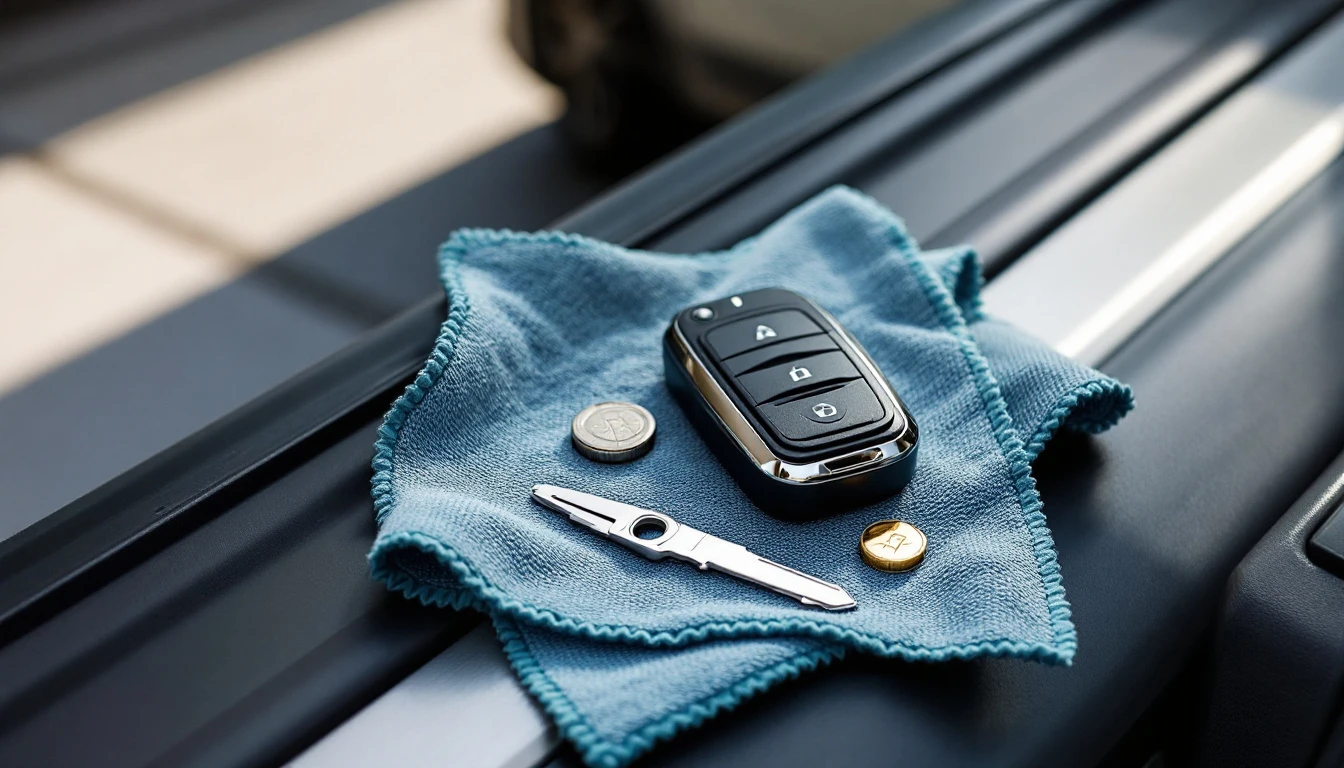
The middle generation combined the blade, the chip, and the lock/unlock buttons into a single housing. Some are one-piece; some are a flip or switchblade design where the blade folds into the head. Functionally identical, priced similarly.
The step up in cost from a chipped blade key is real and it is entirely about the remote electronics. You are buying a radio transmitter in addition to a key, and the programming session covers both.
Push-button proximity fobs
Later Outbacks and Foresters, especially higher trims, moved to keyless access with push-button start. There is no ignition cylinder to turn — the car detects the fob's presence, and an emergency blade hides inside the fob housing for the door. These carry the most electronics, cost the most to replace, and introduce a failure mode that is not really a key failure at all: a fob the car cannot detect, usually a dead fob battery or a reception issue.
That distinction matters. If your Subaru is displaying a message about the key not being detected rather than simply refusing to crank, start with the battery before assuming you need a new fob. The same logic applies across every push-button make — we laid it out in the context of a different brand in our Lexus IS and GS smart key replacement guide, and the diagnostic order transfers cleanly to a Forester.
What Subaru keys cost in Fort Worth (2026)
All figures are all-in mobile pricing — hardware, cutting, and immobilizer registration performed where the car is parked. Year, trim, and whether a working key survives all shift the number.
| Subaru key type | Typical application | Fort Worth price (2026) | On-site time |
|---|---|---|---|
| Chipped blade key | Older Outback and Forester, base trims | $150–$290 | 30–50 min |
| Remote-head or flip key | Mid-generation Outback and Forester | $220–$420 | 40–70 min |
| Proximity smart fob, spare added | Push-button Outback and Forester | $300–$600 | 45–90 min |
| All keys lost, blade or remote-head | No working key, non-proximity vehicle | $320–$650 | 60–120 min |
| All keys lost, proximity | No working fob, push-button vehicle | $400–$850 | 75–150 min |
| Extra matched key, same visit | Any type, programmed together | $110–$340 each | Adds 10–30 min |
The most useful line in that table is the last one. Adding a second key while a technician is already set up costs a fraction of what a separate visit costs, because the diagnostic and programming setup is shared. Our spare car key service is built around that arithmetic, and it is the cheapest insurance available on any vehicle with an immobilizer.
What "registration" actually means
Cutting is the easy half. Registration — enrolling the new key's chip into the car's immobilizer so it is accepted as legitimate — is where the real work is, and it is what a hardware store cannot do.
The technician connects to the vehicle's diagnostic port, establishes a session with the immobilizer, and enrolls the new key. On many vehicles this also means every key that should work has to be present, because some enrollment procedures rewrite the list of accepted keys rather than appending to it. That is why we ask you to bring every key you own, including the one that "doesn't work anymore" — leaving one in a drawer at home can quietly deactivate it.
Access to the factory data behind this runs through the National Automotive Service Task Force's Vehicle Security Professional framework (nastf.org), which requires vetting and an audit trail. That is deliberate: key programming is the mechanism behind a real category of vehicle theft, which NHTSA covers in its theft-prevention materials (nhtsa.gov). The verification you go through is what stops someone else from going through it on your car.
When the only key is gone
All-keys-lost is genuinely a different job, not just a more expensive version of the same one.
With nothing to duplicate, the technician has to derive the key code from the VIN through authorized channels, cut a blade from that code rather than by copying, and run a full immobilizer session instead of a quick add. That is why the price sits at the top of the range and why the visit takes longer.
Verification is strict. Have ready:
- The VIN — driver-side door jamb sticker, or readable through the base of the windshield.
- Photo ID for whoever meets the technician.
- Proof of ownership — registration, title, or an insurance card in the matching name. On a vehicle registered to a business, add a work order or short authorization letter if the person on-site is not the registered owner.
- Every key you still possess, working or not.
Texas locksmiths are licensed under the DPS Private Security Program (dps.texas.gov), and you are entitled to ask about licensing before anyone connects to the car. Our all-keys-lost service covers this path, and the VIN-to-new-key walkthrough goes through it step by step.
The three mistakes that cost Subaru owners money
Buying a key online first. The most common and the most expensive. Used proximity fobs are frequently locked to their original vehicle and cannot be re-enrolled to yours. Counterfeit automotive electronics are a persistent problem across every brand. And the economics are unforgiving: if the part you supplied fails to program, the service visit is still billable, so the discount evaporates and then some. This is not brand-specific — we made the same argument about a very different make in our Acura MDX and TLX key fob replacement guide, because the underlying risk is identical.
Having a blade cut without programming. A cut-only copy will open the doors and turn in the cylinder, and it will never start the car. Owners then conclude the key is defective, buy a second one, and repeat the experience. The blade was fine; the chip was never registered.
Waiting until there is one key left. The gap in the table above between "spare added" and "all keys lost" on the same vehicle is, functionally, the price of having waited. It is also the difference between an appointment and an emergency.
When it is not the key
Not every Subaru no-start is a key problem, and diagnosing correctly saves money.
A strong crank with no start and a security indicator lit points at the immobilizer refusing to authenticate — a key or registration issue. A push-button vehicle reporting that the key is not detected points at the fob battery, the fob itself, or reception. Dash lights that flicker or die in a particular ignition position point at the ignition switch rather than at anything electronic, and that lane runs $150–$550 through our ignition repair service.
And when the fault traces to a control module rather than to a key, honest practice is to diagnose first and quote after — the correct answer depends entirely on what the vehicle reports, and nobody can responsibly price it over the phone. Our ECU and module programming service handles that work.
For the newest model years and the highest-security trims, our position is the same as everywhere else: capability changes faster than any published article can track, so a technician confirms your exact setup from the VIN before promising an outcome. The Federal Trade Commission's consumer guidance on auto repair (consumer.ftc.gov) makes the case for estimates based on inspection rather than assumption, and we agree with it.
Where we come to you
We are mobile-only, based in 76102, and available 24/7. Subaru calls reach us from across the Fort Worth service area — apartment lots near the TCU area, trailhead and park parking on the west side, driveways throughout the Cultural District. Because the work happens at the car, a Subaru with no working key never has to go on a tow truck to get one. Our car key replacement service covers every key type described above.
Frequently Asked Questions
Do I need a transponder key for my Subaru?
Almost certainly. Outbacks and Foresters from roughly the late 1990s onward carry an immobilizer, so a new key must be electronically registered to the car in addition to being cut. A blade-only copy will open the doors and turn in the cylinder but will not start the engine.
How much does a Subaru key cost in Fort Worth?
In 2026, an older chipped blade key runs about $150 to $290, a remote-head or flip key runs $220 to $420, and a push-button proximity fob runs $300 to $600 with programming included. If no working key remains, expect $320 to $850 depending on which type your vehicle uses.
Why won't my hardware-store Subaru key start the car?
Because it was cut but never registered. The metal profile controls the doors and the cylinder; the transponder chip controls whether the immobilizer allows the engine to run. Programming that chip to your specific vehicle is a separate step that requires diagnostic equipment.
Can you make a Subaru key if I lost all of them?
Yes. With photo ID and proof of ownership, a licensed locksmith derives the key code from the VIN, cuts a blade from code, and runs a full immobilizer registration session at your location. No tow and no dealership appointment are required.
Should I bring my other keys to the appointment?
Yes, all of them, including any that no longer work. Some enrollment procedures rewrite the list of accepted keys rather than adding to it, so a key left at home can end up deactivated. Bringing everything avoids a second visit.
Is buying a Subaru fob online cheaper?
Usually not. Many used proximity fobs are locked to their original vehicle, counterfeit units frequently fail to program, and if a part you supplied fails you still owe for the service visit. A correct part supplied by the locksmith is generally cheaper once that risk is priced in.
Stuck with a Subaru that turns over and will not start, or no key at all? Call Locksmith Fort Worth at (817) 674-3595 any hour, day or night. We are mobile-only, we come to the vehicle anywhere in the Fort Worth area, and we can cut and register a spare while we are already on-site. Email contact@locksmithfortworth.net for non-urgent scheduling.
Written by the technicians at Locksmith Fort Worth, a mobile automotive locksmith service based in 76102 and serving the Fort Worth area 24/7.