Lincoln Continental & MKS Spare Key in Fort Worth: Add One Now (2026)
Quick answer: Adding a spare key to a Lincoln Continental or MKS while one key still works is a duplication job — typically $150–$430 in Fort Worth in 2026, finished at your car in 25 to 60 minutes. Losing every key turns the same vehicle into a reconstruction job at $330–$700, because the technician has to pull the key code from the VIN and rebuild the immobilizer's trust from nothing. Same car, same fob, two to three times the price and several times the hassle. Call (817) 674-3595 while you still have a working key.
Almost nobody calls a locksmith to buy a spare key. They call because the spare does not exist and the primary is gone, and by then the cheapest version of the job is no longer available to them. This article is an attempt to talk to you on the earlier day.
As of July 2026, the Lincoln Continental and Lincoln MKS are prime candidates for that conversation for a very specific reason: they are premium sedans that have mostly passed into second and third ownership, and used luxury cars are notorious for arriving with exactly one key. The original owner kept the spare, or it went missing during a trade, or the dealer handed over one fob and nobody thought about it. Whatever the path, a large share of the Continentals and MKSes on the road in Tarrant County are one bad afternoon away from an emergency call.
The economics, stated plainly
Every automotive key job falls into one of two categories, and the gap between them is the entire argument.
Duplication. You still have a working key. The technician reads the existing key's cut or duplicates it mechanically, connects to the car with a credential the immobilizer already trusts, and adds a second credential alongside the first. The car is cooperative the whole time. It is a short, low-drama visit.
Reconstruction. No working key exists. Nothing in the car trusts anything you have. The technician has to retrieve the factory key code from the VIN through a vetted channel, cut a blade from code rather than by copying, and then bring the immobilizer or keyless module up from scratch to accept a credential that has never existed before. On some vehicles that includes security wait periods that cannot be shortened at any price.
Those are genuinely different jobs. The parts may be identical; the labor, the equipment access, the verification burden, and the risk are not. Which is why the spread on the same Lincoln can be two to three times, and why the difference is not a markup — it is a different service.
There is a second cost people forget entirely. When you lose all keys, the car is stranded wherever it is. That may be your driveway, which is inconvenient. It may be long-term parking at DFW after a red-eye, which is considerably worse. A spare key never has that problem, because a spare key is already somewhere else.
What key does your Lincoln actually use?
The Continental and MKS span enough model years to cover three distinct key styles, and the style sets the price far more than the badge does.
Transponder blade keys
The older end of this lineup uses a cut metal blade with a transponder chip in the plastic head. Turn the key, the ignition ring energizes the chip, the chip answers, and the anti-theft system decides whether to allow fuel. If the chip is wrong or missing, the engine cranks strongly and dies within a second or two.
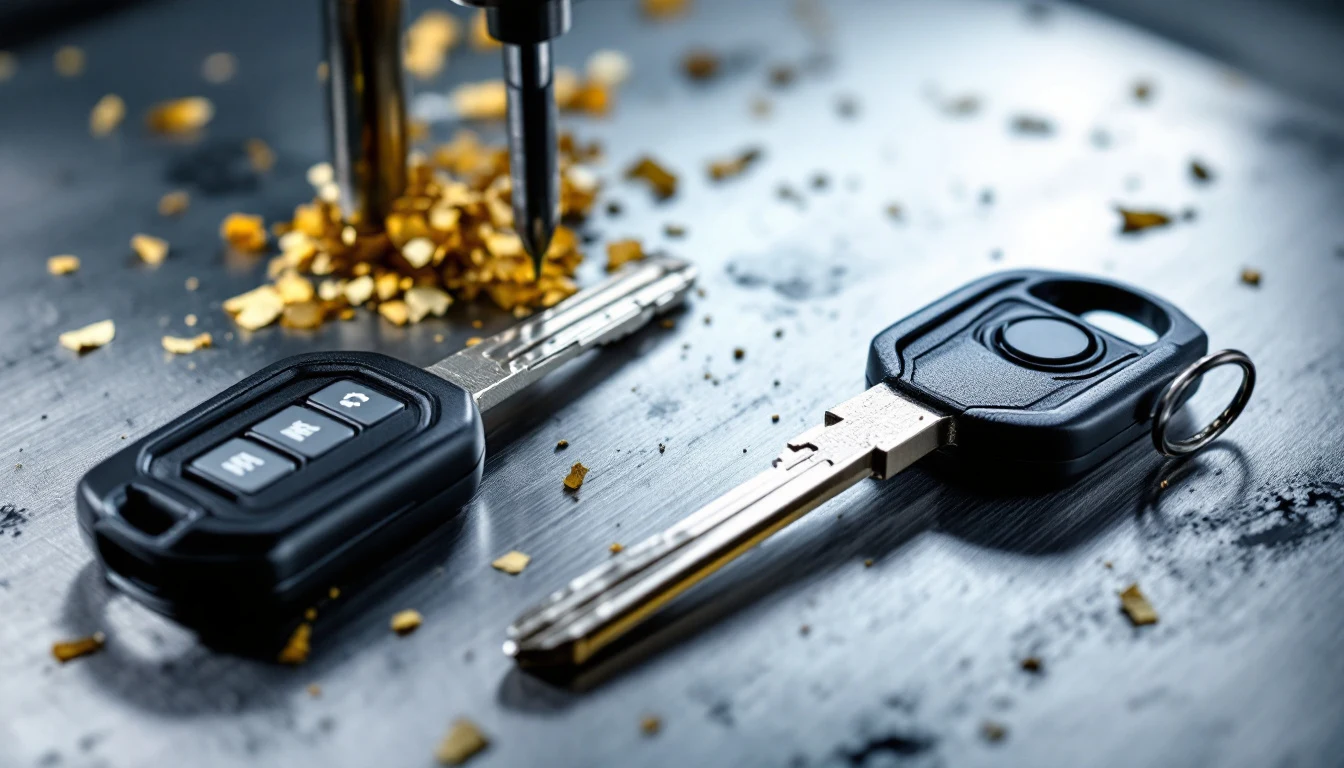
These are the least expensive Lincoln keys to duplicate, and they are also the ones most likely to be worn out. A blade key that has spent fifteen years on a loaded keyring has rounded cuts, and a duplicate made from a worn key inherits that wear. When we duplicate an old blade we prefer to cut from the factory code rather than copy the worn original, which produces a key that fits better than the one you have been using.
Remote-head keys
Mid-generation cars combine the cut blade, the chip, and the lock/unlock/trunk buttons in a single molded head. Some are switchblade-style flip keys. Mechanically this is still a turn-key car; you are simply paying for the remote-entry electronics bonded to the key.
A common Continental and MKS complaint at this generation is a head that has cracked or a battery contact that has gone intermittent — the key starts the car fine but the remote functions have quit. That is often repairable, and it is worth asking about before buying a whole new key.
Proximity smart fobs
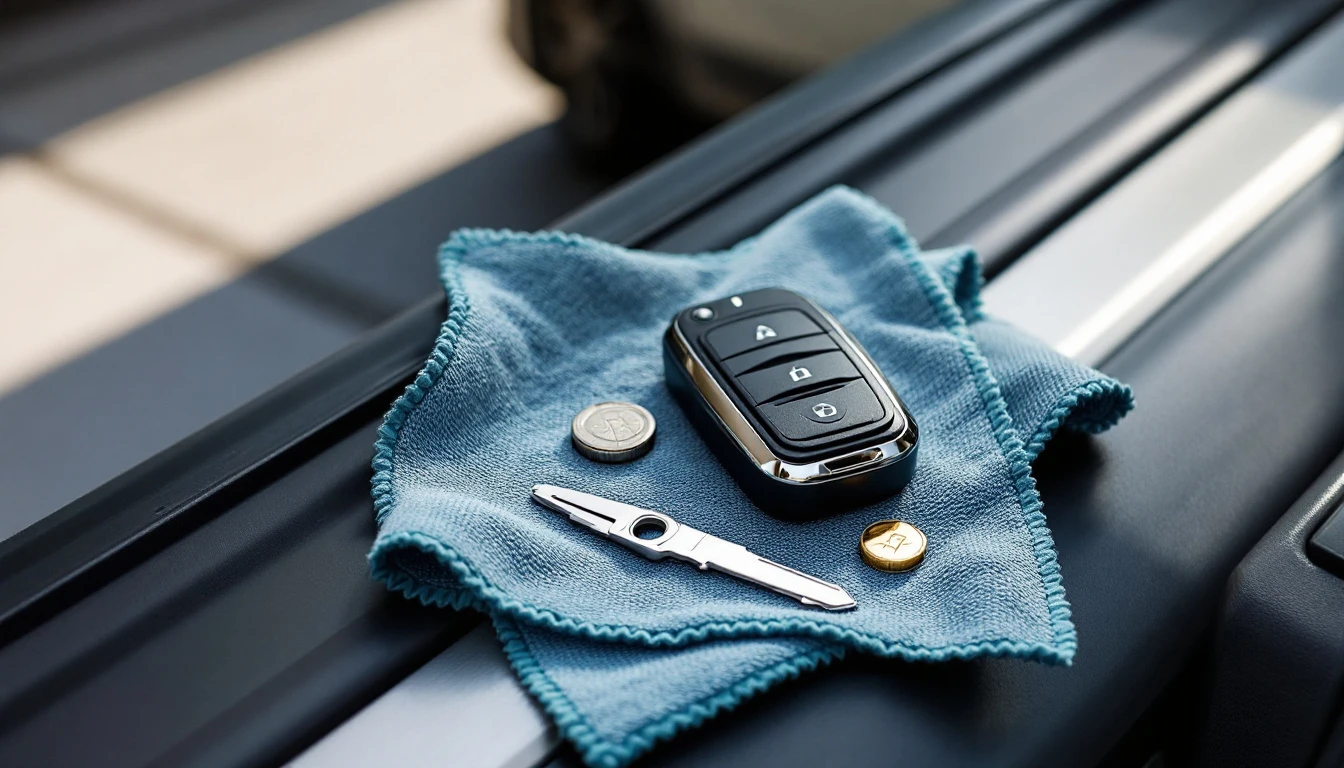
Later cars use a proximity fob with push-button start and no ignition cylinder at all. The car listens for the fob inside the cabin and authorizes the start button when it hears a valid one. A thin emergency blade hides inside the fob body for the door, in case the car's battery or the fob's battery has died.
Proximity fobs carry the most electronics and sit highest in the price band. They also fail in a way that looks alarming but often is not — a "key not detected" message is frequently a dead coin cell rather than a dead fob. If you are not sure which system your car uses, our guide on telling whether you need a transponder key sorts it out quickly.
Spare versus all keys lost: the 2026 Fort Worth numbers
All prices below are all-in mobile figures — hardware, cutting, programming and testing done wherever the car is parked. The right-hand column is the number you avoid by acting early.
| Lincoln key type | Spare added, one key still works | All keys lost, nothing works | Typical on-site time |
|---|---|---|---|
| Transponder blade key | $150–$260 | $260–$430 | 25–60 min |
| Remote-head or flip key | $200–$340 | $310–$520 | 35–70 min |
| Proximity smart fob | $290–$430 | $420–$700 | 45–110 min |
| Emergency door blade only | $150–$200 | Not applicable alone | 20–35 min |
| Second matched key, same visit | $95–$280 each | $95–$280 each | Adds 10–25 min |
Read that table across, not down. The left column is what a normal Tuesday costs. The right column is what the same key costs on the day you actually need it, plus a stranded car, plus whatever the delay costs you. For a broader make-by-make view of where Lincoln sits relative to everything else, see our 2026 Fort Worth car key replacement cost breakdown by make.
Note the bottom row as well. A second matched key made during the same visit is dramatically cheaper than that key made later as its own call, because the diagnostic setup and the drive are already paid for. If you are having any key work done at all, that is the moment to go from one key to two — or from two to three.
The one-key household is more common than you think
We ask every customer the same question when we finish a job: how many working keys do you have now? A surprising number of answers are "one," and it is almost never a decision anyone made deliberately.
The patterns repeat. A used car bought with a single fob. A second key that lived in a kitchen drawer until a move. A spare handed to a family member who moved away. A valet key that was never actually a full key. A fob that stopped working two years ago and got tossed in a glovebox instead of diagnosed.
The fix is dull and it works: keep a second working key, store it somewhere that is not inside the car it opens, and test it every few months so you find out it is dead on your schedule rather than the car's. The DHS preparedness campaign (ready.gov) makes the same argument about household spares in a broader context, and it applies cleanly to a vehicle you depend on. The same logic drives our Toyota Sienna spare key guide — different vehicle, identical math, and the minivan version has the added wrinkle of multiple drivers sharing one key.
What the visit looks like
A spare-key visit on a Continental or MKS is short and undramatic, which is the point.
The technician meets you at the car and verifies ownership first — photo ID plus registration, title, or a current insurance card in your name. Legitimate access to factory key codes and vehicle security data runs through the National Automotive Service Task Force's Vehicle Security Professional program (nastf.org), which vets technicians and logs every request, so the paperwork step is the system working correctly rather than a delay.
From there: the blade is cut, either by duplicating your working key or from the factory code for a cleaner fit; the equipment connects to the diagnostic port; and the new key or fob is enrolled alongside your existing one. Then everything gets tested — doors, trunk, remote functions, and a full start cycle — including confirmation that your original key still works, which matters, because on some vehicles adding keys can affect what is already enrolled.
Bring the VIN if you have it handy. On both models it is on the driver-side door jamb sticker and readable through the base of the windshield.
Where we hedge
Two honest boundaries.
The newest model years. Manufacturers keep tightening the security around key enrollment, and current-generation configurations can require additional steps, longer security wait periods, or manufacturer-side authorization. On most Continentals and MKSes this is routine mobile work; on the newest vehicles, a technician confirms your exact setup before we commit to a firm price. We would rather say that on the phone than in your driveway.
When it is not the key at all. If a known-good key suddenly stopped working, if the anti-theft light behaves erratically, or if the car cranks with no response, the fault may live in a module rather than in the key. That is a diagnose-then-quote service handled through our ECU and module programming service, not a flat-rate key job. And if the key physically will not rotate in the cylinder, you have an ignition problem instead, which runs $150–$550 depending on the car.
One more caution worth repeating: do not buy a fob online first. Many used proximity fobs are permanently married to their original vehicle and cannot be re-enrolled to yours at any price. Counterfeit automotive electronics are a documented problem, and NHTSA (nhtsa.gov) along with the FTC's consumer guidance (consumer.ftc.gov) have both addressed the broader issue of counterfeit and misrepresented auto parts. If a fob you supply will not program, the visit is still billable.
Fort Worth, at your car
We are mobile-only, based in 76102, and available 24/7 — there is no shop to drive to, which is convenient for a spare key and essential when the car cannot move. We cover the whole Fort Worth area, from office garages downtown to driveways in the Cultural District and out along Camp Bowie.
Our spare car key service is the cheap, boring, correct call. Our all-keys-lost service is the one you pay two to three times as much for. You get to choose which one you use, but only for a limited time.
Frequently Asked Questions
How much does a spare key cost for a Lincoln Continental or MKS?
In Fort Worth in 2026, a spare runs about $150 to $260 for a transponder blade key, $200 to $340 for a remote-head key, and $290 to $430 for a proximity smart fob, all-in with cutting and programming at your location while a working key still exists.
Why is losing all my keys so much more expensive?
Because it is a different job. With a working key the technician duplicates a known cut and adds a credential the car already trusts. With no key at all, the key code has to be pulled from the VIN, the blade cut from code, and the immobilizer brought up from scratch — often two to three times the cost, plus a stranded car.
Can you make a Lincoln spare key at my house or office?
Yes. Everything the job needs travels with the technician: code retrieval, key cutting, and immobilizer programming. We work in driveways, office lots and parking garages across the Fort Worth area, any hour of the day or night.
Does adding a key erase my existing one?
Not on a normal spare-key visit — the new key is enrolled alongside the working one, and we verify your original still starts the car before leaving. In some all-keys-lost procedures, previously enrolled keys can be cleared, which is one more reason to make the spare while you still have a good key.
Should I buy a Lincoln fob online and just have it programmed?
We advise against it. Many used proximity fobs are permanently bound to their original vehicle and cannot be enrolled elsewhere, and counterfeit units routinely fail programming. If a customer-supplied fob will not take, the service visit is still billable, so the savings usually vanish.
How many working keys should I actually have?
Two at minimum, three if the car is shared between drivers or driven far from home. Keep at least one stored away from the vehicle, and test it every few months so you discover a dead battery on a calm day rather than in a parking garage at midnight.
Still running your Continental or MKS on a single key? Call Locksmith Fort Worth at (817) 674-3595 any hour, day or night. We are mobile-only, we come to your driveway or office, and a spare made today costs a fraction of the same key made in an emergency. Email contact@locksmithfortworth.net to schedule.
Written by the technicians at Locksmith Fort Worth, a mobile automotive locksmith service based in 76102 and serving the Fort Worth area 24/7.