Ford Fusion & Taurus Ignition Repair in Fort Worth: Cylinder, Key, or Immobilizer? (2026)
Quick answer: When a Ford Fusion or Taurus key sticks, jiggles, or turns without starting the car, the cause is almost always one of three things — a worn ignition cylinder, a worn key, or an immobilizer/security fault. The first two are mechanical and sit in our $150–$550 ignition band. A new key falls in the $150–$850 key band. Anything on the car's computer side is diagnostic-then-quote. Locksmith Fort Worth is mobile and 24/7: (817) 674-3595, ignition repair service.
As of August 2026, ignition complaints on the Ford Fusion and Taurus of roughly 2010 through 2019 are among the most common calls we take from Fort Worth sedan owners. These cars accumulated a lot of miles in a lot of hands — rental fleets, commuters, second cars handed down through a family — and an ignition is a wear item that quietly counts every single turn.
The frustrating part for owners is that three very different problems produce nearly identical symptoms. This guide separates them, because which one you have determines whether you are looking at a modest mechanical fix, a new key, or a diagnostic visit.
Start With the Symptom, Not the Fix
Before anyone quotes you anything, answer four questions about your own car. They cost nothing and they narrow the field fast.
Does the key go in smoothly? A key that now needs to be shoved, wiggled, or coaxed into a slot it used to slide into is telling you about physical wear — either the key's cuts have rounded off, or the cylinder's internal wafers have.
Does it turn? There is a real difference between a key that will not turn at all and one that turns but nothing happens. The first is mechanical. The second is electrical or security-related.
Does a different key behave differently? This is the single most useful test in the whole diagnosis. If your spare key works perfectly and your daily key does not, the key is worn. If both keys behave identically badly, the car is the problem.
Are there warning lights? A security or anti-theft indicator flashing while cranking is the immobilizer speaking up. That is a different category from a cylinder that feels gritty.
Write your four answers down before you call anyone. They will save you money.
The Three Culprits, Separated
1. A Worn Ignition Cylinder
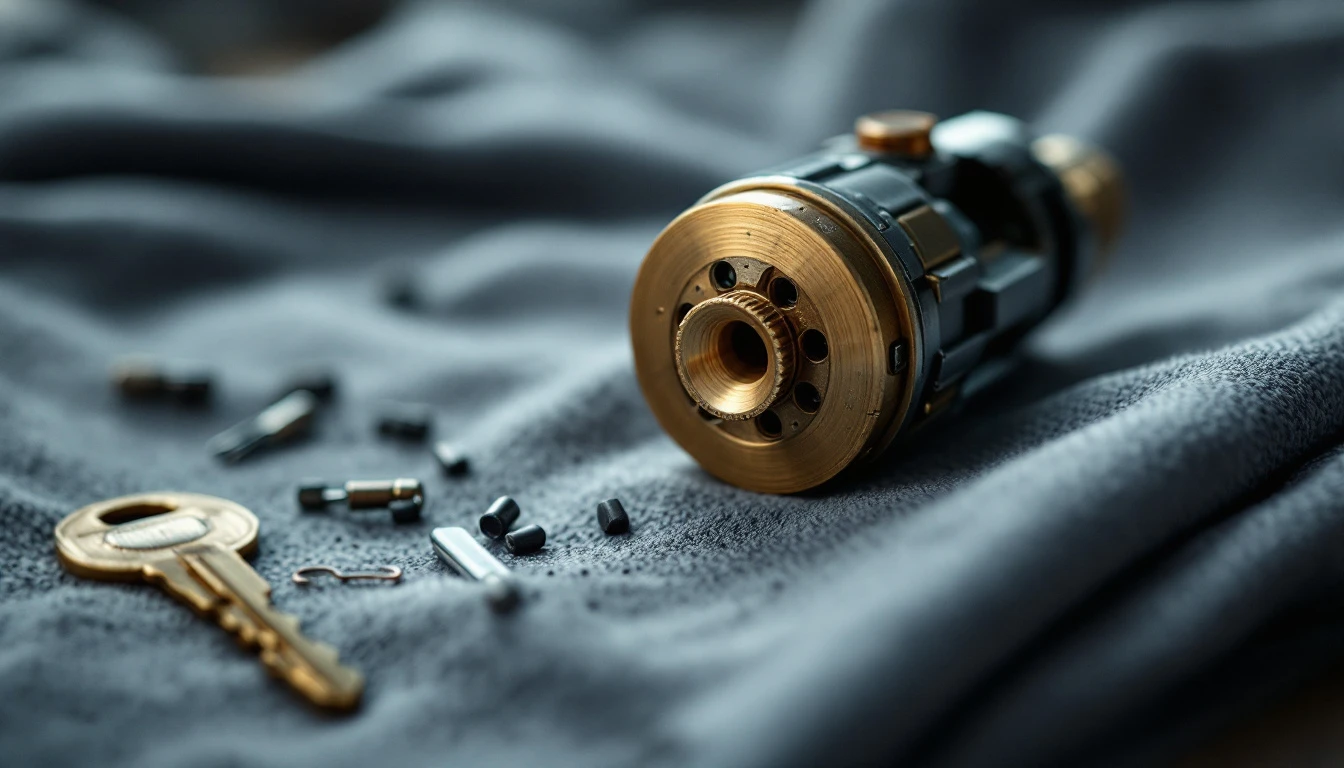
The cylinder is the lock the key goes into. Inside are small spring-loaded wafers that read the key's cuts. Ten-plus years of daily turns, plus dust, plus a heavy keyring hanging off the end of it, wears those parts down.
What it feels like: gritty or notchy rotation, needing to jiggle or lift the key, the key sticking in one position, or eventually a key that goes in but will not rotate at all. The failure is usually gradual — owners describe "it's been getting worse for months."
What fixes it: rebuilding or replacing the cylinder, and re-keying the new cylinder to your existing key so you do not end up carrying two different keys for one car. Ignition work sits in the $150–$550 band.
2. A Worn Key
Keys wear too, and faster than people expect. Brass is soft; ten years of insertion and rotation rounds the peaks and valleys of the cuts until the wafers can no longer read them cleanly. The car is fine. The key stopped being an accurate copy of itself.
What it feels like: almost exactly like a worn cylinder — sticking, jiggling, hesitation. The tell is the spare-key test. A spare that has lived in a drawer for eight years has barely worn at all, so if it turns cleanly, you have your answer.
What fixes it: a fresh key cut to the vehicle's original specification rather than copied from your worn one, then programmed to the car's transponder system. That falls in the key band; our full breakdown of Ford car key replacement costs explains how hardware type moves the number.
This is the happiest outcome, because a cheap-ish key can save an entire cylinder job. It is also the one people skip past, because "the key looks fine." Keys always look fine.
3. An Immobilizer or Security Fault
Here the mechanical side is healthy — the key goes in, turns freely, the starter may even crank — but the engine will not run, or runs for two seconds and dies. That behavior is the anti-theft system refusing to authorize fuel and spark for a key it cannot authenticate.
What it feels like: normal key movement, a security or anti-theft light, and a start attempt that fails without any mechanical roughness. Often intermittent at first.
What fixes it: diagnostics. This is the category where we will not give you a phone number, because the honest answer depends on what the scan finds. It could be a key that lost its programming, a wiring or antenna-ring issue around the ignition, or a module concern. Diagnostic-then-quote, always.
Symptom → Cause → Fix → Cost
One table, top to bottom, most-common first. Match your symptom to the row.
| What your car does | Most likely cause | The usual fix | Cost band |
|---|---|---|---|
| Key needs jiggling to go in or turn; getting worse for months | Worn cylinder, worn key, or both | Spare-key test first, then re-key or rebuild the cylinder | $150–$550 ignition / $150–$850 key |
| Spare key turns fine, daily key does not | Worn key | Fresh key cut to spec and programmed | $150–$850 |
| Neither key turns; movement feels gritty or blocked | Worn or failed cylinder | Cylinder rebuild or replacement, re-keyed to your key | $150–$550 |
| Key turns freely but engine will not start; security light on | Immobilizer or security fault | On-site diagnostics, then targeted fix | Diagnostic-then-quote |
| Key turns, engine starts and dies within seconds | Anti-theft cutting fuel | On-site diagnostics | Diagnostic-then-quote |
| Key snapped off in the ignition | Key fatigue, often after months of forcing | Extract the broken piece, assess the cylinder, cut a fresh key | $150–$550 plus key work |
| No key at all; every key lost | All keys lost | Originate and program from scratch | $150–$850 (top of band) |
Notice how many rows resolve to something cheaper than "replace the ignition." That is the point of diagnosing before buying.
When Repair Beats Replacement
Owners often call already convinced they need a whole new ignition. Frequently they do not.
Repair usually wins when the problem is confined to the cylinder's internals, the car's electrical side is healthy, and the vehicle is worth keeping. A rebuilt or replaced cylinder re-keyed to your existing key means one key still opens everything — doors, trunk, ignition — which is exactly how the car left the factory.
Replacement of more than the cylinder is warranted when the electrical switch behind the cylinder has failed, when there is physical damage from a theft attempt, or when the housing itself is compromised. That is a bigger job and a technician will tell you honestly which side of the line you are on.
Neither is the answer when the real fault is the security system. Replacing a perfectly good cylinder because the anti-theft light was on is money spent on the wrong part, and it is one of the more common ways owners get overcharged. The Federal Trade Commission (FTC consumer guidance) has long documented the pattern of unnecessary parts replacement in auto service; the defense is insisting on diagnosis before purchase.
If your Ford is a crossover rather than a sedan, the same triage applies — see our companion guide to Ford Escape and Edge ignition switch repair.
Do Not Force It
The most expensive thing you can do with a sticking ignition is keep turning harder. Every forced rotation accelerates wear on both sides, and eventually the key does the only thing a soft brass blade under torque can do: it snaps, usually with half of it still inside the cylinder.
That single event converts a modest cylinder job into an extraction plus a cylinder assessment plus a new key. It also tends to happen at the worst moment, because forcing is something people do when they are already running late.
If your key is fighting you today, treat it as a scheduled repair this week rather than an emergency next month. The Associated Locksmiths of America (ALOA) publishes consumer guidance on choosing qualified locksmiths, and in Texas, automotive locksmith work is regulated by the Texas Department of Public Safety Private Security Program — ask for licensing, and be wary of anyone who bristles at the question.
What a Mobile Ignition Visit Looks Like
Locksmith Fort Worth is mobile-only, which matters more for ignition work than for almost anything else — a car whose ignition will not turn is a car that cannot be driven to a shop, and a tow is a cost on top of the repair.
- Phone triage. Year, model, your four symptom answers, and whether a spare key exists.
- Ownership verification. Photo ID and registration or title matching the car, checked before any work on the security system.
- Diagnosis on site. The spare-key test, physical inspection of the cylinder, and a security-system read if the symptoms point that way.
- Firm quote. Full findings and full price before anything is opened up.
- Repair and verify. Cylinder work, key cutting, or programming as needed — then repeated start-and-shutoff cycles to confirm the fix, plus doors and trunk if the cylinder was re-keyed.
We work anywhere across Fort Worth, including apartment lots near TCU and workplaces around the Cultural District. Heavier trucks follow the same process but a different key structure — our Ford F-250 and F-350 Super Duty all-keys-lost guide covers that end of the lineup.
The Cheap Prevention Nobody Does
Two habits genuinely extend an ignition's life on these cars:
Lighten the keyring. A heavy cluster of keys, fobs, bottle openers, and carabiners hangs off the cylinder and levers on it every time you go over a bump. Ford's own owner materials and the National Highway Traffic Safety Administration (NHTSA) safety communications have both addressed key-mass concerns in ignition systems. Carry the car key on its own or on a light ring.
Rotate your keys. If you have two, alternate them. Splitting the wear across two keys roughly halves the rate at which either one degrades — and it means you find out early if one is going soft, on your schedule rather than in a parking garage. The Department of Homeland Security's Ready.gov already lists spare keys as basic preparedness; using them occasionally is the free upgrade.
Frequently Asked Questions
Why does my Ford Fusion key stick in the ignition?
Sticking usually means physical wear — either the key's cuts have rounded off or the cylinder's internal wafers have worn. Test your spare key first: if the spare turns cleanly, the key is the problem and a fresh key cut to specification fixes it. If both keys stick equally, the cylinder is the wear point.
Can a locksmith repair a Taurus ignition without replacing it?
Often, yes. When the fault is confined to the cylinder's internals and the electrical switch behind it is healthy, a rebuild or cylinder replacement re-keyed to your existing key restores normal operation. Ignition work sits in our $150–$550 band. A technician confirms which repair your car actually needs before quoting.
My key turns but the engine will not start. Is that the ignition?
Not mechanically. If the key rotates normally, the cylinder is doing its job. An engine that will not run — especially with a security or anti-theft light on, or one that starts and dies within seconds — points at the immobilizer or security system. That is diagnostic-then-quote work, because the honest price depends on what the scan finds.
How long does a Fusion or Taurus ignition repair take?
Most straightforward cylinder jobs are completed in a single mobile visit, on site, without towing the car anywhere. Key cutting and programming is added into the same visit. Security-system faults can take longer because diagnosis comes first and the repair depends on the finding.
My key broke off in the ignition. What now?
Stop trying to retrieve it with pliers or glue — both routinely make extraction harder and can damage the cylinder. A technician extracts the broken piece, assesses whether the cylinder survived, and cuts a fresh key. Broken keys are almost always the endpoint of months of forcing a worn ignition, so expect the cylinder to be evaluated too.
Do you work on these cars at night or on weekends?
Yes. Locksmith Fort Worth is 24/7 and mobile-only across Fort Worth. An ignition that will not turn means the car cannot come to anyone, so the equipment comes to it — home, work, or roadside. Call (817) 674-3595 or email contact@locksmithfortworth.net.