Dodge Grand Caravan & Chrysler Town & Country Ignition Repair in Fort Worth (2026)
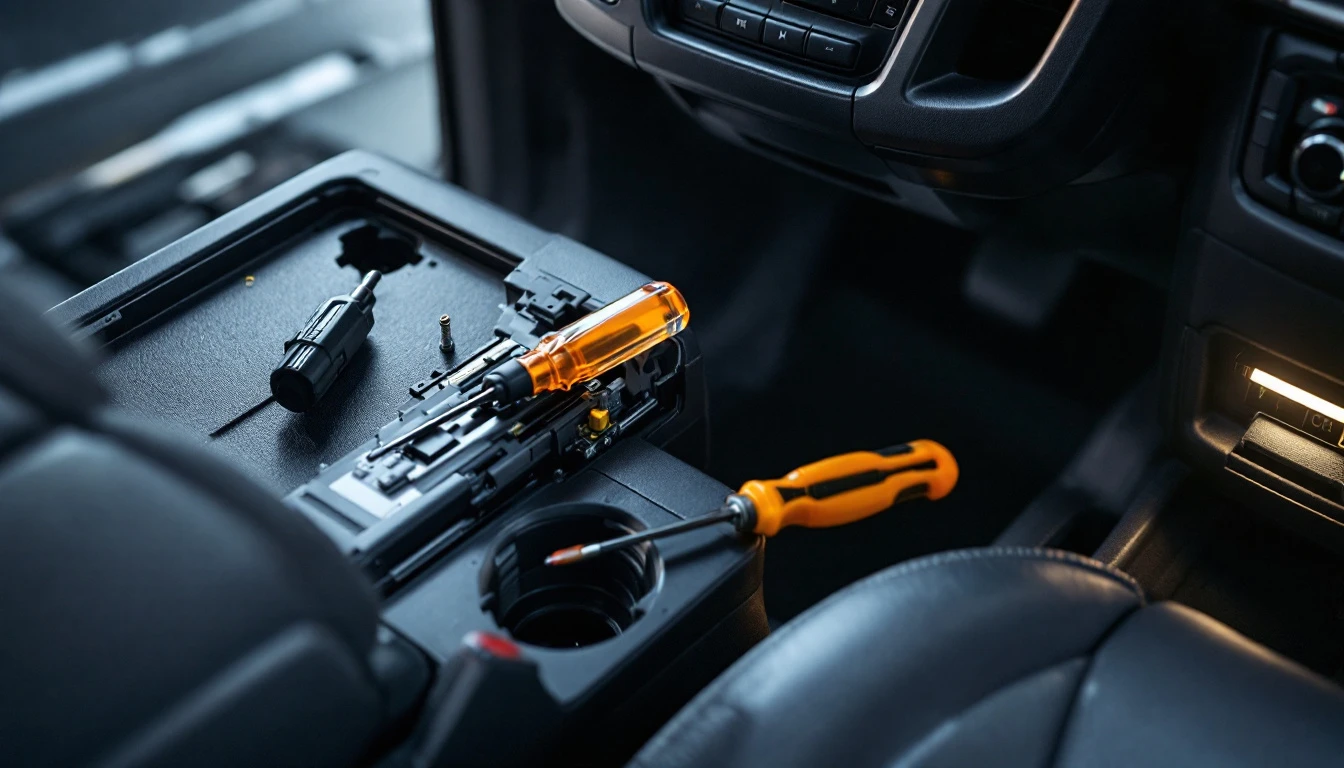
Quick answer: On a high-mileage Grand Caravan or Town & Country, a key that won't turn is usually a worn ignition cylinder, a worn key, or both wearing each other out together — and ignition work in Fort Worth runs $150–$550. If the key turns fine but the engine cranks and dies with a security light on, it's not the cylinder at all; that's the anti-theft side, and it's diagnostic-then-quote. Locksmith Fort Worth is mobile and 24/7: (817) 674-3595, ignition repair service.
As of August 2026, the 2008–2020 Chrysler minivans — the Dodge Grand Caravan and the Chrysler Town & Country that shared its bones — are among the highest-mileage vehicles still doing daily work in Fort Worth. School runs, rideshare, contractor hauling, church vans. They earn every mile, and the ignition is the single part of the vehicle that gets touched hardest: a key goes in and out of that cylinder four, six, ten times a day for twelve or fifteen years.
That's why "my Caravan key won't turn" is one of the most common calls we take. It's also one of the most commonly misdiagnosed, because three completely different failures produce symptoms that feel identical from the driver's seat. This guide separates them, so you know which conversation you're having before anyone quotes you a number.
Why Minivan Ignitions Wear Out Faster Than You'd Expect
An ignition cylinder is a precision mechanical part with springs, wafers, and tolerances measured in thousandths of an inch. Every insertion drags the key's cut edges across those wafers. Over fifteen years and tens of thousands of cycles, two things happen at once: the wafers wear down inside the cylinder, and the peaks on your key blade wear down too.
Neither one alone might stop the van. Together they compound — a slightly rounded key in a slightly loose cylinder eventually can't line the wafers up well enough to rotate. That's why the failure feels sudden even though it took a decade: you crossed a tolerance threshold, not a cliff.
Three things accelerate it on these particular minivans:
- Keychain weight. A heavy ring of keys, a fob, a gym tag and a bottle opener hangs off that cylinder every time you drive. That downward load wears the cylinder's bore out of round faster than the key ever does.
- Texas heat cycling. A van that bakes at 100°F on a Fort Worth parking lot and then gets blasted with A/C goes through expansion and contraction in the lock body every single day.
- Grit. Dust and pocket lint ride in on the key. There is no filter on an ignition cylinder.
Understanding the mechanism matters because it tells you what the fix is. Wear is not a mystery fault — it's a consumable part reaching the end of its life.
The Three Suspects, and How They Feel Different
Almost every "won't start" complaint on these vans lands in one of three buckets. Read the symptom carefully, because the symptom is the diagnosis most of the time.
Suspect 1 — The cylinder is worn. The key goes in but won't rotate, or rotates only with force, or rotates part way and sticks between positions. It may work better with the steering wheel jiggled, or work on the third try, or work only in the morning. Getting worse over months is the signature. This is mechanical, and mechanical failures degrade gradually.
Suspect 2 — The key is worn. Same symptoms, different owner. The tell: you have a second key that works noticeably better, or you have an old original key and a hardware-store copy and only one of them turns. A copy made from a copy loses accuracy each generation, and a fifteen-year-old daily-driver key has visibly rounded peaks if you hold it next to a fresh one.
Suspect 3 — The security system is unhappy. Here the key turns perfectly. The starter engages. The engine fires — and then dies within a second or two, often with a security or anti-theft indicator lit or flashing. Nothing mechanical is wrong. The immobilizer read the key's transponder, didn't like the answer, and cut fuel. This is not an ignition repair at all, and pricing it as one is how people get surprised.
Suspect 3 sometimes overlaps with the key itself — a transponder chip inside an aging key can fail while the metal blade is still fine. On the fobik-style keys these vans used in the later years, the electronics and the blade are one assembly, and our guide to Chrysler fobik key replacement covers what that means for cost.
A Two-Minute Driveway Test
Before you call anyone, run this. It costs nothing and it usually settles which suspect you're dealing with.
- Take everything off the keyring. Just the ignition key, nothing else. Try it. If a stripped-down key turns when the loaded ring wouldn't, keychain weight has been pulling your cylinder out of alignment — and you've found a contributing cause you can fix for free.
- Try your spare. If the spare turns and the daily key doesn't, the key is the worn part, not the cylinder. That's the cheapest outcome on this list.
- Rock the steering wheel while turning. If that frees it, the steering lock is binding against the cylinder — common when the van was parked with the wheels turned against a curb. Not a failure by itself, but it tells you the mechanism is tight.
- Watch what happens after it starts. If it fires and dies with a light, stop diagnosing the cylinder. You're in security-system territory.
Write down what you observed. When you call, those four data points cut the phone conversation in half and make the quote you get far more honest.
Cost by Year Band
The Chrysler minivans changed underneath across this run, and the changes matter to what a repair involves. Here's the practical picture as of August 2026.
| Model years | What's typically in the ignition | Common failure we see | Likely path | Cost band |
|---|---|---|---|---|
| 2008–2010 Grand Caravan / Town & Country | Traditional blade key with a transponder chip | Worn cylinder wafers; worn key blade | Cylinder service or replacement, key re-cut to the new cylinder | $150–$550 (ignition) |
| 2011–2015 | Blade key, later fobik-style integrated key on some trims | Cylinder wear plus keychain-load bore wear | Cylinder work; key replacement if the blade is rounded | $150–$550 (ignition) |
| 2016–2020 Grand Caravan | Fobik-style key on most trims | Key/transponder side failures overtaking pure cylinder wear | Key replacement and programming more often than cylinder work | $150–$850 (key work) |
| Any year, engine starts then dies | Nothing mechanical — anti-theft chain | Immobilizer or module-side fault | On-site diagnosis first | Diagnostic-then-quote |
Two notes. First, ignition repair on these vans sits inside our published $150–$550 band — a straightforward cylinder job on an older Caravan lands low in it, while a job that also requires a new key cut and programmed to match sits higher. Second, if the diagnosis turns out to be a module or computer fault rather than a lock or a key, we do not attach a dollar figure to it in advance. That's diagnostic-then-quote work, because the honest number depends on what the technician finds on your specific van.
Why We Won't Quote a Module Over the Phone
You'll notice we publish firm bands for ignition and key work and refuse to publish one for computer-side work. That's deliberate. Until diagnostics run on your VIN, nobody can honestly say whether your no-start is a $200 cylinder or a deeper anti-theft fault. The Federal Trade Commission's consumer guidance has documented the bait-quote pattern across the service trades for decades — a low number on the phone, then pressure once someone is standing in your driveway. The defense is simple: diagnosis first, a firm written quote second, work only third.
The same logic runs the other direction, too. If you call a shop and describe a fires-then-dies symptom and they immediately quote you an ignition cylinder replacement, they're guessing. Ask them how they ruled out the security system.
Dealer vs. Mobile Locksmith on a Fifteen-Year-Old Minivan
For a van this age, the practical difference is mostly about towing. A minivan whose key won't turn cannot be driven to a dealership — which means a tow bill and a wait before anyone even looks at it. A mobile locksmith brings the cylinder work, the key cutting, and the programming equipment to wherever the van is sitting: a driveway in the Cultural District, an apartment lot near TCU, or a jobsite off Alliance Town Center.
There's also a parts-availability reality. Dealers stock what's current. On a 2009 Town & Country, the aftermarket and the locksmith supply chain are frequently faster than the franchise parts counter. The National Automotive Service Task Force (NASTF) exists precisely to keep independent professionals in the security-and-immobilizer loop for exactly this reason — so vehicle owners aren't captive to one channel.
If your van is a Dodge but not a minivan, the same logic applies across the family — the Dodge Charger key replacement cost breakdown covers the sedan side, where the key technology is different enough to move the price.
What a Mobile Ignition Visit Actually Looks Like
Locksmith Fort Worth is mobile-only and 24/7, and works across Fort Worth and the surrounding neighborhoods. There is no shop to drive to — which is the point, since a van with a dead ignition isn't driving anywhere.
- Phone triage. Year, model, the four driveway-test observations above, and whether a spare key exists. Some of this we can talk through for free.
- Ownership verification on arrival. Photo ID and registration or title matching the vehicle. Any professional should verify ownership before touching a vehicle's ignition or security system; the Associated Locksmiths of America (ALOA) treats that as baseline practice, and so do we.
- Diagnosis. The tech settles cylinder vs. key vs. security system with tools rather than guesswork.
- Firm quote before work. Full findings, full price, your call.
- Repair and verify. If a cylinder is serviced or replaced, the key is matched to it and tested through a full cycle — lock, unlock, start, shut down — before the tech leaves.
One preparedness note while your van still starts: if you're down to a single working key, you are one failure away from an all-keys-lost job, which sits at the expensive end of the band. The Department of Homeland Security's Ready.gov lists spare keys under basic household readiness for a reason. A spare key ordered on a calm Tuesday costs a fraction of an emergency at 11 p.m.
Frequently Asked Questions
My Grand Caravan key won't turn at all. Is the ignition dead?
Not necessarily. Try the key with everything else removed from the keyring, and try rocking the steering wheel while turning — a bound steering lock and a heavy keychain both stop a perfectly good cylinder. If a stripped key still won't rotate and your spare won't either, then the cylinder itself is the likely failure, and that's ignition work in the $150–$550 band.
The van starts and then immediately shuts off. Is that the ignition cylinder?
No. If the engine actually fires, the cylinder did its mechanical job. A start-then-stall, especially with a security or anti-theft indicator, is the immobilizer refusing to authenticate the key and cutting fuel. That's a security-system diagnosis, not a lock repair, and it's priced diagnostic-then-quote after a technician reads the vehicle.
How much is ignition repair on a Town & Country in Fort Worth?
Ignition work falls in our published $150–$550 band. A straightforward cylinder job on an older van sits toward the lower end; a job that also needs a new key cut and programmed to match the new cylinder sits higher. A technician confirms the exact figure on-site before any work starts.
Can a worn key damage a good ignition?
Yes, and it's the most under-appreciated cause on these vans. A rounded, over-copied key forces the wafers to work harder every single insertion, accelerating wear on a cylinder that would otherwise have years left. If your key looks visibly smoothed compared to a fresh one, replacing the key is cheap insurance for the cylinder.
Do I need to tow my minivan to a shop?
Not for ignition or key work. Locksmith Fort Worth is mobile-only, so the equipment comes to the van — driveway, workplace lot, or roadside. A tow only enters the picture if diagnosis reveals something outside locks, keys, and immobilizer work.
Do you come out at night or on weekends?
Yes. We're 24/7 across Fort Worth. Call (817) 674-3595 or email contact@locksmithfortworth.net. We're mobile-only — there's no shop location to visit — and we don't use WhatsApp, so calls and email are the way to reach us.